 NFL2026-08-29
Wan'Dale Robinson Avoided a Concussion and Tennessee's Slot Role Is Still the Safest Target Share
By Verdexed NFL Desk
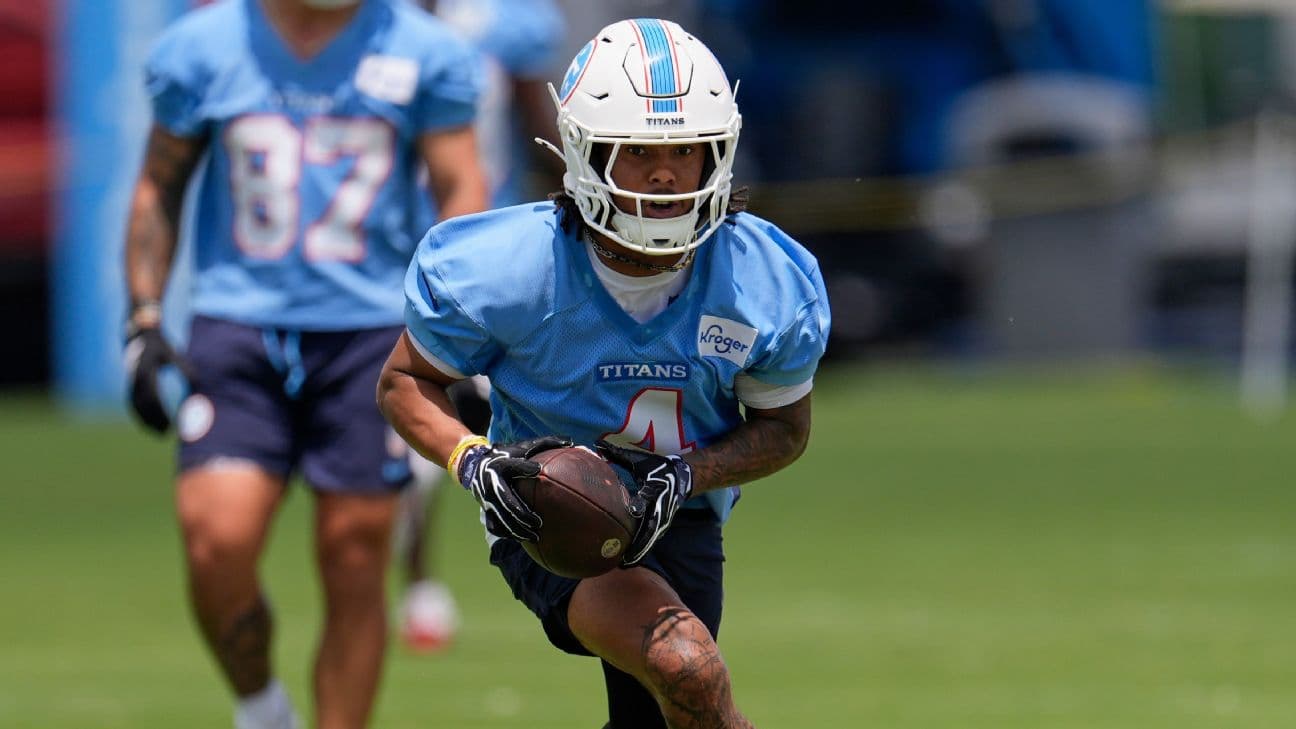
Tennessee wide receiver Wan'Dale Robinson was evaluated for a concussion after taking a hard hit from Chicago safety Xavier Woods during Thursday's joint practice in Nashville. Reports Friday indicated Robinson is not believed to have sustained a concussion, though the Titans will continue monitoring him for symptoms. Head coach Robert Saleh called the hit cheap, and a skirmish broke out afterward involving Tennessee offensive linemen.
For fantasy purposes, the important word in all of that is "not." A concussion eleven days before Week 1 would have put Robinson's opener in genuine doubt. Instead, the Titans' most dependable receiver is on track.
The context around the hit
Woods played for Tennessee last season, which is why the hit registered as more than a routine training camp collision. Joint practices produce these moments every August, and they produce a disproportionate share of the injuries that reshape fantasy drafts.
Saleh's public reaction matters less than the medical follow-up. Concussion evaluations are not diagnoses, and a player can clear the initial screen and still enter protocol days later if symptoms emerge. Anyone drafting Robinson this weekend should treat his status as trending positive rather than resolved, and check the Titans' first regular-season practice report before locking a Week 1 lineup.
Why Robinson is Tennessee's most valuable fantasy receiver
The Titans' receiving room has been unsettled all summer. Elic Ayomanor cleared his own shoulder scare this week and has emerged as the team's most talented outside option. That competition is real, and it will determine who leads the team in receiving yards.
It will not determine who leads the team in receptions. Robinson's role is the slot, and the slot is where a second-year quarterback throws when he is uncomfortable, which Cam Ward will be often.
That is the fantasy argument in one sentence. In PPR formats, the receiver who catches eight passes for 62 yards is more valuable than the one who catches three for 71, and Robinson's route tree, target depth and alignment all point toward the former. His floor is the highest in the room even if his ceiling is not.
The joint-practice injury tax
Robinson is the latest reminder that the last ten days of August produce a disproportionate share of season-altering injuries, and that most of them happen away from television cameras.
Joint practices exist because coaches want competitive reps against unfamiliar opponents without exposing starters to full-speed tackling in an exhibition game. The trade is real, but the risk does not disappear. Players are in helmets and shoulder pads going against strangers with something to prove, and the officiating and tempo controls that govern a real game are absent.
Fantasy managers drafting this weekend are working from information that is a day or two stale by definition. The practical response is not to avoid drafting players in camp, which is impossible, but to build benches that can absorb a Week 1 inactive. That means taking the backup at a thin position over a fourth running back you will never start, and it means checking Wednesday practice reports before the season opener rather than assuming August news holds.
The Cam Ward variable
Ward's preseason was rough enough to generate outside concern, and Tennessee has publicly declined to panic about it. That is the correct organizational posture and it is also not evidence of anything.
For fantasy managers, a struggling second-year quarterback creates a specific distribution of outcomes at receiver. Deep targets become inefficient. Checkdowns and quick game increase. Target concentration tightens toward the players the quarterback trusts. Every one of those effects benefits a slot receiver and hurts a boundary receiver.
If Ward takes a genuine step forward, Ayomanor's ceiling is the one that moves. If Ward does not, Robinson absorbs a larger share of a smaller pie, and his PPR production holds up better than the offense around him.
That is an unusual profile: a receiver whose fantasy value is relatively insulated from his quarterback's development curve in either direction.
The Verdexed model take
Verdexed's model projects Robinson as a low-end WR3 in PPR scoring with a tight distribution, which is exactly what the profile should produce. Reception volume is the most stable input in receiver projection, far more stable than yards per reception or touchdown rate, and Robinson's projected reception total is the most confident number in Tennessee's passing game.
The model is less optimistic about the Titans' offense as a whole. Total projected pass volume is near the league average, and projected points per drive sit below it. That combination caps every Tennessee receiver's ceiling and is the reason none of them belongs in the top 24 at the position.
The betting translation is more interesting than the fantasy one. Tennessee's team totals are projected low enough that the model prefers unders on the Titans' full-game totals early in the season, particularly against defenses that generate pressure. A struggling young quarterback and a receiving corps still sorting itself out is not a recipe for shootouts.
What to do in your league
Robinson belongs on your bench in 12-team leagues and in your flex in PPR leagues deeper than that. Draft him in the double-digit rounds and treat him as a weekly floor play rather than a ceiling chase.
Ayomanor is the better bet if you need upside. He carries the touchdown and big-play equity that Robinson does not, and his draft cost is comparable.
Owning both is defensible in best-ball formats, where Robinson's floor and Ayomanor's spike weeks complement each other. In managed redraft leagues, pick one.
What is next
Tennessee cuts to 53 on Sunday, and the receiver room is the position group most likely to change. A claim off waivers Monday could reshuffle the depth chart before the opener.
The more important checkpoint is the first official injury report of the regular season. If Robinson appears on it with a head injury designation, everything above changes. If he does not, the Titans open the year with their slot job settled and their outside jobs still in flux, which is the reverse of what most teams want and exactly what makes Robinson draftable.