 NFL2026-07-03
Travis Etienne Signs With the Saints: A Lead-Back Role and a Borderline RB1 Ceiling in New Orleans
By Verdexed Fantasy Desk
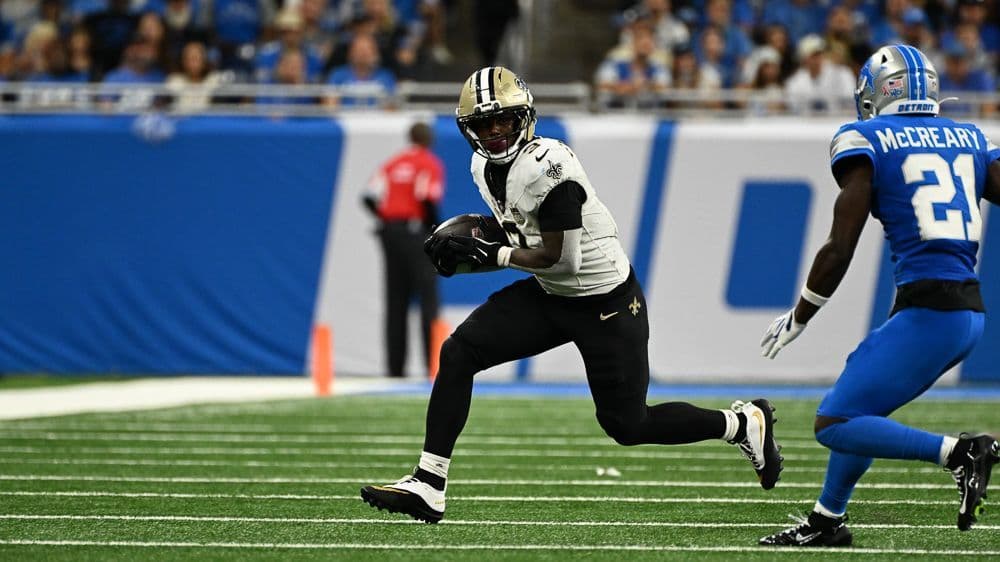
The Saints have a new lead back. New Orleans agreed to terms with Travis Etienne on a four-year, $52 million contract worth roughly $13 million per season, paying him like a top-nine running back and signaling that he is expected to carry the backfield in 2026. For fantasy managers, the signing does two things at once: it hands Etienne a workhorse opportunity and it throws Alvin Kamara's outlook into doubt.
This is one of the more consequential backfield moves of the offseason, and it reshapes how both New Orleans backs should be drafted.
Why Etienne's value just jumped
Etienne is coming off a strong 2025 with the Jaguars, when he ran for 1,107 yards and seven touchdowns on 260 carries and added 36 catches for 292 yards and six scores on 52 targets. That is a proven three-down profile: volume on the ground, real receiving usage, and touchdown production. Now he moves into a situation where the team just paid him like a featured back, which is the clearest possible signal of intended workload.
The fantasy ceiling is significant. If Etienne is not splitting touches evenly with Kamara, he has the potential to be a borderline No. 1 running back in all leagues. Lead backs who catch passes and score touchdowns are the backbone of fantasy rosters, and Etienne now fits that description in New Orleans. The pay grade alone tells you the team's plan is to feed him.
The Kamara question
The complication is Alvin Kamara. Kamara is playing out a two-year extension worth around $24.5 million through 2026, but it has been restructured so that only roughly $3 million is guaranteed, which makes a trade or release mechanically easier than his prior deals. That financial structure is the tell: the Saints have given themselves flexibility to move on if they choose.
Head coach Kellen Moore has said Kamara will remain part of the running back room and that he can envision using both backs, which keeps a committee scenario alive. The probability framing sits at roughly 40/60 in favor of Kamara staying through at least training camp, so this is not a settled situation. But the direction is unmistakable: the Saints paid Etienne to lead, and Kamara's role is now the variable rather than the given.
Fantasy fallout for both backs
For Etienne, the draft approach is to treat him as a lead back with RB1 upside and a committee-risk floor. If Kamara is traded or released before the season, Etienne's stock climbs further toward a bankable early-round pick. If Kamara stays and the two split work, Etienne settles into a strong RB2 with weekly RB1 upside in favorable matchups. Either way, his floor rose the moment he signed.
For Kamara, the outlook is the mirror image. If he remains in New Orleans in a reduced role, his fantasy value plummets, and the guidance is to draft him no earlier than the middle rounds as essentially a high-end handcuff to Etienne. If he is dealt to a team that hands him touches, his value could rebound depending on the landing spot. Kamara is now a bet on a change of scenery as much as on the player himself.
The offensive context in New Orleans
A running back's fantasy value is never just about the back; it is about the offense around him. Etienne steps into a Kellen Moore system, and the coordinator-turned-coach's offensive identity will shape how the backfield is used, from pass-game involvement to red-zone tendencies. Moore's public comments about valuing both backs suggest a coach who likes options, which is the one note of caution against penciling Etienne in for a bell-cow share right away.
Still, the money settles most of the argument. Teams do not pay a back top-nine dollars to split evenly, and Etienne's proven three-down skill set fits the profile of a featured runner. His receiving chops matter enormously in points-per-reception formats, where his 2025 target total translated into meaningful production. If Moore leans on Etienne in the passing game the way Jacksonville did at his best, the PPR ceiling climbs even if the raw carries are shared. The pass-game usage is the swing factor that could push him from a strong RB2 into weekly RB1 territory.
The Verdexed model take
Verdexed's model prizes projected touch volume above almost anything else at running back, and Etienne's signing is a textbook case of opportunity meeting talent. Being paid as a top-nine back is a strong proxy for lead-back usage, and the model rewards that with a projection well above what a committee back would earn. The single biggest swing factor is Kamara's status, which is why the model treats Etienne's range of outcomes as tied directly to whether New Orleans keeps or moves its longtime back.
For best-ball and dynasty players, the actionable edge is to draft Etienne now, before a potential Kamara departure removes the last shred of committee risk and pushes his ADP up. Buying the ceiling before the news that confirms it is how you capture value. On the Kamara side, patience is the play: his price will keep falling as long as he is stuck behind a paid lead back, and the upside is entirely contingent on a trade.
What's next
Watch training camp and the trade market. The Saints' handling of Kamara over the next several weeks will define both backs' fantasy value, and the contract structure gives New Orleans the freedom to act. Etienne is the clear winner here with a lead-back role and a borderline RB1 ceiling; Kamara is the situation to monitor, a former star whose fantasy fate now hinges on where he lines up in September.