Trevon Diggs Signs With the Seahawks and Seattle's Secondary Adds a Gambler
By Verdexed NFL Desk
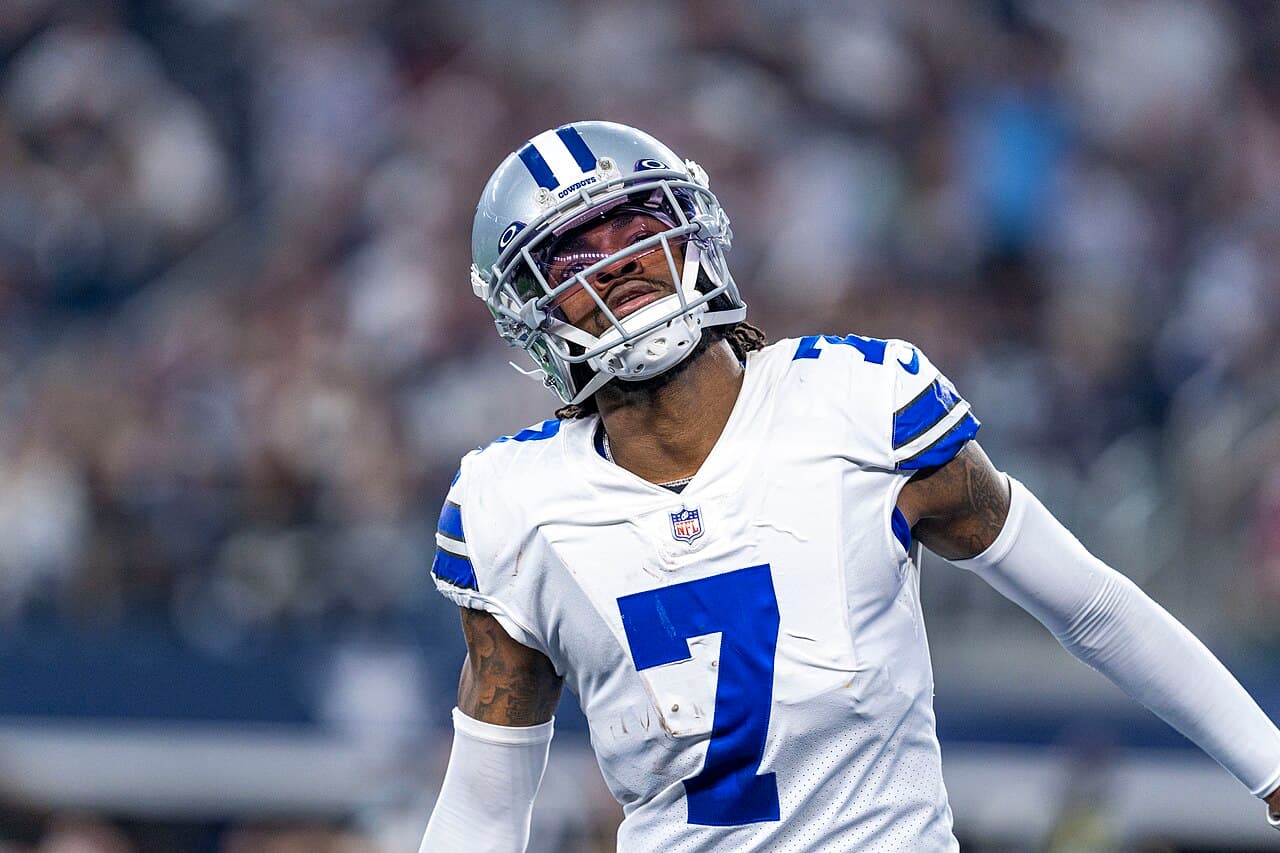
The Seattle Seahawks signed cornerback Trevon Diggs to a one-year contract on Wednesday, adding a former first-team All-Pro to a secondary that already features Devon Witherspoon on the richest cornerback contract in NFL history. For a defense that has spent the offseason collecting premium talent at the position, it is a low-cost swing at the one thing Seattle's coverage unit has lacked: a corner who takes the ball away.
Diggs was a second-round pick by Dallas in 2020 and had one of the great outlier seasons in modern coverage history in 2021, leading the NFL with 11 interceptions and earning first-team All-Pro honors. The years since have been defined by injury. He tore an ACL in 2023, was limited to 11 games the following year, and appeared in only eight games for Dallas in 2025 before finishing the season with Green Bay.
What Seattle is actually buying
The version of Diggs that shows up in Seattle will not be the 2021 version, and the Seahawks are not paying as though it will be. What they are buying is a specific, valuable skill: a cornerback who plays the football in the air rather than the receiver's hands, and who converts contested downfield throws into turnovers at a rate almost nobody else matches.
That skill comes with a well-documented cost. Diggs has always allowed a high completion rate and a high yards-per-target figure, because the same aggression that produces interceptions produces explosive plays against him. In a secondary anchored by Witherspoon, that trade becomes far more palatable. Seattle can put its best cover corner on the opponent's primary threat and let Diggs gamble on the other side with safety help behind him.
The signing also gives Seattle insurance. Cornerback is the position where depth evaporates fastest, and a team with playoff expectations that carries only two reliable outside corners into September is one hamstring away from a problem.
The fantasy angle nobody drafts for
Team defenses are the last position most managers think about, and Seattle just became one of the more interesting streaming assets on the board. Defensive fantasy scoring is driven overwhelmingly by turnovers and touchdowns, not by yards allowed, and turnovers are the single least predictable category in football. What makes them slightly more predictable is personnel: interceptions cluster around ball-hawking corners.
Adding a player whose entire coverage profile is built on attacking the football raises the variance and the ceiling of Seattle's defensive scoring without requiring the unit to improve in any other way. That is exactly what a fantasy manager wants from a DST. Nobody wins a league on a defense that allows 17 points a game and produces nothing. They win on the defense that produces three takeaway games.
For individual defensive player leagues, Diggs is a difficult own: low tackle volume, boom-or-bust interception weeks. Witherspoon remains the more stable asset.
The scheme fit
Seattle's coverage structure has leaned heavily on zone principles with an emphasis on disguising post-snap rotations. Diggs is at his best in zone looks where he can read the quarterback rather than track a receiver, which is a better fit than the man-heavy schemes he played in earlier in his career. That is the strongest argument that his production could rebound closer to his peak than his recent seasons suggest.
The counterargument is availability. A corner who has played eight, eleven and zero-to-partial seasons across the past three years is not a player any projection should assume plays 17 games. The one-year structure of the deal suggests Seattle understands exactly what it is buying.
The Verdexed model take
Our defensive projections weight three inputs above all others: pressure rate, opponent pass volume, and takeaway generation from the secondary. Seattle already grades well on the first, and the schedule provides a reasonable amount of the second. The third has been the gap, and Diggs is a direct, if volatile, answer to it.
The model treats a healthy Diggs as one of the largest single-player swings in projected defensive takeaways available on the free agent market at this stage of August, which is why a one-year deal at a modest number is good process regardless of outcome. The variance is priced in.
For betting purposes, this is not a number-moving signing. Seattle's win total and division odds are set by the offense and the front seven, and a rotational corner does not shift a season-long market. Where it does register is in weekly props and team-based markets: opposing quarterback interception props against Seattle should carry a slightly higher implied probability than they did on Tuesday, and Seattle's defensive and special teams touchdown markets get marginally more attractive.
The more useful betting observation is structural. Markets are efficient at pricing quarterbacks and slow at pricing secondaries. Cornerback additions in the last two weeks of August almost never move a line, but they do change how an offense attacks, and the effect shows up first in interception and turnover markets rather than in point spreads.
What it means
For Seattle, this is a sensible, cheap addition to a position group that was already a strength, and it gives the coaching staff optionality it did not have on Tuesday. For Dallas and Green Bay, it is a footnote. For fantasy managers, it is a reason to move the Seahawks up your defensive streaming board and to consider them as a late-round DST rather than a Week 1 waiver claim.
The thing to watch between now and the September opener is the snap split. If Diggs takes first-team outside reps opposite Witherspoon in Seattle's remaining preseason work, he is a starter and the projection above holds. If he rotates with the incumbents while working back to full conditioning, the impact is a month away and the streaming case is a mid-season one.
Either way, the Seahawks just improved the least predictable and most valuable part of a fantasy defense's scoring profile, and they did it for one year and a modest number. That is how good teams shop in late August.