The Yankees Need a Leverage Arm and Camilo Doval Is Available: New York's Bullpen Math Before Monday
By Verdexed MLB Desk
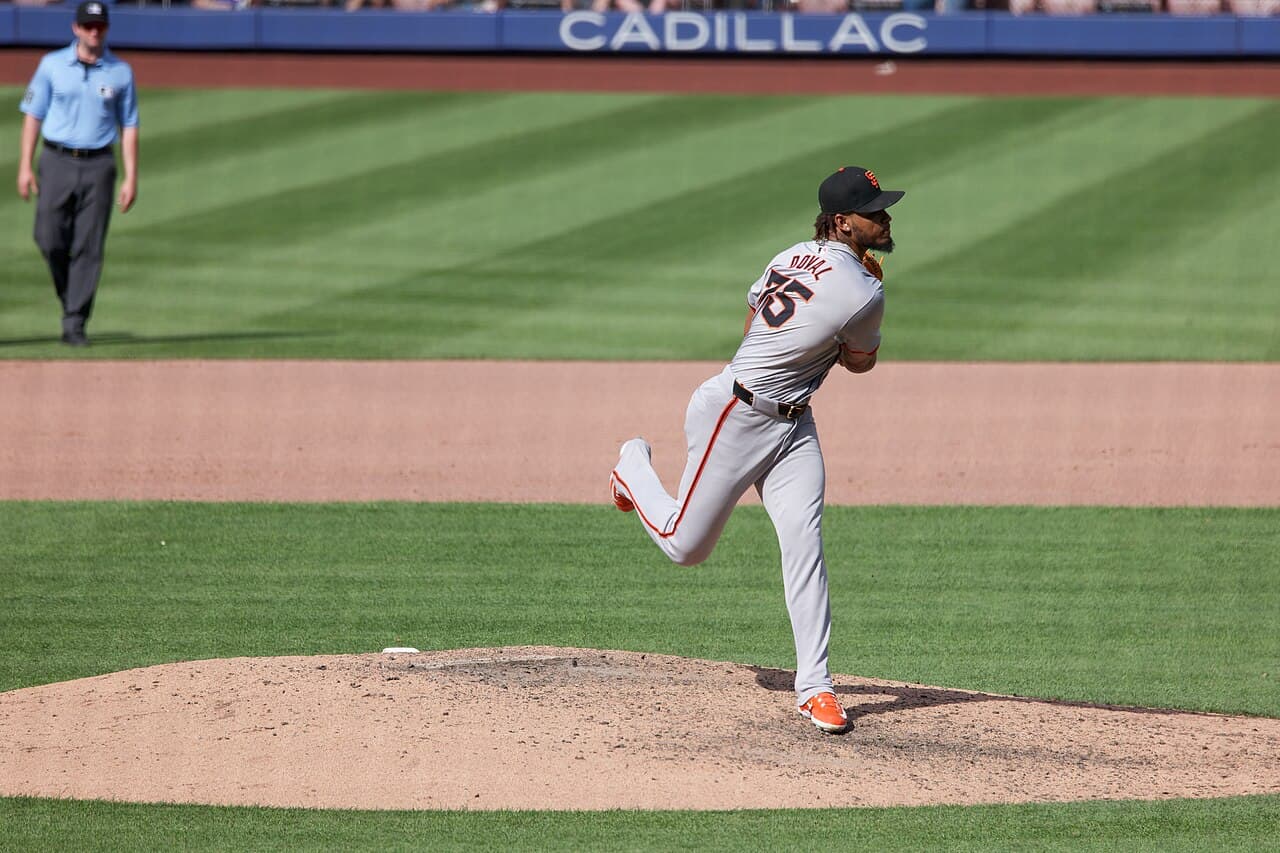
The New York Yankees are working both sides of the relief market with days left before Monday's deadline. They are looking to add a leverage reliever or two, and they are open to trading Camilo Doval, the right-hander they acquired from San Francisco at last year's deadline.
Doval's season explains the split. He has carried an ERA near 4.85 across more than 60 appearances entering the week, and the platoon split underneath it is worse than the ERA suggests: left-handed hitters have hit him hard, with a batting average in the .370s and an OPS above 1.000. That is not a matchup problem a manager can scheme around in October. It is a reliever who can only be used in a narrow set of situations.
The Pirates have reportedly shown interest, though the framing in that reporting is that New York would need to absorb part of Doval's remaining salary for a deal to work. That is the tell. When a team has to pay to move a reliever it acquired 12 months earlier, the industry has already priced him as a reclamation project rather than an asset.
What New York actually needs
The Yankees' bullpen problem is not depth. It is trust. A contender heading into October needs two or three arms a manager will use in a one-run game in the seventh inning, and New York's recent bullpen decisions suggest the organization is not confident it has enough of them.
The available market for that profile is thin and expensive. Every contender wants the same thing, and sellers know it. The most likely outcome is that New York adds one established late-inning arm at a price that feels high in July and reasonable in October, which is how deadline relief acquisitions almost always work.
Fantasy fallout
The immediate fantasy consequence is in the saves market, and it runs in three directions.
First, Doval has no closing value in New York and would not immediately have it anywhere else. A reliever traded because of a left-handed split does not walk into a ninth inning. Managers holding him in saves-plus-holds formats should evaluate the destination before deciding, but the default is that he stays a middle-relief asset.
Second, any reliever New York acquires becomes less valuable in fantasy terms than he was on his previous team. Moving from a closer role on a non-contender to a setup role behind an established Yankees ninth-inning arm is a downgrade in every format that counts saves. This is the single most common fantasy trap of deadline week.
Third, the sellers who lose relievers create the actual opportunity. Every non-contender that trades its closer opens a ninth inning for somebody currently rostered in fewer than half of leagues. Those are the adds worth making, and the window to make them cheaply is before the trades are announced, not after.
The Verdexed model take
Verdexed's model prices relievers primarily on projected leverage and role rather than raw run prevention, because saves and holds are role-driven categories. A trade that improves a pitcher's talent context but reduces his role produces a lower fantasy projection, which is counterintuitive to a lot of managers and is precisely where the edge sits.
Applied to this week: the model's biggest projected rest-of-season movers are not the relievers being acquired. They are the second-in-line arms on selling teams. Identify the setup man on a last-place club whose closer is being scouted by contenders, and add him now.
The betting application is narrower but real. Teams that add a high-leverage reliever at the deadline see a measurable improvement in one-run game outcomes over the final two months. That does not move a World Series price much, but it does move run-line and first-five-innings versus full-game correlations, and it is worth accounting for in any late-season model.
What to do in your league
Do not add Doval speculatively. Do not add whichever reliever the Yankees acquire in the expectation of saves. Do add the highest-leverage arm on a selling team's roster before Monday evening, because the price of that add doubles the moment the closer is traded.
If you roster a closer on a team that is clearly selling, decide now whether you are holding through the deadline. A closer traded to a contender loses most of his fantasy value instantly, and the trade deadline is one of the few moments in a fantasy season where you can sell into a known catalyst.
What's next
New York's front office has consistently addressed relief needs at the deadline, and the expectation is that it does so again before Monday at 6 p.m. Eastern. Whether Doval moves is a secondary question that depends almost entirely on how much salary the Yankees are willing to attach.
The broader signal to watch is how aggressively contenders pay for relief this year. In a season where the standings are compressed and a large number of teams believe they are still alive, the relief market gets thinner and more expensive than usual. That is good news for anyone rostering a reliever on a seller and bad news for anyone hoping to add saves cheaply in August.
The Doval reclamation case
There is a version of this where Doval is a useful acquisition for the team that takes him, and it is worth naming because it affects whether he is worth a speculative fantasy add after a trade.
Relievers with velocity and a swing-and-miss breaking ball who collapse against one side of the plate are among the most fixable pitchers in baseball. The failure mode is usually mechanical or sequencing-based rather than a loss of stuff, and organizations with strong pitching development infrastructure buy these arms specifically because the fix rate is high enough to justify the cost.
What makes Doval a genuine reclamation target rather than a lost cause is that the underlying velocity has not disappeared. What makes him a difficult one is that a mid-season acquisition gives the new organization roughly two months to implement changes, which is not much runway.
For a fantasy manager, that means the correct posture is to watch rather than to act. If Doval is traded and the acquiring team's pitching development track record is strong, he becomes a deep-league speculative add in September. If he is traded to a team with a poor development record, or if he simply stays in New York, there is nothing to do.
What it means
Ignore the headline names and work the second order. The relievers who gain fantasy value this week are the ones inheriting ninth innings on selling teams, not the ones changing uniforms.