The Ravens Blew Another Fourth-Quarter Lead and Lost Their Home Opener to the Saints
By Verdexed NFL Desk
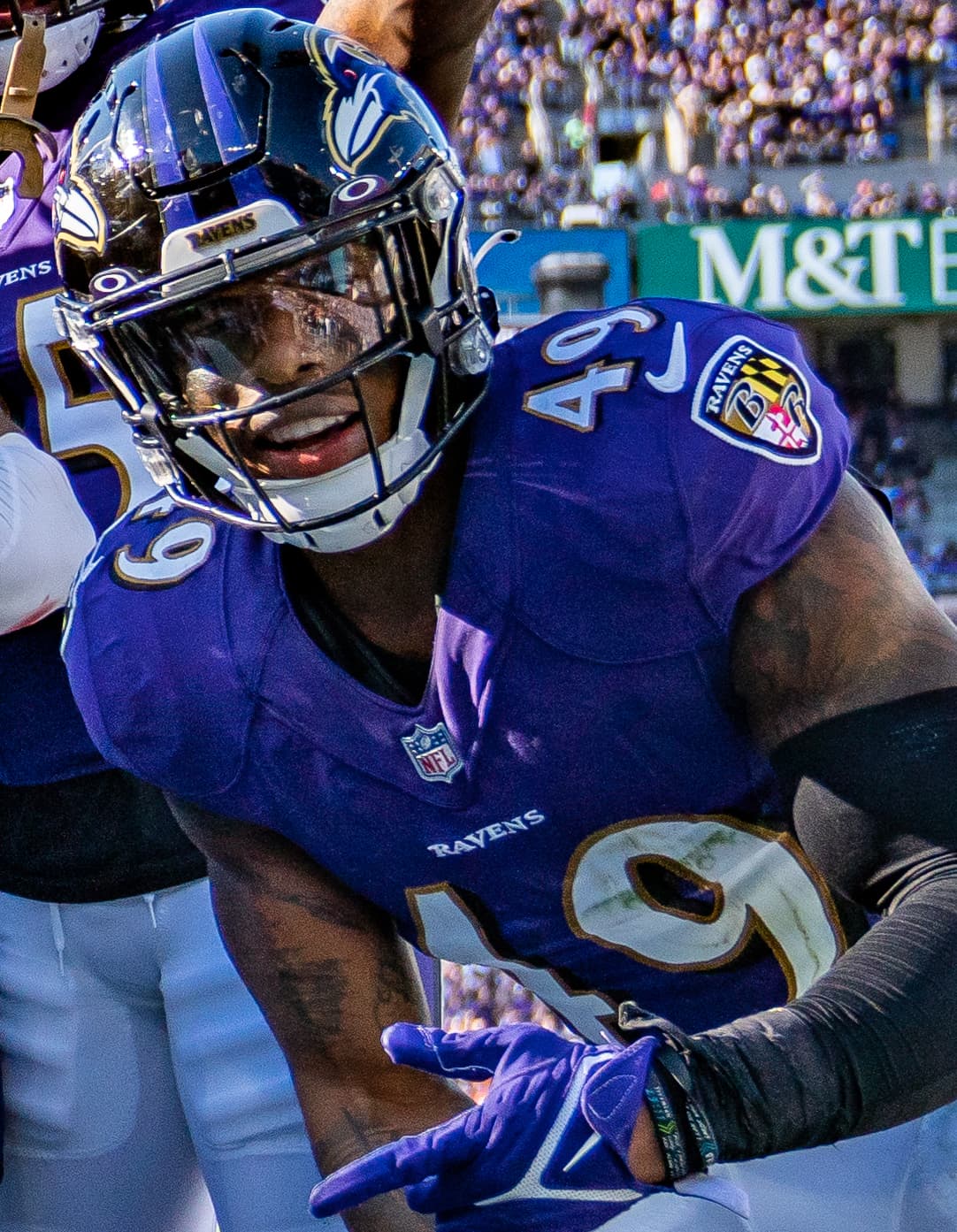
Baltimore led New Orleans in the fourth quarter of its home opener on Sunday and lost anyway. Tyler Shough found Chris Olave for a 21-yard touchdown with 9:42 remaining, and after a penalty moved the two-point attempt to the 1-yard line, Travis Etienne ran it in to tie the game at 17. The Saints then drove nine plays and 68 yards for the winning touchdown with 1:32 to play. Baltimore got the ball back, and Lamar Jackson's deep throw was intercepted by Julian Blackmon with 13 seconds left.
It is the second straight week the Ravens have surrendered a fourth-quarter lead, and the pattern is now the most important thing to know about this team from both a fantasy and a betting standpoint.
The fourth quarter is the problem
Teams that lose leads in the fourth quarter are usually doing one of two things: failing to close on defense, or failing to sustain drives on offense when the clock becomes the primary weapon. Baltimore did both on Sunday. The defense allowed a touchdown drive and then a game-winning nine-play march. The offense could not produce the first downs that would have made the second drive unnecessary.
Baltimore entered the game without Zay Flowers, who sat with a hamstring issue, which concentrated the passing game around Rashod Bateman and the tight ends. That is a narrower operation than this offense wants to run, and it showed in the late-game situations where a team needs a reliable target on third down.
The interception to end it was a low-percentage deep shot in a situation that demanded one, which is less an indictment of the throw than of the situation it was thrown in.
What it means for the Ravens' fantasy pieces
**Lamar Jackson** remains a top-tier fantasy quarterback and nothing about Sunday changes that. Quarterbacks whose teams trail late throw more, and throwing more produces fantasy points. The real-life problem and the fantasy outcome diverge here, and managers should not confuse them.
**Rashod Bateman** absorbed the target share with Flowers out and is a hold. If Flowers misses another week, Bateman is a flex play with a real floor rather than a hope.
**The Baltimore backfield** is the piece to watch. A team that keeps losing fourth-quarter leads is a team that keeps throwing in the fourth quarter, which suppresses running back value even when the early-down work is there. Baltimore backs are being scripted for games they are not playing.
**Zay Flowers** is a buy-low if his hamstring is week-to-week rather than multi-week. The target share is waiting for him.
The Saints are not a fluke
New Orleans is the more interesting story. Shough opened the season 35 of 56 for 410 yards with three touchdowns against Detroit and followed it with a road win in Baltimore that he authored in the fourth quarter. Two weeks, two high-volume performances, one of them a comeback win in a hostile building.
Chris Olave entered the week with an injury designation and caught the touchdown that started the comeback. Travis Etienne has been used as both a runner and a receiver in this offense, and he converted the two-point play that tied the game. The Saints have real, startable fantasy assets, and most of them were drafted late or not at all.
For anyone still streaming quarterbacks, Shough is the best player available on most waiver wires this week. The volume alone makes him a weekly QB1 candidate regardless of how the efficiency settles.
The Verdexed model take
There is a specific, repeatable market inefficiency in how books and bettors handle teams that keep losing close games, and Baltimore is about to sit in the middle of it.
The naive read is that a team which has blown two fourth-quarter leads is a bad team, and the line should reflect that. The sophisticated read is usually the opposite: close losses are the noisiest possible signal, they regress hard, and teams that lose them get undervalued by the market for weeks afterward. That framework, applied blindly, says buy Baltimore.
Our model does not apply it blindly here, and the reason is the mechanism. There is a difference between losing close games because of bad luck on a handful of high-variance plays, and losing them because of a structural failure to close. Baltimore's two losses share a shape: a lead, a defensive breakdown, an offense that cannot burn clock. That is repeatable in a way that a missed field goal or a tipped interception is not.
The Verdexed position is to stay off Baltimore as a bounce-back buy for at least another week, and to look instead at their game totals. A team that plays from ahead and then surrenders the lead produces high-scoring fourth quarters, and Baltimore has now played two of them. Until the defense demonstrates it can close, the over is the side with the better structural argument in Ravens games, particularly in the second half and fourth-quarter derivative markets where the pricing is thinner.
On New Orleans, the market will be slow to respect a team quarterbacked by a player almost nobody drafted. Road wins in Baltimore do not happen by accident. The Saints' numbers should be shorter than they are going to be for the next two weeks, and that lag is where the value sits.
What's next
Baltimore's Wednesday injury report is the first real information of the week. Flowers' hamstring status determines whether this passing game runs at full strength or continues to operate through a narrowed target tree.
For fantasy managers, the action items are clear. Hold Jackson, start Bateman while Flowers is out, be careful with Baltimore running backs until the game scripts stabilize, and add Shough if he is somehow still available in your league.
For bettors, the discipline is patience. The market has not yet decided what Baltimore is, and the number will be better in a week than it is today.