The Rangers Reclaimed the AL West Lead but Houston Owns the Tiebreaker
By Verdexed MLB Desk
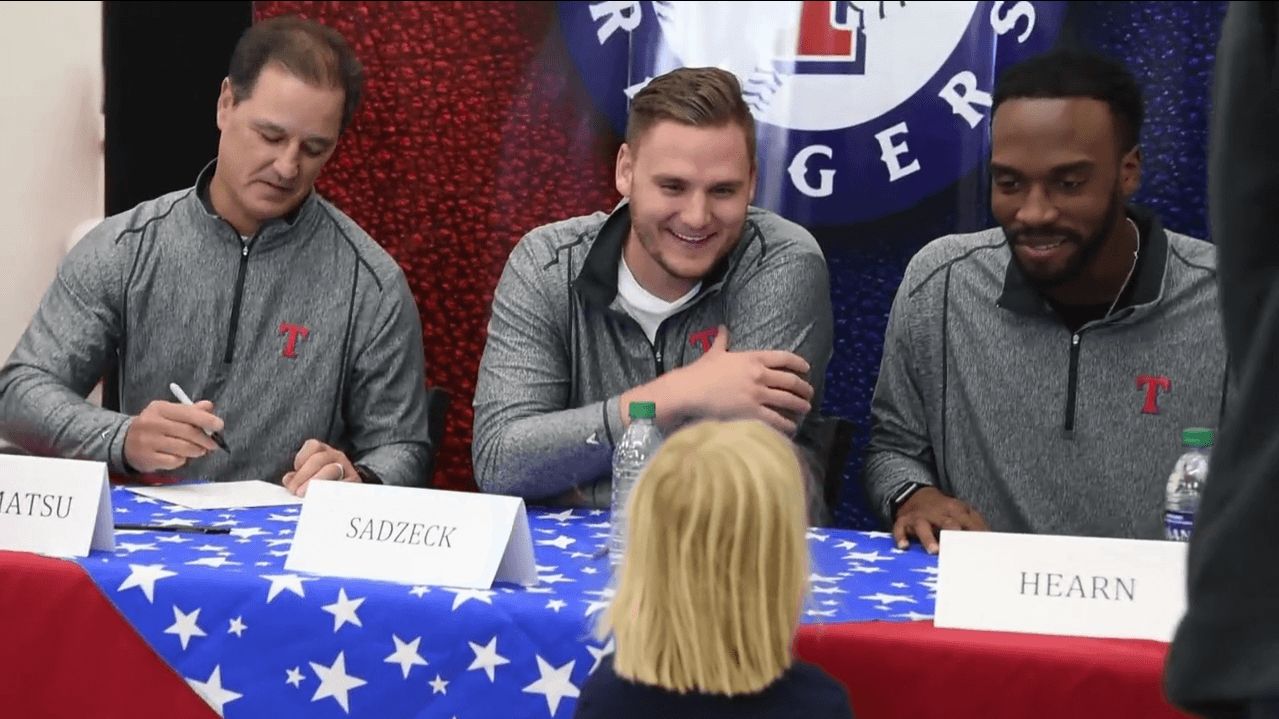
Texas has taken the AL West lead back from Houston, sitting at 78-77 with the Astros a game behind at 77-78 and seven games left on the schedule. The Rangers have a magic number of seven to clinch a playoff berth.
The complication is the tiebreaker. Houston won the season series 9-4, which means the Astros own any tie. A one-game lead in a race where the trailing team holds the tiebreaker is effectively a half-game lead, and Texas has to finish ahead of Houston outright to win the division. There is no tie that goes the Rangers' way.
The schedules diverge
The two teams close the season in very different circumstances.
Texas finishes with a three-game home series against the Mets and then travels for a season-ending three-game set at Minnesota. Playing at home for half the remaining schedule against a team fighting its own battles, then closing against an opponent with less at stake, is a workable draw.
Houston plays its final six games on the road, against Seattle and the Athletics. Six straight away from home in the last week of a division race is the harder assignment on paper, though the quality of opponent matters as much as the venue, and one of those series is against a division rival with its own reasons to play hard.
A sub-.500 division leader is the story nobody is telling
Texas leads the AL West at 78-77. That is a division leader one game over .500 with a week to play, and it says something about how the American League has sorted itself this season.
For bettors, it says something more specific: this division is going to produce a playoff team that is, by record, worse than several teams that will miss the postseason entirely. That happens periodically under the current format, and it creates a predictable market distortion in October. A division winner carries the label of a division winner, and the futures market prices that label. A 79-win or 80-win division champion is not a good baseball team; it is a team that played in the right division.
The Verdexed model take
There are two separate bets here and they point in different directions.
On the division market, the Rangers' one-game lead is worth less than the standings imply because of the tiebreaker, and our read is that the market has not fully discounted it. When a team leads by a game with a week to play, the instinct is to price the leader as a clear favorite. The correct adjustment is to treat this closer to a coin flip with a small Texas edge, because every scenario in which the teams finish level goes to Houston. That is a meaningful chunk of the outcome distribution being handed to the trailing team.
On the postseason futures market, the correct position is to be short whichever of these two teams wins the division. A sub-.500 or barely-above-.500 club entering the wild-card round against a team that won 88 or 90 games is not a live underdog in any interesting sense, and the "division winner" designation will support a price it does not deserve.
The third angle, and the most immediately actionable one, is on individual games in the final week. Both Texas and Houston are playing every game at full effort with their best available pitching. Several of their opponents are not. Minnesota and the Athletics have nothing at stake, and teams in that position rest regulars, pull starters early, and hand innings to September call-ups.
The market adjusts for this, but incompletely and usually late. Check the posted lineup and the probable pitcher before you take a price on any game involving a team that has been eliminated. The gap between a contender's A-lineup and an eliminated team's late-September lineup is larger in the last week of the season than at any other point in the calendar.
The fantasy angle
For head-to-head leagues still running, this race is a source of guaranteed playing time, which is the scarcest commodity in the final week of a fantasy baseball season.
Rangers and Astros regulars will be in the lineup every day. Their pitchers will be pushed. Managers in a one-game division race with the tiebreaker against them do not rest anybody and do not skip a start they can make.
Compare that to Milwaukee, Los Angeles and Atlanta, all of whom have clinched and all of whom are now managing workloads rather than chasing wins. The Dodgers have already trimmed their rotation to four for October. Those are the rosters to move off of, and Texas and Houston are among the rosters to move toward.
The same logic applies in reverse to the opponents. A Rangers hitter facing a Twins pitching staff in the final week, or an Astros hitter facing an Athletics staff that is auditioning arms for next year, is looking at a softer environment than his season-long numbers reflect.
What's next
Seven games. Texas needs to stay ahead outright, because a tie is a loss. Houston needs to gain one game across six road contests and the division is theirs.
The postseason begins September 29, which means this resolves in the final days of the regular season. For a division that spent the year without a dominant team, that is a fitting finish, and it is one of the few races on the board where the tiebreaker, not the standings, is the number that decides it.