The Padres and Diamondbacks Are Half a Game Apart and They Close With Three at Petco
By Verdexed MLB Desk
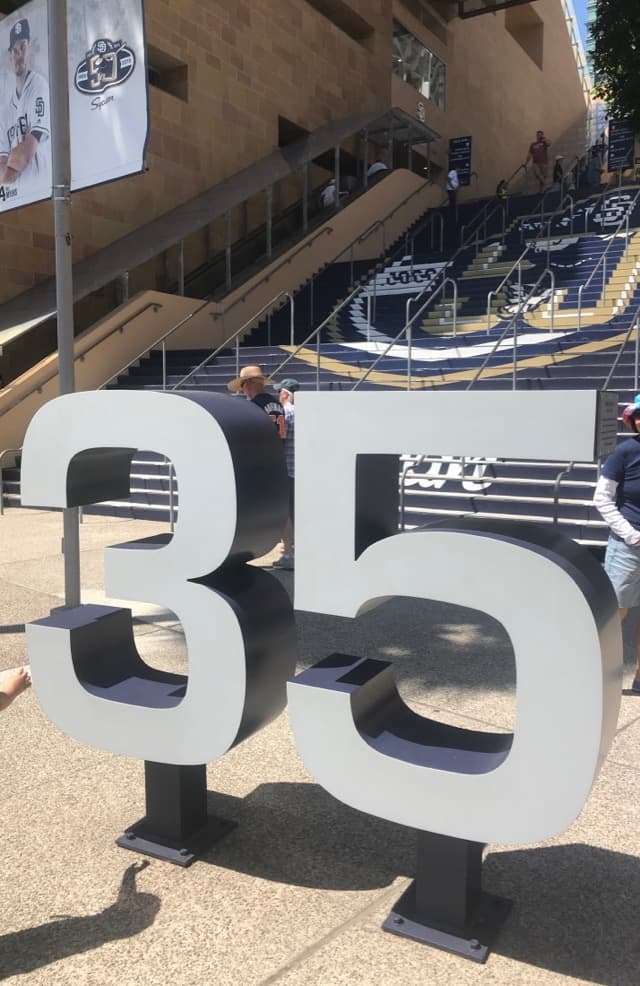
The last open spot in the National League playoff field belongs to San Diego by half a game over Arizona, and the two teams have the decency to settle it themselves: they play three at Petco Park from September 25 to 27, the final series of the regular season for both clubs. The Padres and Diamondbacks have split their season series to this point, which means whoever wins that set also wins the head-to-head tiebreaker. There is no cleaner setup left on the September board.
Where the race stands
The top two National League wild cards are effectively settled, with Philadelphia and Chicago holding them and the Brewers, Dodgers and Braves in control of their divisions. The third spot is the only live ticket, and it has been a two-team race for most of the month, with San Diego and Arizona trading the position back and forth.
The underlying profiles differ in a way that matters. San Diego has been the better run-prevention club, carrying a positive run differential built on pitching and defense. Arizona has scored more but allowed considerably more, producing a differential barely above even. Over a 162-game sample, those two paths can produce similar records. Over ten games, the lower-variance team is the safer projection, and that is San Diego.
The schedule is the real separator
Before the head-to-head finale, the two clubs face materially different slates. Arizona has a three-game set against the Yankees on its remaining schedule, which is the single toughest series either team has left. San Diego's path over the same stretch is softer.
This is where races are decided, and it is systematically underpriced by casual observers who look only at the standings. A half-game deficit against a team with an easier week is worse than a half-game deficit against a team with a harder one, and Arizona is carrying both disadvantages at once. The Diamondbacks need to hold serve against a playoff-caliber opponent just to arrive at Petco level.
The tiebreaker rules matter now
Major League Baseball no longer plays a Game 163 for wild card seeding. Ties are broken by head-to-head record first, which is why the Petco series carries double weight: it decides both the standings and, if the teams finish level, the tiebreaker.
The scenario to game out is a split heading into the final weekend. If San Diego enters the series with a one-game lead, it can afford to lose two of three and still advance on the tiebreaker as long as it takes one. If Arizona enters trailing by one, it needs at least two of three to force the issue, and a sweep to control its own fate cleanly. Anyone betting this race needs to be pricing those branches, not just the raw win totals.
The Verdexed model take
The model gives San Diego a clear edge, and the margin is larger than the half-game in the standings would suggest. The inputs: a better remaining schedule, a better run-prevention profile, home field for the decisive series, and the split head-to-head record that makes a tie functionally a coin flip rather than a loss.
Run the remaining schedule through the model and San Diego projects to the third wild card in a comfortable majority of simulations, with the distribution skewed further by Arizona's Yankees series. The model's read is that the market price on Arizona to make the postseason has not fully adjusted for the schedule asymmetry, and that San Diego to clinch is the more accurately priced side of the two.
The other lean worth flagging: the model likes the Padres' pitching staff to play up in a three-game home series with everything on the line, which is a point in favor of unders and pitcher strikeout overs in that Petco set rather than a shootout narrative.
Betting angle
San Diego to make the playoffs is the position, and it should be taken now rather than after the Diamondbacks play the Yankees. The number will shorten if Arizona drops that series, and it will lengthen only in the scenario where Arizona wins it, which is the less likely branch.
For the Petco series itself, wait. Petco is a pitcher's park, both teams will be starting their best available arms, and totals in a high-leverage September series between familiar opponents tend to be set honestly. The value there will be in individual pitcher props rather than sides or totals.
If you want a long shot, Arizona to win the Petco series outright plus San Diego to still make the playoffs is a correlated parlay that pays off in the exact scenario the standings currently point toward: the Padres arriving with a cushion and losing the series without losing the spot.
The fantasy angle in the final week
For head-to-head fantasy leagues still running, these two clubs are the last two National League teams whose regulars are guaranteed to play every inning of every game. Everyone else in the NL is either eliminated or clinched, and clinched teams rest people.
That is a substantial edge in the final scoring week. Padres and Diamondbacks hitters should be started over comparably ranked players on Milwaukee, Los Angeles or Atlanta, whose managers will be managing workloads for October. The same logic applies to closers: San Diego and Arizona will use their leverage arms in every save situation, while teams with nothing to play for will spread the ninth inning around.
What to watch
Arizona's series against the Yankees is the hinge. A sweep or a series win there and the Diamondbacks arrive at Petco with the momentum and possibly the lead. Two losses and the race is effectively over before the teams meet.
After that, watch the rotation alignment for the final weekend. Both managers will be trying to line up their best three starters for Petco, and whoever has to burn an arm earlier in the week to stay alive loses the chance to set up the series that decides it.