The NFL's Record Nine International Games Are a Betting Edge Hiding in the Schedule
By Verdexed Analytics
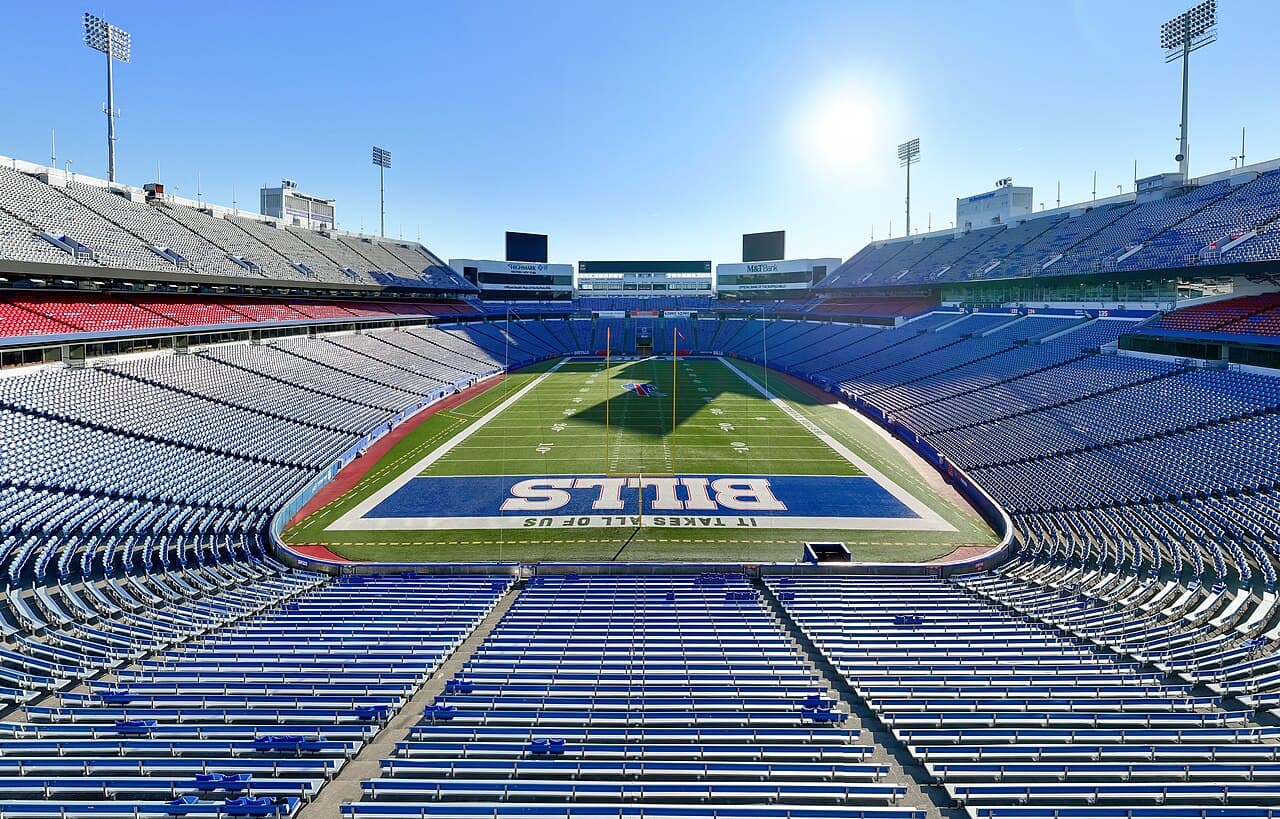
The NFL will play nine international games in 2026, the most in league history, spread across four continents, seven countries, and eight stadiums between September 10 and November 22. Melbourne, Rio de Janeiro, London, Paris, Madrid, Munich, and Mexico City all host, with London taking three consecutive games across two venues.
For bettors and fantasy managers, this is not a novelty item. It is nine games in which the standard modeling assumptions about rest, travel, and home-field advantage do not apply, and markets are demonstrably slower to price the unusual than the routine.
The slate
The international schedule opens in Melbourne on Thursday, September 10, with the 49ers facing the Rams at the Melbourne Cricket Ground, the first NFL regular-season game played in Australia. Rio de Janeiro follows on Sunday, September 27, with the Ravens and Cowboys at Maracana Stadium. London hosts three straight games, two at Tottenham Hotspur Stadium and one at Wembley, before the slate continues through Europe and finishes in Mexico City.
Two of those nine games carry the most extreme travel burdens the league has ever scheduled: Melbourne, which sits fourteen to seventeen time zones from the continental United States depending on the origin city, and Rio, which is a shorter flight but a full overnight one.
What the research actually says
The evidence on NFL travel effects is more nuanced than the folk wisdom. The consistent findings across the literature are these.
Direction matters more than distance. Eastbound travel, which shortens the body clock day, degrades performance more reliably than westbound travel of equal distance. A team flying from the West Coast to London loses more than a team flying from London back.
Recovery time is roughly one day per time zone. That is the standard clinical estimate for circadian resynchronization, and it means no team playing in Europe on a normal weekly schedule is fully adjusted at kickoff. Teams that fly early in the week are meaningfully better off than teams that fly Friday.
The following week is the underrated part. The post-international week, when teams return home and often get a bye, is where the schedule effect shows up in the standings. Teams without a bye after an international game are the ones to fade.
Neutral-site home advantage is not zero. The designated home team still gets locker-room logistics, uniform choice, and crowd support in most markets, but the standard three-point home edge does not survive intact.
Where the market is exploitable
Books price international games competently at the headline level. What they price less carefully is the interaction between a long-haul game and the surrounding schedule, because it requires modeling two weeks rather than one.
The three specific angles worth tracking:
The Melbourne opener has no base rate. Neither team has ever played a regular-season game in Australia, no NFL team has, and the flight is the longest in league history for a regular-season contest. Any line on that game is an educated guess. The 49ers and Rams are division rivals who know each other well, which is itself a variance-reducing factor that argues for the game landing close to a small number, but the honest position on a game with no historical precedent is to pass rather than to guess more confidently than the book.
The London cluster. Three consecutive weeks of games in the same market creates a compounding effect for the second and third home-designated teams, whose fields and facilities are being used repeatedly. This is a marginal factor and it is genuinely never priced.
Post-trip letdown. The single most reliable international angle historically is fading teams in the week after they return, particularly those that do not have a bye. Check each participant's Week+1 schedule the moment the international matchups are on your board.
The Verdexed model take
Verdexed's model applies an explicit travel adjustment built from time-zone delta, flight direction, and days between games, rather than a flat neutral-site correction. The largest adjustments in the model's 2026 schedule are, unsurprisingly, on the Melbourne game and on the post-Melbourne week for both participants.
The model's structural view is that the market prices the game and ignores the week after. That gap is small in expectation, on the order of a fraction of a point per game, but it is persistent and it applies to eighteen team-weeks across the season rather than nine.
Fantasy fallout
International games have two consistent fantasy signatures.
Kickers get worse. Unfamiliar surfaces, different ball-handling conditions, and stadium geometry built for other sports. Fade kickers in international games as a default.
Passing volume falls slightly. Teams playing in unfamiliar conditions call more conservative games, particularly in the first quarter. That mildly suppresses receiver ceilings and mildly helps running backs.
The more useful fantasy application is roster planning. Teams playing internationally often have their bye the following week, which creates awkward two-week gaps in your lineup. Identify which of your projected starters are affected before your draft, not in Week 8 when you cannot cover it.
What to do
Put the nine international dates in your calendar now, alongside each participant's following-week schedule. For bettors, the actionable position is not on the international game itself; it is on the week after, where the schedule effect is real and the pricing attention is not.
For fantasy managers, note the bye-week interactions on draft day and discount kickers in international matchups. Neither of these is a large edge. Both are free.
What's next
The first of the nine arrives in three weeks. Melbourne on September 10 will generate the first real data point about how NFL teams handle a trans-Pacific regular-season trip, and whatever happens there will be over-extrapolated by the market for the rest of the season. That over-extrapolation, more than the game itself, is where the money will be.