The Mavericks Are Shopping Klay Thompson and a Buyout Is Not on the Table
By Verdexed NBA Desk
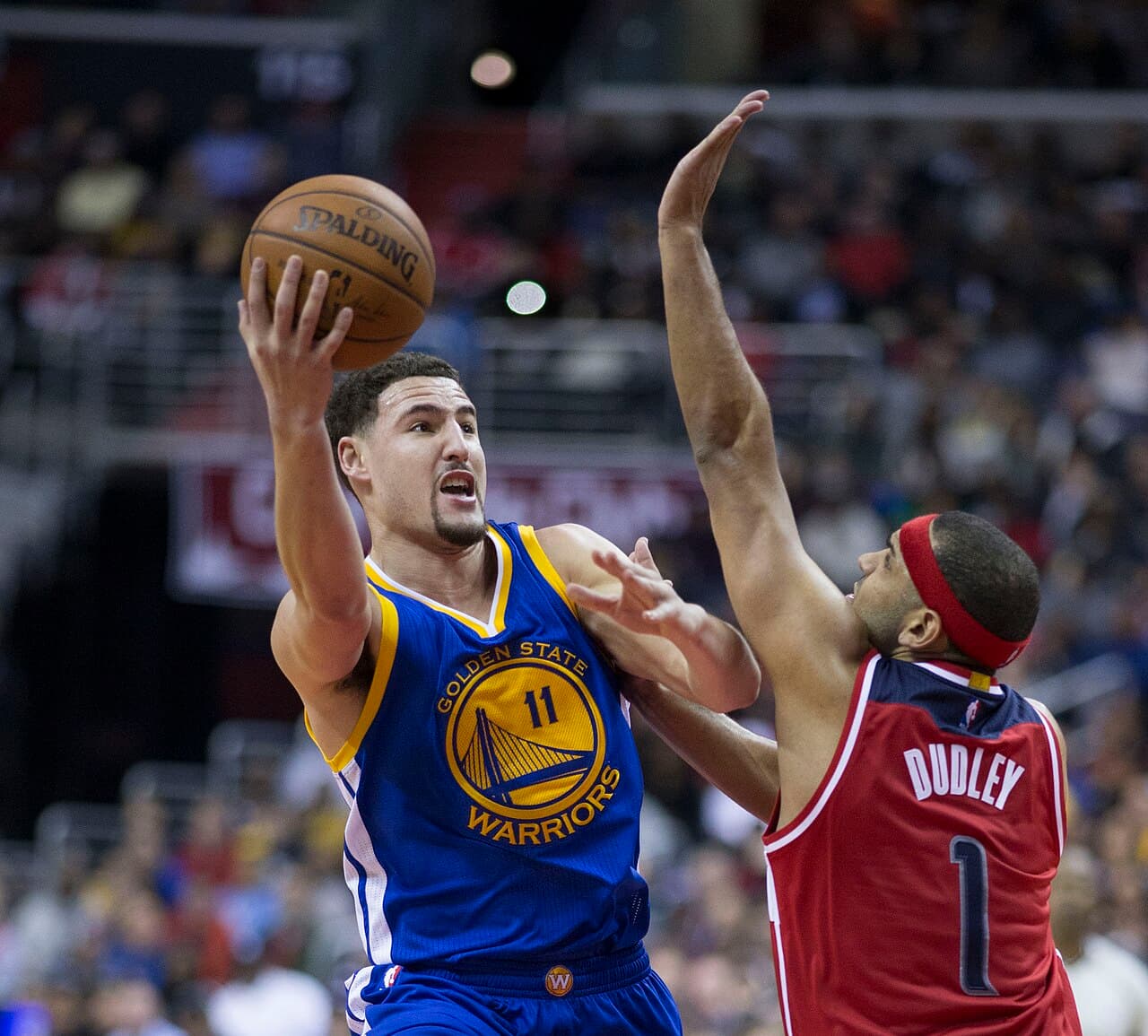
Dallas has made Klay Thompson available in trade talks as he enters the final year of his contract at roughly $17.5 million, according to reporting from Hoops Rumors, while a separate report from ClutchPoints indicates a buyout is not currently being discussed between the two sides. Miami has been repeatedly mentioned around the league as a suitor for the veteran wing.
That distinction, trade market open and buyout market closed, is the entire story for anyone trying to figure out where Thompson plays next season and what he is worth in a fantasy draft.
Why there is no buyout
Buyouts happen when a team wants salary relief or when a player is willing to leave money on the table for a better situation. Neither condition is currently in place. Dallas sits roughly $2.3 million under the tax line, which means the financial urgency that usually drives an August buyout does not exist. And the Mavericks have no incentive to release a $17.5 million expiring contract for nothing when that contract is a useful trade asset in its own right.
Expiring salary has real value in the current collective bargaining environment. It is the currency that makes midseason trades legal, and a team that wants to consolidate at the deadline needs matching salary that comes off the books. Dallas giving that away in August for zero return would be poor asset management, regardless of what Thompson prefers.
The player's leverage is limited accordingly. Thompson can express a preference, and reporting suggests he has interest in a contending situation, but he cannot force a release from a team with no financial reason to grant one.
What Thompson is at this point
He is 36 and coming off a season in which he averaged a career-low 11.7 points in 21.7 minutes per game. He also shot 38.3 percent from three, which is the number that matters and the reason multiple contenders remain interested.
That is a specific, narrow, and still valuable player: a bench shooter who spaces the floor, requires defensive attention, and can be hidden defensively in the right lineup. It is not a player who solves a rotation problem, and it is not a player who returns to a starting role on a good team. It is a specialist, and specialists win playoff games when deployed correctly and lose them when deployed as anything else.
Fantasy fallout
In standard fantasy formats, Thompson at 21.7 minutes per game is a marginal roster hold at best, and the trade destination barely changes that. A bench shooter who plays low twenties in minutes produces threes and very little else, which makes him a category specialist in the same way he is a rotation specialist.
Where the destination matters is in the tail. A move to a team with a thin wing rotation could push him back toward high-twenties minutes and make him a genuine threes-and-points contributor in deeper leagues. A move to a team already deep on the wing, which describes most of the contenders reportedly interested, keeps him exactly where he is.
The more useful fantasy read is on the other side of any trade. Dallas moving an expiring contract means Dallas is taking salary back, and whoever comes the other direction inherits a rotation spot on a team whose depth chart has been in flux. That incoming player is the one worth tracking for fantasy purposes, not Thompson.
For anyone in a Miami-adjacent dynasty context, the calculation is the same: adding a low-minutes shooter compresses the minutes available to younger wings on that roster, which is a small negative for the developmental assets behind him.
The Verdexed model take
Our minutes projection model treats age-36 role players as one of the least stable inputs in basketball, because their playing time is decided week to week by coaching preference rather than by a fixed depth chart. Thompson's projected minutes carry a wide band regardless of destination.
What the model does say with some confidence is that his per-minute production is still functional in one category. A 38.3 percent three-point rate at his volume is above the level at which a specialist stops being playable, and it is the reason our roster-value projection has not written him off entirely even as the counting stats have declined.
The projection difference between staying in Dallas and moving to a contender is smaller than the discourse implies. Both scenarios have him in the low twenties in minutes as a shooting specialist. The difference is the quality of the possessions, which matters enormously for winning basketball and very little for fantasy scoring.
Betting angle
The market to watch is not Thompson's own props, which will be thin and unreliable for a bench player. It is the futures market for whichever team acquires him.
The general principle here is that championship futures overreact to name recognition. A team adding a four-time champion with a recognizable name will typically see its title odds shorten by more than the on-court value justifies, because retail betting money follows familiar names. If Miami or any other contender lands Thompson and the number moves meaningfully, the correct read is usually to fade the move rather than follow it.
The exception would be a team with a genuine and specific shooting deficiency, where a specialist actually addresses the roster's binding constraint. That is a small number of teams, and identifying whether the acquiring club is one of them is the whole analysis.
What's next
The trade market for role players on expiring contracts typically stays quiet through the rest of the offseason and reopens in December, when teams can aggregate salary and when rotations have revealed their actual weaknesses. Dallas has no deadline pressure to move him before camp, and no financial pressure to buy him out at all.
The most likely outcome, based on what has been reported, is that Thompson opens the season in Dallas and becomes a midseason trade candidate once the Mavericks know what their roster is. Fantasy drafters should plan for that version and treat any earlier resolution as a bonus.