The Cavaliers Send Dennis Schroder to Charlotte for Tre Mann
By Verdexed NBA Desk
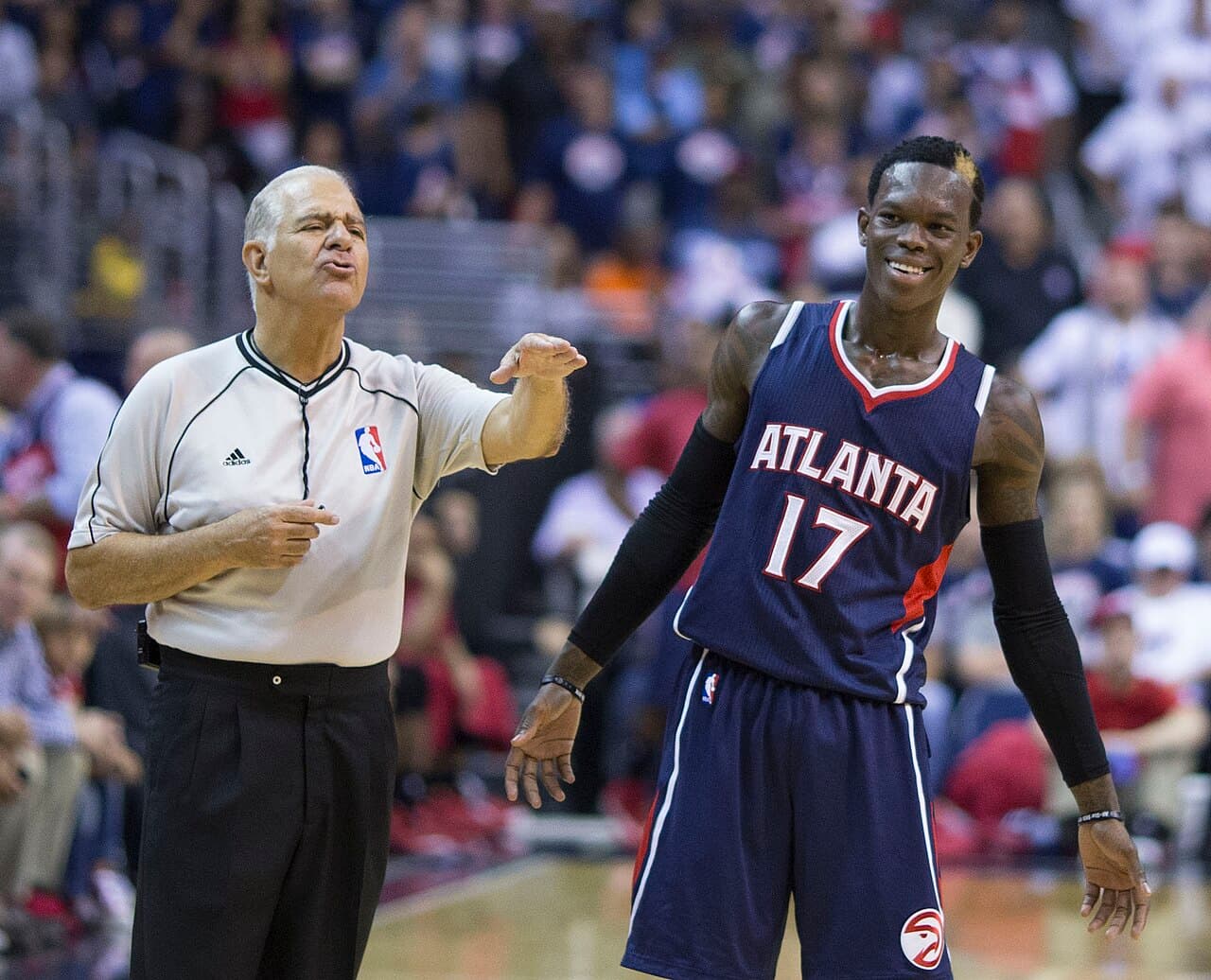
The Cleveland Cavaliers are sending veteran guard Dennis Schroder and cash to the Charlotte Hornets for guard Tre Mann, a deal reported over the weekend and worked on for months by the two clubs and Schroder's representation. It is a small trade with two clear purposes: Cleveland gets under its tax and apron thresholds with room to keep operating, and Charlotte gets an experienced ball handler for a roster that has almost none.
For fantasy managers drafting in September and October, the relevant part is the second-order effect on two backcourts that were already unsettled.
What Cleveland gets
The salary math is the headline. The trade provides Cleveland with flexibility to continue pursuing roster moves and creates tax savings that keep the team comfortably under the second apron, which is the operative constraint for a club at this stage of its cycle. Teams above the second apron lose access to most roster-building tools, and Cleveland's front office has evidently decided that keeping those tools matters more than keeping a 32-year-old backup point guard.
Mann is the return, and he is a genuine piece rather than salary filler. The 18th pick in the 2021 draft averaged 5.5 points in 53 games with Charlotte in 2025-26, numbers that reflect a limited role more than a limited player. He is younger than Schroder by a decade and has shown flashes of shot creation when given rotation minutes.
From a fantasy standpoint, Mann is not a draft consideration in standard leagues. He is a deep-league watch-list name whose value depends entirely on whether Cleveland's guard rotation opens up, which the club's other moves this offseason will determine.
What Charlotte gets
The Hornets are in the middle of a full reset. LaMelo Ball was traded to Minnesota earlier in the offseason, Miles Bridges was sent to Phoenix, and the offense now runs through Brandon Miller and Kon Knueppel with Coby White, signed to a three-year deal in free agency, handling primary point guard duties.
Schroder slots in as the backup behind White, with rookie Christian Anderson Jr. behind him. That is a coherent depth chart for the first time in a while. Schroder averaged 10.8 points and 4.9 assists over 70 games last season split between Sacramento and Cleveland, production that is entirely replicable in a larger role on a worse team.
The fantasy read on Schroder is the classic veteran-on-a-rebuilding-team profile: more minutes than his talent warrants, real assist volume, and a nonzero chance he is traded again by February. In deep leagues and in category formats that reward assists, he is a late-round add. In 12-team leagues, he is a streamer.
Fantasy fallout
The player most affected is Coby White. Adding a competent backup point guard reduces the minutes ceiling for a starter who, on a roster this thin, might otherwise have played 36 minutes a night out of necessity. White remains the primary creator and the best fantasy asset in the Charlotte backcourt, but the version of his season where he posts a career-high usage rate because there is nobody else to hand the ball to just got less likely.
That is a modest downgrade, not a reason to move him down a tier. White's role is secure and his shot volume is not in question. The change is at the margins of minutes.
Brandon Miller and Kon Knueppel are essentially unaffected. Both project as high-usage wings on a team without a clear alternative, and a backup point guard does not change that. If anything, Schroder's playmaking is a small positive for both, because rebuilding teams that cannot generate clean looks tend to produce inefficient volume, and inefficient volume hurts fantasy value in percentage categories.
On the Cleveland side, the fantasy impact is close to zero in the short term and potentially meaningful later. Freeing up flexibility below the second apron is how a team acquires a rotation player in-season. Cavaliers managers should watch for what the club does with that room rather than what it did in this trade.
The Verdexed model take
Our projections move Charlotte's team assist rate up slightly and White's projected minutes down by roughly two per game, which nets out to a small negative for his per-game fantasy line and a small positive for the team's offensive efficiency.
The betting relevance is limited but not zero. Charlotte's win total sits near the bottom of the league, and adding a veteran guard to a young roster is the classic mechanism by which a projected 20-win team wins 26. Rebuilding clubs with competent backup point guards lose fewer games by 20 points and cover more spreads as large underdogs than rosters without one. That is a live angle for anyone who bets NBA sides in November against bad teams, and it is not reflected in a win total set before this trade.
Cleveland's projection does not move. Schroder was a rotation piece, not a rotation anchor, and the flexibility gained is worth more than the minutes lost.
What's next
The question for Cleveland is what the apron room buys. Front offices do not execute salary-clearing trades in mid-August for their own sake, and the reporting around this deal explicitly framed it as setting up further moves. Fantasy managers with Cavaliers exposure should hold their draft boards loosely until that follow-up arrives.
For Charlotte, the question is the rotation order. If Schroder opens the season playing 24 minutes a night, he is a useful deep-league asset and Coby White is a slightly diminished one. If he plays 18, nothing changes for anyone. Preseason minutes distributions will answer it, and in a rebuilding backcourt, they answer it quickly.