 MLB2026-07-29
The Angels Are Listening on Players Controlled Past 2026: Jo Adell, Reid Detmers and Jose Soriano
By Verdexed MLB Desk
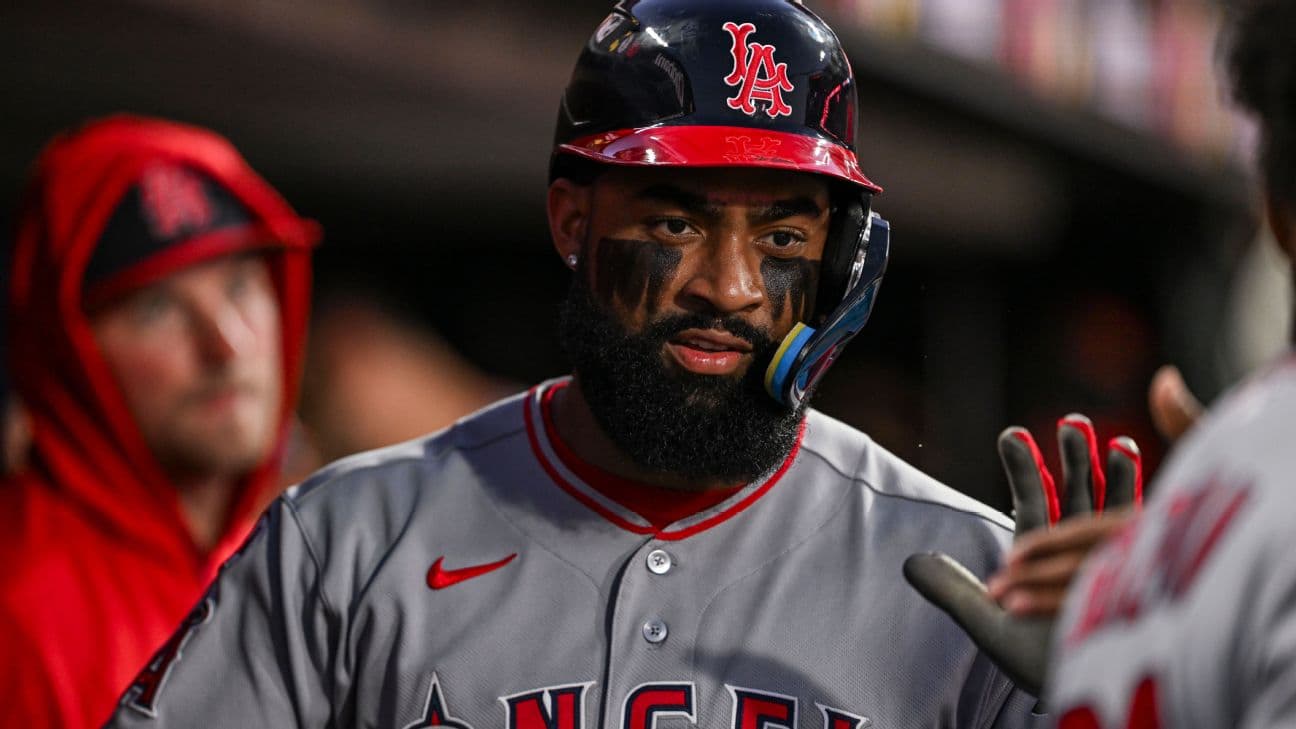
The Los Angeles Angels are among the few unambiguous sellers in a deadline market crowded with buyers, and reporting this week suggests they intend to use that position aggressively. ESPN's Alden Gonzalez has reported the Angels are very open to trades involving players controlled beyond 2026, a stance that puts outfielder Jo Adell, left-hander Reid Detmers and right-hander Jose Soriano into a market that badly needs all three profiles.
That is a meaningful escalation. Selling expiring contracts is what bad teams do every July. Selling controllable talent is what rebuilding organizations do, and it is the difference between a maintenance deadline and a reset.
Why the Angels hold leverage
The 2026 deadline has produced an unusual structure: muddled standings in nearly every division and both wild-card races have left far more clubs believing they are contenders than the standings can support. That imbalance turns the small group of committed sellers into price-setters.
The Angels are the clearest example. Reporting has described Jo Adell to Philadelphia as a persistent rumor, while Detmers and Soriano address the single scarcest commodity at any deadline, which is cost-controlled starting pitching. Adell is controllable through 2027, which limits his return relative to a longer-term asset but still places him well above a rental in value.
Los Angeles is not obligated to move any of them. That is precisely why the return should be high. A seller with control years in hand can walk away, and in a market this thin, walking away is a credible threat.
Fantasy fallout: Jo Adell
Adell's fantasy profile is the most environment-dependent of the group. He is a power bat whose production has always been driven by raw pop rather than contact skills, and his value in any given month tends to track his playing time more than his underlying performance.
A trade to a contender would be a mixed outcome. The lineup context would improve, which raises runs and RBI, but the playing-time guarantee would weaken. Los Angeles has run Adell out every day for stretches because it had no better option. A contender would not necessarily do the same, particularly against right-handed pitching.
The Philadelphia connection cited in reporting is the most interesting fantasy scenario. A power bat moving into a hitter-friendly park in a productive lineup is the kind of change that can add several home runs over two months, and it would come with better run-scoring context than anything Anaheim has offered.
Fantasy fallout: Reid Detmers and Jose Soriano
The pitching side is where the deadline math gets more favorable for fantasy managers. Both Detmers and Soriano would be leaving one of the American League's weaker run-support environments, and both would likely be joining clubs with better defenses behind them.
Wins are the most volatile fantasy pitching category and the one most sensitive to team quality, and a starter moving from a last-place club to a playoff team gains more in that category than in any other. Managers rostering either pitcher should hold through Monday for that reason alone.
The workload question is the caveat. Contending teams manage acquired pitchers with October in mind, and a starter arriving in August can find himself on a shortened leash or, in some cases, moved to the bullpen for the playoff push. That is a downside scenario for strikeout totals and innings, and it is the reason to prefer a trade to a club with a rotation hole over a trade to a club with rotation depth.
The Verdexed model take
The Verdexed model treats controllable starting pitching as the most underpriced asset class at any deadline, and this one in particular. In a market with more buyers than sellers, the clubs willing to sell control years extract prospect packages well above what rental pricing would suggest. The model's read is that the Angels' asking prices on Detmers and Soriano are more likely to be met this year than in a normal deadline, simply because the alternatives have run out.
For the Angels themselves, the model does not credit a reset with any 2026 improvement, and their remaining season markets should be treated as untouchable. The relevant projection change is on the buying side. The model's largest odds movements from an Angels sell-off would land on whichever contender acquires a controllable starter, because a rotation upgrade in August compounds through a playoff series in a way that a bat generally does not.
The betting angle worth watching is Philadelphia. If the Adell rumor converts and the Phillies also address pitching, their National League odds would move on the combination rather than on either move alone, and the market tends to price sequential acquisitions one at a time rather than in aggregate. That lag is where value lives in the final week of July.
What to do in your league
Hold Detmers and Soriano through Monday in all formats. The most likely trade outcomes improve their win projections, and the downside case is that they stay put and nothing changes.
Treat Adell as a hold in deep leagues and a drop candidate in shallow ones. His fantasy case is entirely about at-bats, and a trade to a contender is as likely to reduce those as to increase them.
In dynasty formats, watch the return rather than the departure. The prospects moving to Anaheim in these deals will be the actionable names, and controllable-pitching trades historically return the strongest packages of any deadline transaction type.
What's next
The deadline is Monday at 6 p.m. ET. The Angels have no reason to move early, and clubs holding control years typically wait for the market to come to them in the final 48 hours. The tell will be whether Los Angeles moves an expiring piece first. A club that clears its rentals early and then goes quiet is holding for the offseason; a club that keeps taking calls into Monday afternoon is genuinely willing to trade its control years.