The AL's Third Wild Card Is a Four-Team Scrum With Six Weeks Left
By Verdexed Analytics
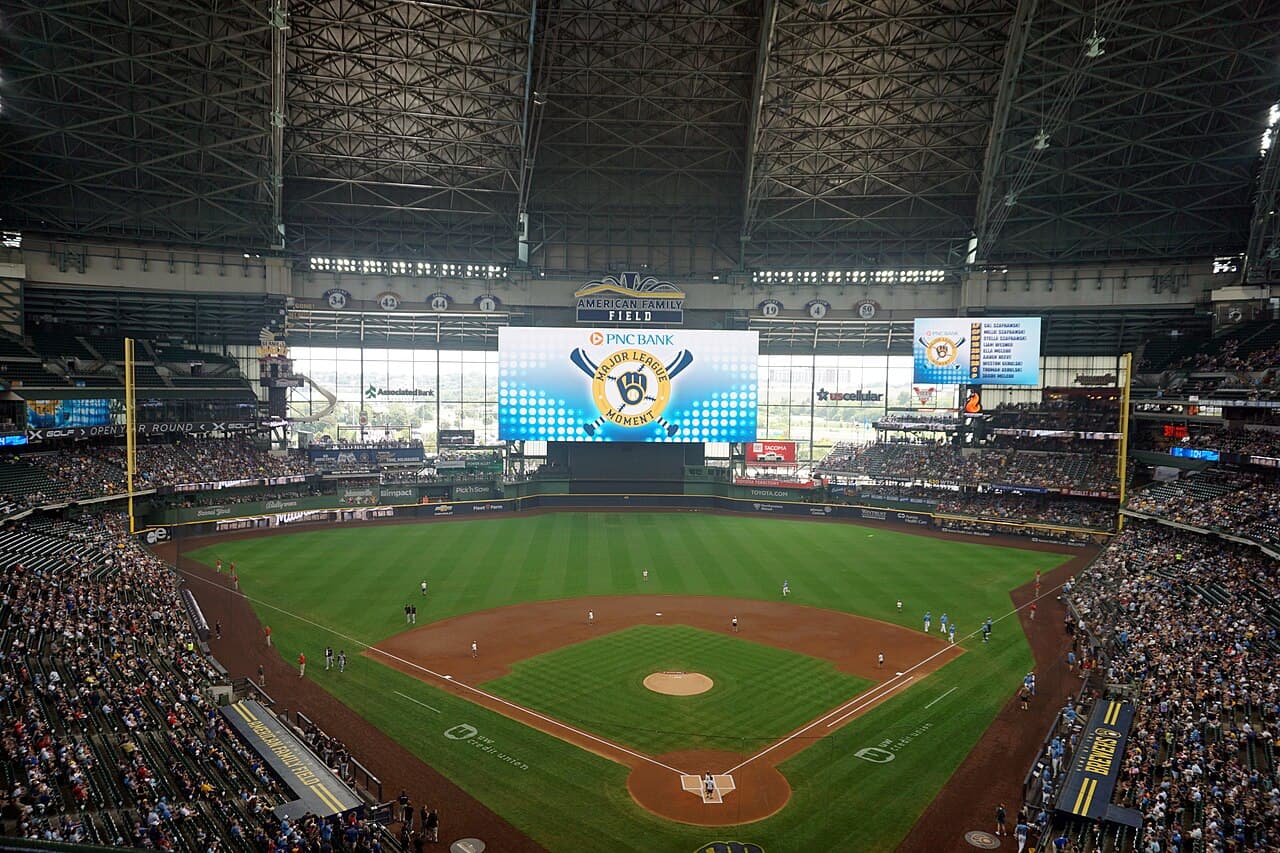
Six weeks remain in the regular season, and the shape of both wild card races has finally settled into something legible. In the American League, the New York Yankees, Boston Red Sox and Minnesota Twins occupied the three wild card positions entering Thursday, with Texas, Detroit and Cleveland packed tightly enough behind the third spot that a single bad weekend flips the order. In the National League, San Diego held the final berth with Arizona roughly a game back and a cluster of teams including Miami, St. Louis, Cincinnati and Pittsburgh still close enough to matter.
For anyone setting a lineup or a bet over the next month and a half, the practical consequence is that a large number of teams will be playing meaningful games in September. That changes everything about how rosters get used.
The AL picture
Tampa Bay has been the class of the American League, and the Yankees have built enough of a cushion in the top wild card slot that their October participation is close to settled even if their seeding is not. Boston has held the second spot.
The third spot is the real race, and it is the one worth watching for fantasy and betting purposes alike. Minnesota holding it entering Thursday with Texas, Detroit and Cleveland clustered behind is a genuinely unstable arrangement. Four teams separated by a game and change over 40 games is close to a coin flip, and the deciding factor in races like this is almost never talent. It is health and schedule.
That is the analytical point that most preview coverage misses. When teams are this evenly matched in run differential, the projection systems produce nearly identical playoff odds, and the actual outcome gets determined by which club loses a starting pitcher in the first week of September and which one draws a soft stretch of opponents.
The NL picture
Milwaukee has led the National League, and the Cubs have been strong enough to sit atop the wild card standings. Philadelphia has swung between slides and streaks, most recently regaining momentum with a four-game winning stretch.
The bottom of the NL field is messier than the AL's. San Diego holding the final berth by roughly a game over Arizona, with several teams behind them still in range, means the National League is more likely than the American to produce a September collapse. Races with more teams in contention have more variance, not less, because the leader has to hold off multiple independent challengers rather than one.
What it means for fantasy
The single most valuable thing to understand about the next six weeks is that contending teams and eliminated teams treat their rosters completely differently, and that divergence is worth more in fantasy than any individual player's talent.
Contenders shorten their bullpens. High-leverage relievers on teams in a race pitch more often and in more save situations, while relievers on teams playing out the string get used interchangeably. If you need saves, the reliever on a contending club is worth substantially more than an equally talented arm on a seller, and that gap widens every week.
Contenders also stop resting regulars. Position players on teams fighting for a wild card slot play close to every day in September, while eliminated teams give at-bats to prospects and rest veterans. For anyone in a head-to-head league heading into the fantasy playoffs, the games-played advantage of rostering hitters on contenders is real and often decisive.
The mirror image is the opportunity. Eliminated teams hand jobs to prospects, and September call-ups on non-contenders get genuine everyday runs rather than spot starts. Rosters expand on September 1, and the teams furthest from the race are the ones where a call-up will actually play.
The Verdexed model take
Our playoff odds treat remaining schedule strength as the dominant input at this point in the calendar, ahead of season-long run differential, because 40 games is a small enough sample that opponent quality swings outcomes more than underlying team quality does. That produces a different ordering than the raw standings in tight races, and the four-team American League scrum is exactly where that divergence shows up.
The general principle is that the market prices the standings and underprices the schedule. Teams a half-game back with an easier remaining slate are consistently better bets than teams a half-game ahead with a harder one, and that mispricing persists deep into September because the standings are the number everyone sees.
The second modeling point concerns the trade deadline. Teams that bought in July have had roughly three weeks to integrate additions, which is long enough that the acquired players' contributions are now reflected in results rather than in projections. Teams that sold have had the same three weeks to see their production decline. Both effects are now baked into the run differentials, which makes the current numbers more reliable than they were two weeks ago.
For betting purposes, the actionable markets in a race this tight are not the division winners, which are largely settled. They are the team-specific playoff yes-no markets on the four American League clubs bunched around the third wild card, where the true probabilities are close to even and the pricing is driven by public perception of brand rather than by schedule.
What to do this week
If you are in a roto league, start planning for the games-played squeeze now. Move to hitters on contenders where the talent gap is small, and be ruthless about relievers on sellers.
If you are in a head-to-head league with playoffs starting soon, look at your roster's September schedule rather than its season stats. A hitter with a favorable set of opponents on a team that will play him daily is worth more over three weeks than a better hitter who will get rest days on an eliminated club.
And if you are betting, wait for the September schedule to become the story. The market will reprice these races on results. The edge is in pricing them on opponents.