The 49ers Are 12.5-Point Favorites Over Miami and That Is the Biggest Number of the Young Season
By Verdexed Analytics
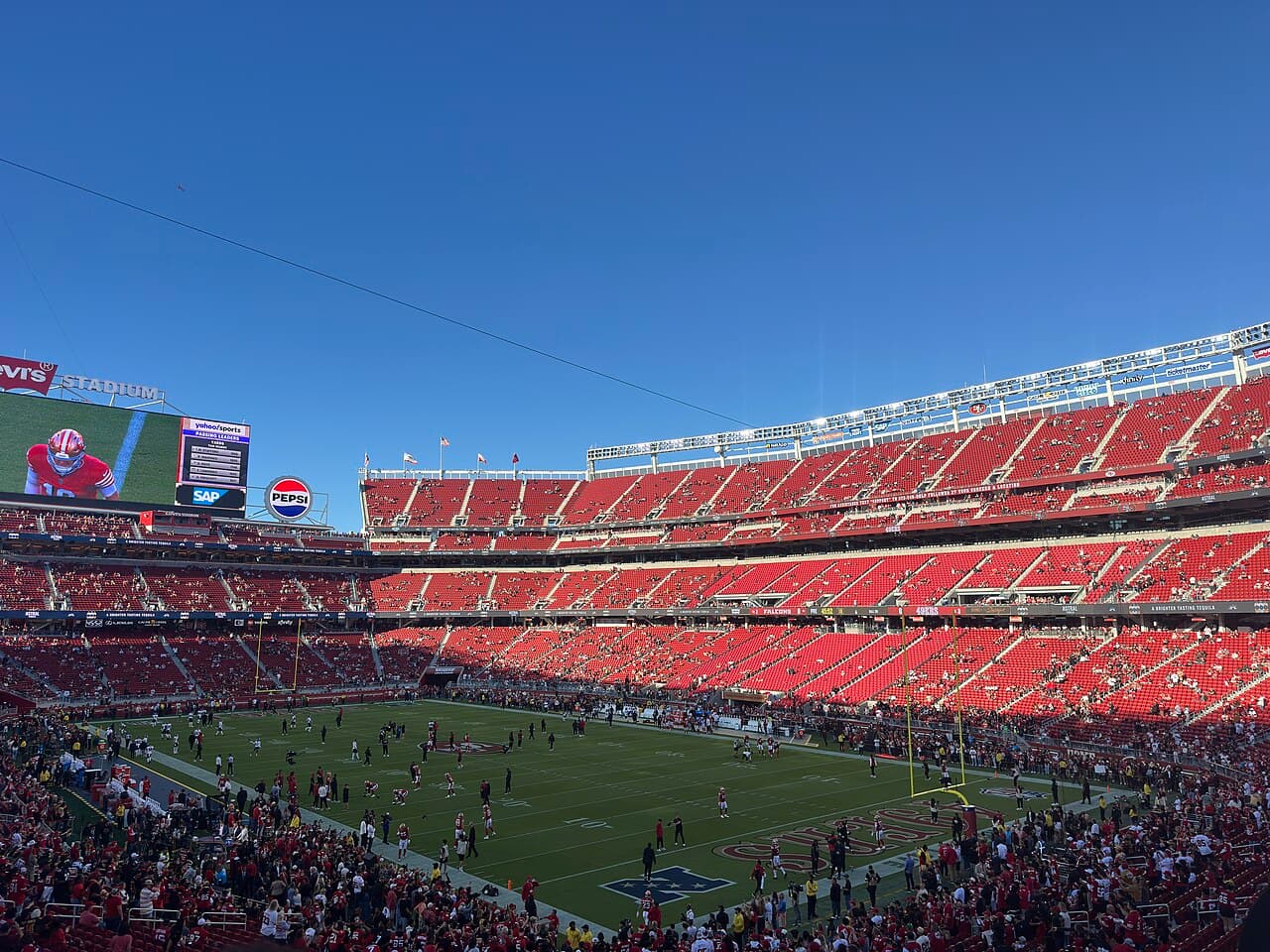
San Francisco is favored by 12.5 points over Miami at Levi's Stadium on Sunday, the largest spread on the Week 2 board and the largest number posted so far this season. Some books opened Miami as high as a 13.5-point underdog before the market settled. The Dolphins totaled 13 points in a Week 1 loss to Las Vegas; the 49ers beat the Rams 27-7. Double-digit September spreads are where recreational money and sharp money most reliably disagree, and this one has a specific structural problem underneath it.
How the number got here
Two data points built this line. San Francisco handled the Rams, a team that entered the season with Super Bowl expectations and scored seven points in the process, and Miami's offense looked inert in a loss to a Raiders team nobody has ranked highly. In a week when the sample size is one game for everybody, the market has no choice but to overweight what it just saw.
The implied probability at -12.5 puts San Francisco somewhere in the high 80s to 90 percent range to win outright. That is a number normally reserved for late-season spots involving eliminated teams and backup quarterbacks, not Week 2 with two rosters that were both considered playoff-adjacent in August.
The total, meanwhile, sits in the low 40s. That combination is the tell. A 12.5-point spread with a low total means the market expects San Francisco to win a grinding, low-possession game rather than a shootout, and it implies a Miami team total in the low teens. Betting the favorite there requires believing the Dolphins score roughly what they scored against Las Vegas, again, on the road.
The case against laying the number
Double-digit road underdogs in September cover at a rate that has historically frustrated favorite backers, and the mechanism is not mysterious. Large favorites in low-total games have fewer possessions to build a cover. A single early score, a turnover, or a long field-goal drive by the underdog compresses the margin, and coaching staffs pull off the accelerator in the fourth quarter of a comfortable win rather than chasing a cover.
San Francisco also has its own attrition. The 49ers lost Alfred Collins for the season in their Melbourne opener, and their backfield usage in Week 1 was strange enough that Kaelon Black out-carried Christian McCaffrey, with McCaffrey subsequently described as week to week with a calf. A team managing a star running back's calf in a game it is expected to lead comfortably is not a team that runs up the score.
That is the core argument: the situation that produces a 12.5-point line is also the situation that produces a 10-point win.
The case for it
The counterargument is real and should not be dismissed. Miami's offense produced 13 points against a defense that is not elite, and the film that generated that result does not fix itself in six days. San Francisco's defense, even without Collins, is built to punish a struggling offense, and Kyle Shanahan's scheme creates explosive plays against defenses that have to respect both the run and the play-action shot.
If Miami cannot sustain drives, the 49ers get extra possessions, and extra possessions in a mismatch are how 12.5-point spreads turn into 24-point wins. That scenario is live. It is just not as likely as the price implies.
The Verdexed model take
The model prices this game closer to San Francisco by nine and a half to ten, which makes Miami plus 12.5 the play and makes the number a legitimate edge rather than a coin flip. The gap comes almost entirely from the model refusing to move its power ratings as far as the market did on one week of results.
Both of the data points driving this line are single games against opponents whose true quality is unknown. The Rams scoring seven points is as likely to be a Rams problem as a 49ers achievement. The Raiders holding Miami to 13 is as likely to be a Miami problem as a Raiders achievement. The model's preseason priors for both teams have not moved enough to justify a 12.5-point separation.
The model also flags the McCaffrey situation as a material input the market has underweighted. A backfield split that already looked committee-shaped in Week 1, with the lead back nursing a calf, is a backfield that produces fewer explosive runs and shorter scoring drives.
Betting angle
Miami plus the points is the recommendation, with the caveat that the number has already come down from its opener and further movement toward 11.5 or 11 would make it a stronger position. Do not chase this above 12.5.
The Miami moneyline is not a play. This is a cover bet, not an upset bet, and the distinction matters for bankroll purposes.
The total under is a correlated position that the model likes independently. A low-possession game in which San Francisco leads and manages a running back's calf is a game that finishes in the 30s, and the low-40s number is reachable in the wrong direction.
The first-half spread is the most interesting derivative. If you believe San Francisco is the better team but will not press the margin late, buying the 49ers in the first half at a meaningfully smaller number is a cleaner expression of that view than laying 12.5 for four quarters.
DFS and fantasy implications
For DFS, this game is a leverage spot in both directions. San Francisco's skill players will carry elevated ownership because of the spread, but the low total caps their ceilings, and the backfield uncertainty makes the running back position a minefield. Mike Evans, who looked like Brock Purdy's primary target in his first game as a 49er, is the cleanest play in the game and will be priced accordingly.
The contrarian angle is Miami pass-catchers. A team expected to trail by two scores throws, and a low-owned receiver on a big underdog is the classic tournament leverage play. It is a low-probability, high-payoff position, which is exactly what it should be.
In season-long leagues, start your San Francisco assets and be honest about the risk in the Miami ones. A 13-point offensive output is not a one-week aberration until it is proven to be one.