 NFL2026-07-28
Stefon Diggs Is Still Unsigned as Camps Open: The Commanders Fit and the Fantasy Math
By Verdexed NFL Desk
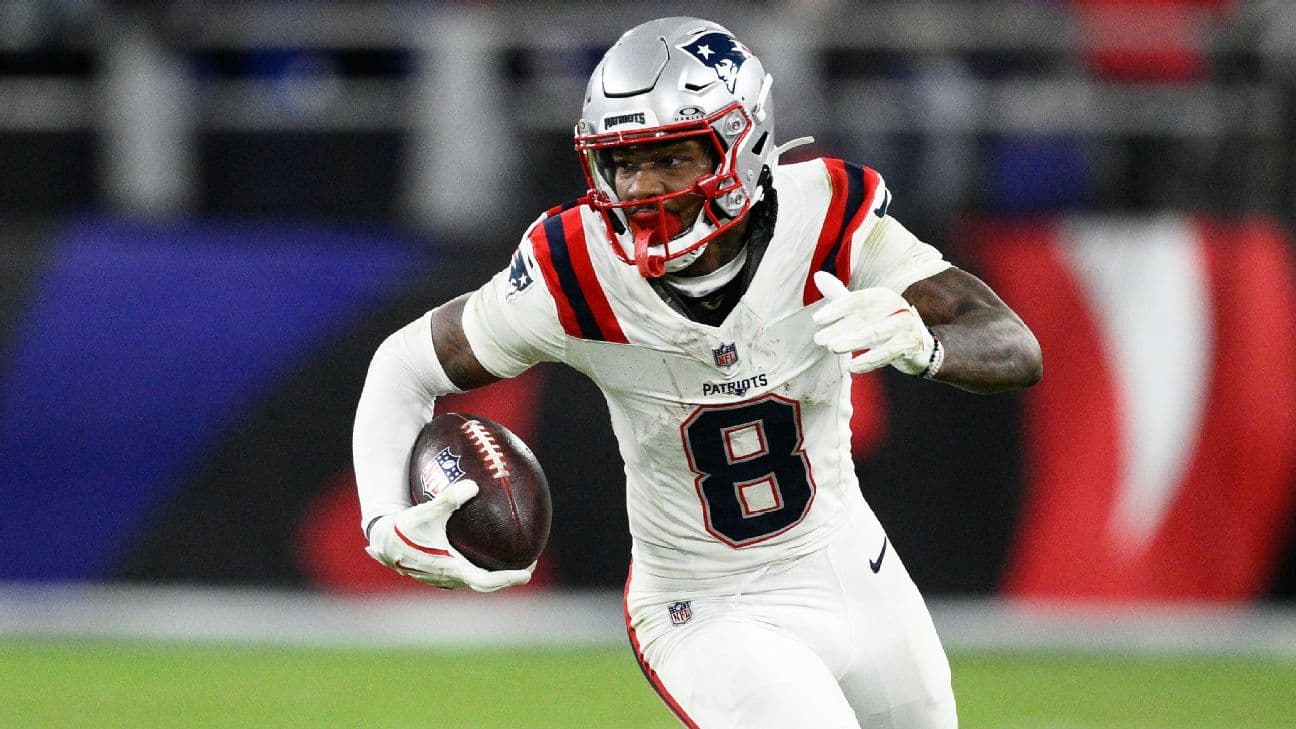
Stefon Diggs is unsigned as all 32 teams report for training camp, which makes him the most accomplished receiver still on the open market. Reporting this month indicates roughly five teams have expressed interest, and the Washington Commanders have surfaced repeatedly as a destination that intrigues him. Diggs is a Gaithersburg, Maryland native who played collegiately at Maryland, and he has said publicly he is not ruling out a homecoming.
Nothing firm has emerged. Veteran free agents at this stage of the calendar routinely wait until after camps have shaken out roster needs, which means a signing in mid-August is at least as likely as one this week. But the fantasy consequences of where he lands are large enough that the situation deserves attention before it resolves rather than after.
Why Washington keeps coming up
The Commanders have been the most-discussed fit for months, and the reasoning is not purely sentimental. Washington has spent the offseason chasing a proven veteran receiver, most visibly through the unresolved Brandon Aiyuk situation, which remains stuck because San Francisco has Aiyuk on a left squad designation and neither side has moved. If Washington concludes that path is closed, Diggs becomes the obvious alternative: no trade compensation, no injury rehab to inherit, and a player who has reportedly framed himself as a quality second option for a good quarterback.
That self-assessment is the important detail. A veteran who sees himself as a complementary piece rather than an alpha is far easier to sign and far easier to deploy, and it tells you something about how the snaps would be distributed if he arrives.
The fantasy math on a Washington signing
Adding Diggs to Washington would compress the target distribution behind the team's established top option. That is the direct effect, and it would be immediate. Every Washington receiver currently being drafted on the strength of projected volume would lose some of it, and the players most exposed are the ones whose entire fantasy case is opportunity rather than talent.
The second effect is on Diggs himself. A veteran receiver signing in August into a new system rarely produces at his peak level in September. Install time matters, and receivers in particular need rep count to build the timing that makes a passing game work. Historically, late-signing veteran receivers start slow and improve through the season, which makes Diggs a better bet in leagues that pay for the second half than in leagues decided by a fast start.
What happens if he signs elsewhere
The other candidate landing spots have not been reported with the same specificity, which is a signal in itself. When a market has five interested teams and one is named repeatedly, the named team usually has the most concrete offer on the table.
For fantasy purposes, the framework is simple regardless of destination. A team that signs Diggs is a team that has decided its current receiver room is insufficient, which means the incumbents in that room lose value the moment the deal is announced. Managers drafting in the next three weeks should be aware that any team with a thin receiver depth chart and cap space carries an unpriced downgrade risk for its late-round receivers.
The Verdexed model take
Verdexed's model does not project unsigned free agents onto hypothetical rosters. It handles them by carrying a probability-weighted downgrade on the incumbent receivers of the most likely destinations, which is the more honest way to reflect the risk. For Washington, that means the team's WR2 and WR3 projections already carry a modest discount relative to what a naive depth-chart read would produce.
On Diggs individually, the model's read is that the gap between his best-case and worst-case 2026 outcomes is enormous and almost entirely determined by two variables: which quarterback throws him the ball and how many weeks he has in the building before Week 1. Neither is known. Until one is, any specific projection for him is a guess dressed up as analysis.
The betting angle
Team receiving props and season-long passing yardage markets for teams with unsettled receiver rooms are the place where this situation is worth money. Books generally price these markets off the current depth chart, and a veteran signing in mid-August often lands after the markets have been set and before they have been aggressively re-hung.
The specific opportunity is on the incumbents. If a team signs Diggs, the incumbent WR2's receiving yardage total becomes a live under, and the reaction is usually slower than the change warrants because casual money follows the star rather than the displaced starter.
What to do in your league
Do not draft Diggs in redraft until he signs. There is no version of this where an unsigned receiver is worth a roster spot in a standard league, and the waiver wire will be available the day the news breaks.
Do adjust for the risk on the other side. If you are drafting Washington receivers, or receivers on any team that could plausibly add a veteran in August, shade those picks a round later than the consensus suggests. The cost of that adjustment is small. The cost of drafting a projected WR3 who becomes a WR4 in the second week of August is not.
In dynasty, Diggs is a specialty asset rather than a core one. He is late in his career, he will sign a short deal, and his value is entirely about the next eighteen months. That is a fine profile for a contending dynasty roster and a poor one for a rebuild.
What's next
The signal to watch is Washington. If the Commanders sign a veteran receiver in the next three weeks, the Diggs market resolves and the Aiyuk situation effectively closes for the season. If Washington stays quiet into late August, the likeliest outcome is that Diggs waits for an injury elsewhere to create a cleaner opportunity, which is how a meaningful share of veteran free agent receivers end up on rosters every September.