Saquon Barkley Has a Stinger and the Eagles Get an Extra Day on Monday Night
By Verdexed Fantasy Desk
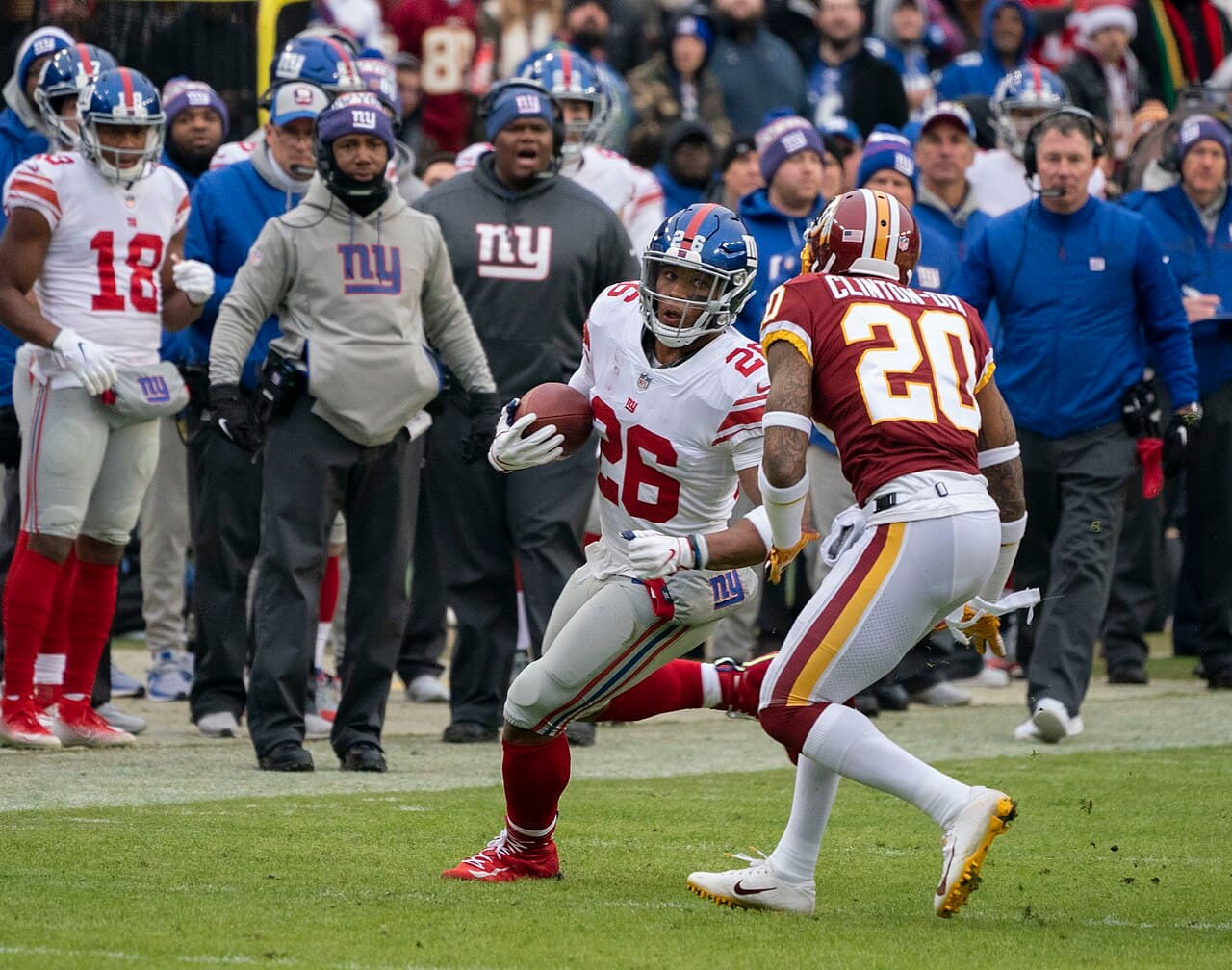
Saquon Barkley suffered a stinger on the Eagles' opening drive of Sunday's 24-20 win over Tennessee, missed the rest of the first half, returned after the break, and finished with four carries for nine yards. He underwent an MRI and said afterward that he would know more in the coming days. Philadelphia plays at Chicago on Monday night, which hands the Eagles an extra day of recovery that most teams in this situation do not get.
A stinger is a nerve injury, essentially a pinched nerve in the neck or shoulder region, and the recovery pattern is unlike a muscle or joint injury. Symptoms can resolve in hours or linger for weeks, and the deciding factor is whether strength returns to the affected arm. That is what the imaging is for.
Why the Monday game matters more than usual
Philadelphia's Week 3 schedule is a meaningful piece of the projection. A Monday night kickoff gives Barkley eight days from injury to game instead of seven, and in a nerve injury where the recovery curve is steep early, a single day is a real percentage of the window.
It also changes the practice calendar. The Eagles will get a Wednesday and Thursday of limited work plus additional time before they have to make a designation, which increases the chance that Barkley is a full participant by the end of the week rather than a game-time decision on Sunday morning.
The practical read for fantasy managers: you will likely know more, and know it earlier in relative terms, than managers holding players in Sunday games. Use that. The waiver period closes before Monday's game, so if you need a contingency plan you have to make the claim on the standard schedule regardless.
The Eagles have a tight end problem too
Barkley was not the only Philadelphia starter to leave that game. Dallas Goedert sprained his MCL and is expected to miss time, which leaves the Eagles without a meaningful replacement at tight end and compounds a position-wide shortage across the league.
The combined effect on Philadelphia's offense is a narrowing of the target tree. When a team loses its starting tight end and its lead back is compromised, the passing game concentrates on its perimeter receivers and its passing-down back. That is a usable fantasy signal even if you do not roster Barkley.
It is also a signal for the run game. If Barkley is limited or out, the Eagles' backup running back becomes an immediate waiver priority, and the value is higher than a typical handcuff because Philadelphia's offensive line and short-yardage usage make its running backs efficient by default.
The matchup is favorable and that is the problem
Philadelphia opened as a road favorite of roughly four and a half points at Chicago, a number that firmed after the Bears lost Caleb Williams to a hamstring injury that has him week to week. Tyson Bagent is in line to start for Chicago.
A road favorite in a game where the opponent is starting a backup quarterback is exactly the game script that produces heavy second-half rushing volume. That is the argument for playing Barkley if he is active even at less than full health, because the Eagles are likely to be protecting a lead in the fourth quarter and that is when their lead back accumulates carries.
It is also the argument for the backup. If Barkley is limited to a reduced snap count, the game script that would have produced his best week instead produces someone else's.
The Verdexed model take
Our model handles nerve injuries differently from soft tissue injuries, and the reason is that the probability distribution is bimodal rather than continuous. A stinger that resolves produces a player at essentially full effectiveness. A stinger that does not resolve produces a player who cannot play at all. There is very little middle ground, which is the opposite of a hamstring strain where the middle ground is the most likely outcome.
That shape means the model treats Barkley's Week 3 projection as a weighted average of two very different scenarios rather than as a single reduced number. In practice, that argues against the conventional fantasy advice of starting a questionable player at a discount. Either start him at full confidence or do not start him.
On the betting side, the model likes Philadelphia laying the number more than it likes Philadelphia's team total going over. Backup quarterbacks compress scoring, and a game where one side is running clock in the fourth quarter tends to land under the posted total even when the favored team covers comfortably.
What to do in your league
Hold Barkley and make a contingency claim anyway. The Eagles' backup running back is worth a mid-priority waiver claim regardless of how the MRI reads, because the downside is a wasted roster spot and the upside is a locked-in starter in the league's most efficient rushing offense.
If you need to fill the tight end spot Goedert vacated, understand that you are competing with a lot of teams. Philadelphia, Los Angeles, and Las Vegas all took tight end injuries in the same weekend, and the replacement level at the position has collapsed. Bid earlier and higher than you normally would, or plan to punt the position entirely and stream a matchup.
Barkley managers with a Monday night decision should set the rest of their lineup assuming he plays, and keep one flex slot flexible enough to absorb a late scratch.