Peyton Watson's Sign-and-Trade Finally Closed and Five Teams Moved to Make It Work
By Verdexed NBA Desk
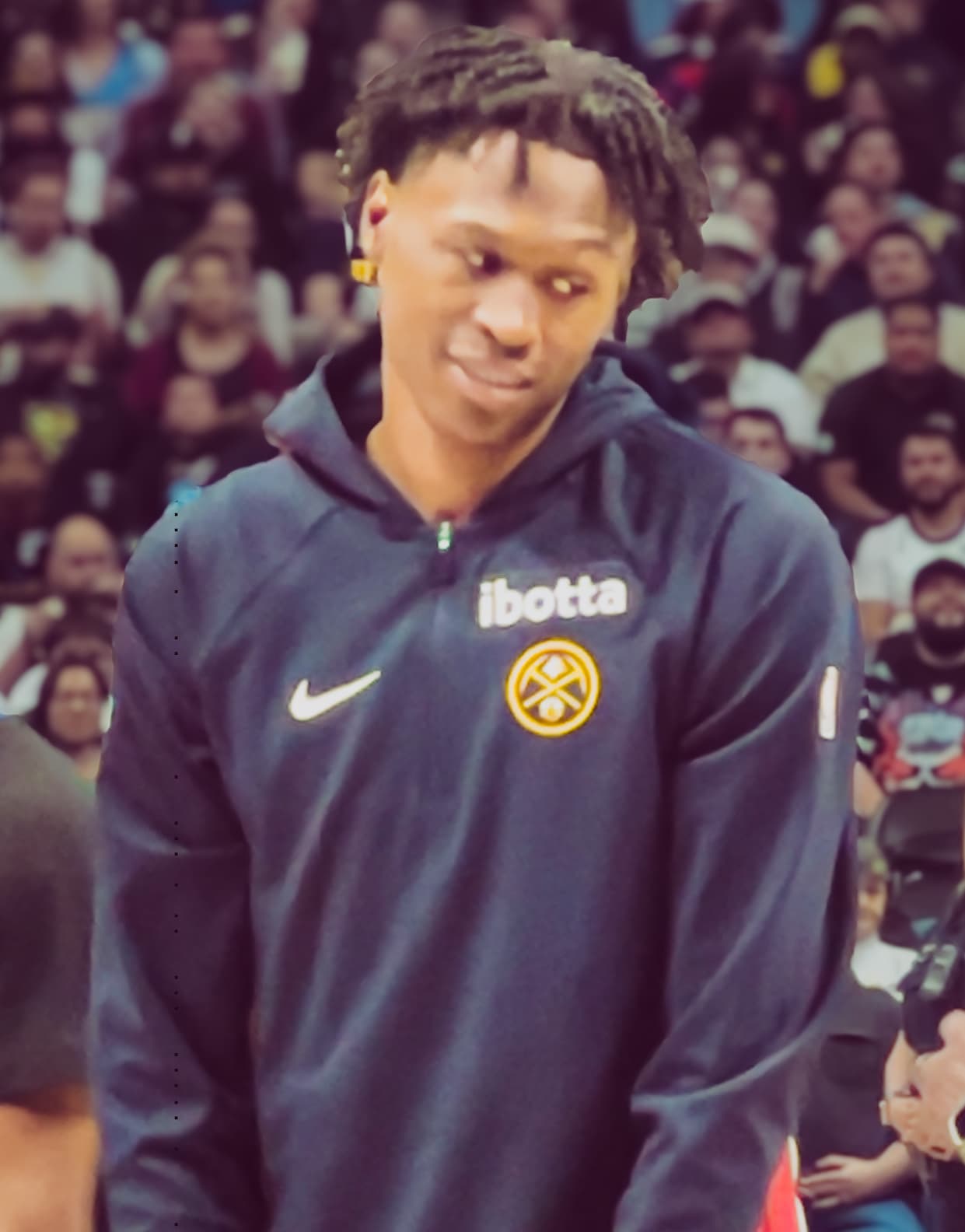
Peyton Watson's restricted free agency, which had been stuck for most of the summer over Denver's unwillingness to pay the number his camp wanted, has ended. Watson signed a four-year, $88 million contract that includes a player option and a 7.5 percent trade kicker, and moved to Cleveland in a five-team sign-and-trade.
Denver received Cleveland's 2031 first-round pick and a 2032 second-rounder from Sacramento. No players came back. Max Strus went to the Clippers. The deal was expanded to absorb the previously reported Charlotte and Washington swap involving Dennis Schroder and Tre Mann, and Cleveland separately sent Tre Mann, a 2027 second-round pick, and cash to Washington for Cam Whitmore.
What Denver actually did
The Nuggets traded a 23-year-old wing coming off a breakout season for two draft picks and nothing else, and the reason is the second apron. Denver moved Watson to stay out of it and avoid the luxury tax, which is a cap-management decision rather than a basketball one.
That distinction matters for how the rest of the league should read this. Denver did not decide Watson was replaceable. Denver decided it could not afford him under the current collective bargaining agreement's escalating penalties, which is the exact scenario the second apron was designed to force.
The basketball consequence is that Denver's wing rotation around Nikola Jokic is thinner than it was. The starting five projects as Jokic, Aaron Gordon, Jamal Murray, Christian Braun, and Cameron Johnson, with Johnson on an expiring deal. Jokic told a Serbian reporter he was happy for Watson and acknowledged the team would miss his energy and skill, which is about as close to a public comment on a cap-driven trade as a star player gets.
What Cleveland got
An athletic wing entering his prime on a contract that, at roughly $22 million per season, is below the market rate for starting wings and includes a player option that gives Watson the flexibility rather than the team. Cleveland gave up a first-round pick seven years out and Max Strus, and separately turned Tre Mann into Cam Whitmore.
Paired with the James Harden re-signing the same week, Cleveland has spent its summer buying win-now pieces and paying for them with future picks and salary flexibility. That is a coherent strategy for a team with Donovan Mitchell and Evan Mobley in their primes. It is also a strategy with no reverse gear.
Fantasy fallout
Peyton Watson. He was one of the hardest players in fantasy to price all summer because nobody knew where he would play. That is resolved, and the resolution is mildly negative for his fantasy value: Cleveland's rotation is more crowded than Denver's was, and Watson is now competing for minutes with Cam Whitmore and Jaylon Tyson rather than starting by default. Draft him as a mid-round upside play rather than a locked-in starter.
Cameron Johnson. The clearest gainer. Johnson's minutes in Denver were never fully secure with Watson in the rotation, and now they are. A shooter playing next to Jokic on an expiring contract with a defined role is a strong fantasy value.
Christian Braun. Similar logic. Denver has fewer wings, and Braun is one of the ones who remains.
Cam Whitmore. Another change of scenery for a player who has bounced through multiple organizations. He gets a real shot at Cleveland minutes, and his fantasy profile has always been scoring-efficient in short bursts. A late-round dart.
Max Strus. Moving to the Clippers gives him a clearer path to shooting volume than he had behind Cleveland's new additions. A modest bump.
Dennis Schroder and Tre Mann. Both landed in situations where the guard rotation ahead of them is now settled. Neither is a standard-format asset.
The Verdexed model take
Verdexed's model treats second-apron-driven trades as a distinct category from basketball-driven ones, because the outgoing team is optimizing for something other than on-court value and the incoming team is therefore likely to be getting a surplus.
By that read, Cleveland acquired a player whose production exceeds what the Cavaliers paid in basketball terms. Denver's projected win total falls modestly, less because Watson was irreplaceable and more because the Nuggets' depth behind Jokic is now the thinnest it has been in several seasons, and Denver's ceiling has always been a function of surviving the minutes when Jokic sits.
For Cleveland, the model's projection barely moves on Watson alone, because the Cavaliers' rotation was already deep and the marginal minutes he takes come from players who were also useful. The Harden signing did more for the Cavaliers' projection than this trade did.
Betting angle
Denver's win total should tick down and Cleveland's up, though neither should move much. The more interesting exposure is Denver's championship futures, which have been priced off Jokic's presence rather than the supporting cast for two years running.
A Denver team with a thinner wing rotation and an expiring contract at small forward is a team whose price should widen. Anyone still holding Nuggets futures should look at whether the number they hold reflects a roster that has gotten materially shallower this month.
The other market is Cameron Johnson's three-point props, which get set off last season's usage and are now attached to a larger role.
What to do in your league
Draft Cameron Johnson a round earlier than you were planning. Minutes certainty in a Jokic offense is one of the most reliable fantasy inputs in basketball.
Move Watson down a tier but keep him on your board. He is a good player in a crowded rotation, which historically produces a slow start and a strong finish.
Whitmore is a bench stash in deep leagues only. He has had chances before.
What's next
Cleveland's rotation is the thing to watch in preseason. The Cavaliers now have Harden, Mitchell, Mobley, Allen, Watson, Whitmore, Merrill, Tyson, and Proctor competing for minutes, and there are not enough of them to go around. Whoever wins the wing minutes behind the starters is the fantasy value hiding in that roster.