Nate Wiggins Avoided Structural Damage, and the Ravens Secondary Dodged Its Worst August Outcome
By Verdexed NFL Desk
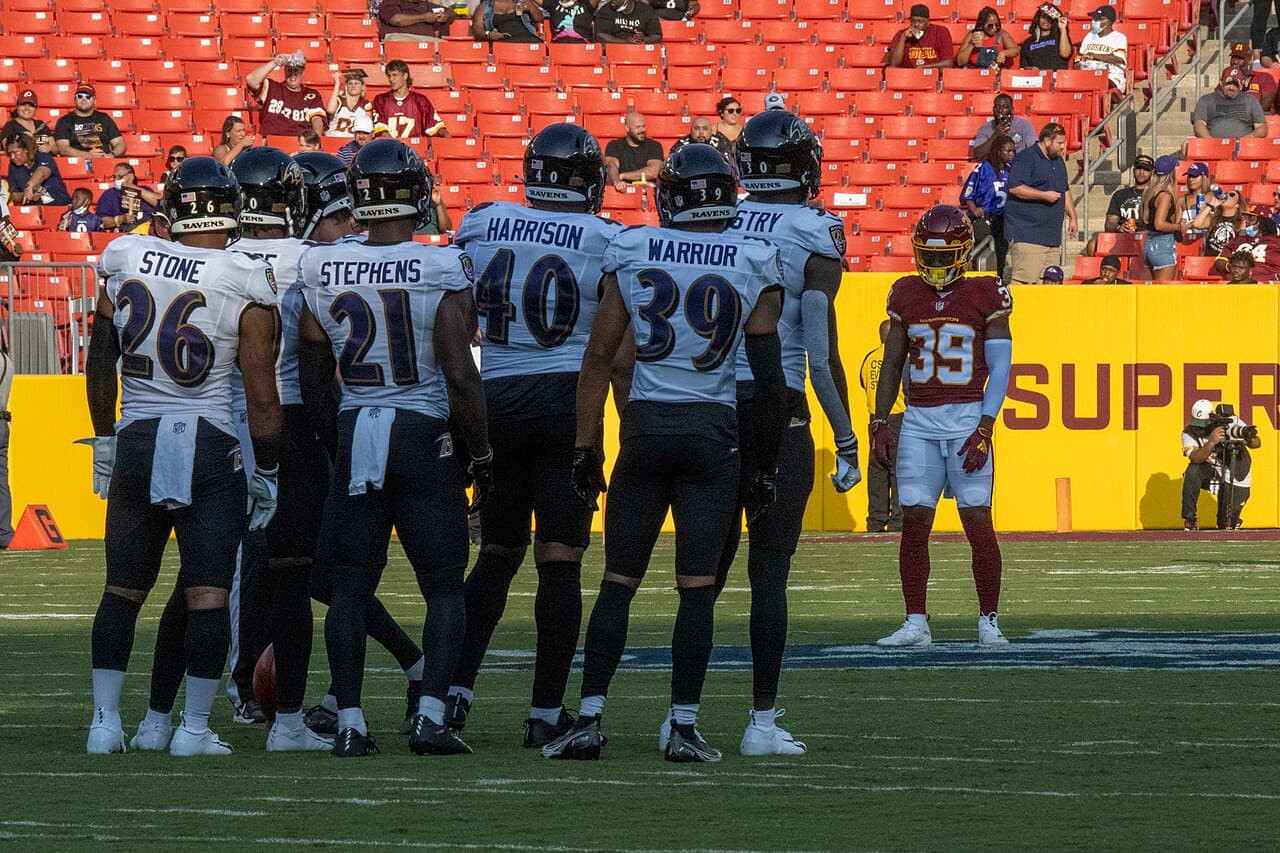
Baltimore cornerback Nate Wiggins was carted off the practice field earlier this week after going down in a one-on-one period, unable to put weight on his left leg as trainers helped him into the team facility. The initial scene was as alarming as any in the league's training camps this summer. The follow-up has been considerably better: NFL Network's Ian Rapoport reported that Wiggins did not suffer structural damage to the knee or leg, and head coach Jesse Minter expressed optimism while declining to give a diagnosis or a timetable.
The practical read is that Wiggins is likely to miss at least the next several practices and, in all probability, the entire preseason. That is a very different outcome from what Tuesday looked like in real time.
What "no structural damage" does and does not mean
The phrase gets used loosely in August, so it is worth being precise. No structural damage means imaging did not show a torn ligament or a fracture. It does not rule out a sprain, a bone bruise, or a hyperextension, all of which can cost weeks. It also does not constitute a team announcement. Baltimore has not issued a formal diagnosis, and Minter's public comments have been deliberately vague.
Wiggins went down while covering rookie receiver Ja'Kobi Lane on a deep ball from Lamar Jackson during one-on-ones. Non-contact lower-body incidents in that specific drill are the ones that most often turn out to be serious, which is why the negative imaging result is genuinely significant news rather than routine optimism.
Until Baltimore puts a status on it, the accurate description is that Wiggins is out indefinitely with a knee or lower-leg injury and is expected back before the regular season. Anything more specific is speculation.
Why this matters beyond IDP leagues
Wiggins is not a fantasy asset in standard formats, and cornerback injuries rarely move redraft boards. This one has second-order effects that do matter.
Baltimore's defensive projection depends heavily on the quality of its perimeter coverage. Wiggins, a 2024 first-round pick, has been the team's most reliable outside corner and the player most often assigned to opposing top receivers. A Ravens defense without him is materially different from a Ravens defense with him, and that difference shows up in game totals and in the fantasy projections for the receivers Baltimore faces.
For IDP managers, Wiggins is a hold. A player expected back by Week 1 with negative imaging is not worth dropping in a league deep enough to roster corners.
The Verdexed model take
The model's Baltimore defensive rating is one of the more Wiggins-sensitive inputs in the AFC North. Removing him from the projection widens the Ravens' expected points allowed by a meaningful margin, and it does so asymmetrically: the effect is concentrated in games against offenses with a clear No. 1 receiver, where a defense without a shadow corner has fewer answers.
With the negative imaging, the model holds Baltimore's season projection essentially unchanged. That is the correct response to an injury with an expected return before Week 1. Where it does adjust is in the confidence band around the Ravens' early-season defensive performance, which widens slightly because a player returning from a knee issue in late August rarely plays at full speed immediately.
The betting implication is narrow but real. Baltimore's Week 1 opponent's passing props and the game total both carry a small amount of value on the over side if Wiggins is limited or inactive, and that information will not be public until the first official injury report of the season. Anyone tracking this should note that a player who misses the entire preseason but plays Week 1 is frequently on a snap count, and the market almost never prices that.
Fantasy fallout for opposing receivers
The most useful application here is not for Ravens managers. It is for anyone drafting a receiver who faces Baltimore early. The Ravens have historically been one of the tougher matchups for perimeter receivers, and a compromised Wiggins softens that. If your team's schedule includes Baltimore in the first month and you are choosing between two similar receivers, this is a tiebreaker in favor of the one who draws that matchup.
That is a marginal edge, and marginal edges are what separate a good draft from an average one at the back of a roster.
What to do in your league
Nothing dramatic. Do not drop Wiggins in an IDP league. Do not adjust your view of Baltimore's offense, which is unaffected.
Do note the matchup implication for Week 1 and Week 2 opposing receivers, and revisit it when Baltimore publishes its first official injury report in September. The gap between "no structural damage in August" and "full participant in September" is where the useful information lives.
What's next
Baltimore hosts Philadelphia on Saturday in preseason Week 1. Wiggins will not play, and his absence there means nothing. The date to watch is the first full-pads practice after the second preseason game, which is when Baltimore would need to have him back on the field to have him ready for the opener without a snap restriction.
If Wiggins is still limited when the Ravens break camp, the story changes from a scare to a real availability question, and the model will move accordingly. For now, the news is good, and the correct posture is patience rather than action.