 MLB2026-07-11
Red Sox Sell-Off Watch: Aroldis Chapman and Sonny Gray Headline Boston's Deadline Board
By Verdexed MLB Desk
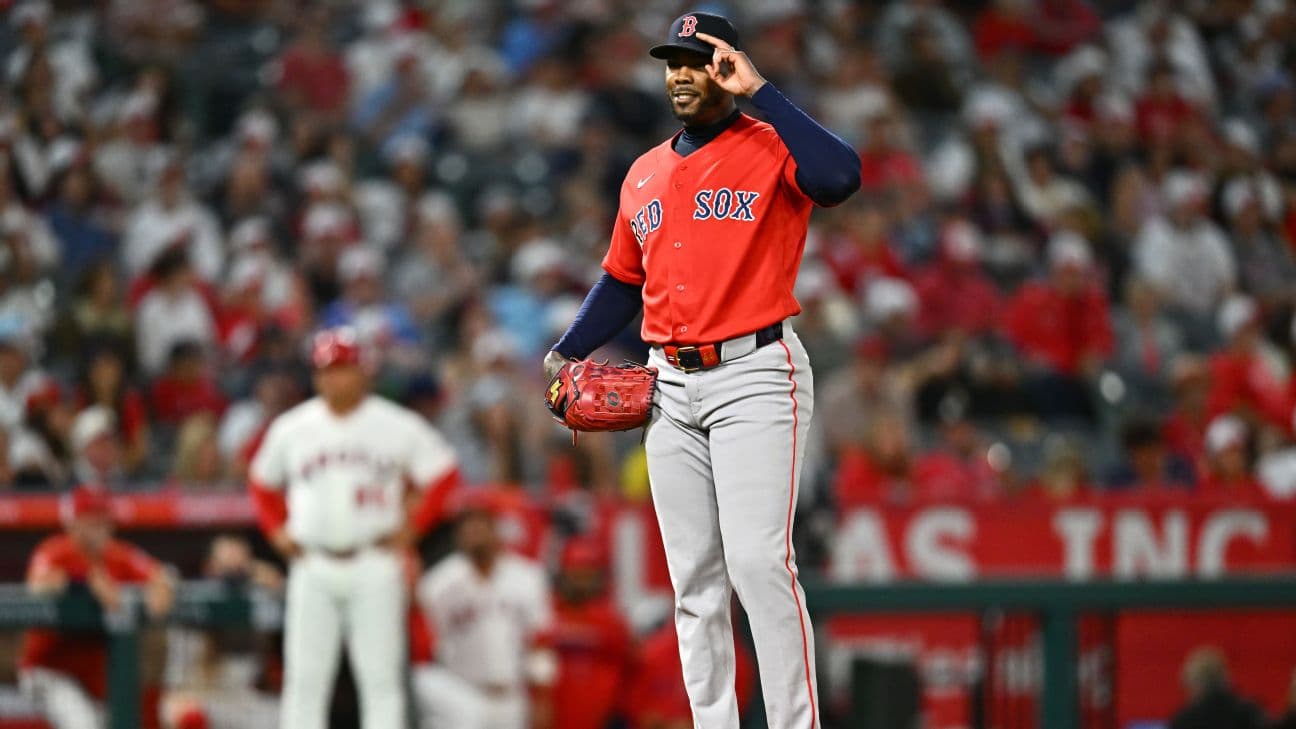
The Boston Red Sox entered the week several games under .500 and staring at the kind of decision that reshapes fantasy rosters across the league: sell, and sell the two most impactful arms available. Closer Aroldis Chapman and starter Sonny Gray headline a Boston trade board that also includes catcher Willson Contreras, infielder Isiah Kiner-Falefa, and, in some scenarios, outfielder Jarren Duran. With the August 3 deadline approaching, the question is not whether Boston can get value back, but how much of its roster ends up in new fantasy situations.
Chapman is the crown jewel. The veteran left-hander has been among the most dominant relievers in baseball over the last two seasons, and multiple reports peg him as close to certain to be dealt if Boston commits to selling. Contenders including the Dodgers, Phillies, Mariners, and Rangers have been tied to the market for late-inning help. For fantasy managers in saves leagues, a Chapman trade is a two-front event: it can vaporize his save opportunities if he lands in a setup role behind an entrenched closer, or it can hand him a fresh ninth-inning job on a better team.
The saves math on Chapman
This is where the destination matters more than the name. If Chapman is dealt to a club with an established closer, his ratios stay elite but his save volume craters, turning a top-tier fantasy reliever into a strikeout-and-ratios specialist with limited counting stats. If he lands somewhere with an unsettled ninth inning, he becomes one of the most valuable in-season saves adds available.
Just as important is what he leaves behind. Whoever inherits the Boston closer role the moment Chapman is traded becomes an immediate speculative add in every saves league, regardless of pedigree. Deadline closer vacancies are among the highest-leverage waiver pickups of the fantasy calendar precisely because they are so hard to predict, and a Chapman deal would open one overnight.
Gray's no-trade wrinkle
Sonny Gray is the rotation piece, and his situation carries a complication. Gray holds a no-trade clause and has, per reporting, said only that he is open to a conversation about waiving it, not that he will. That makes his market real but conditional. Any team acquiring Gray gets a proven mid-rotation-or-better starter, and for fantasy purposes, a move to a stronger club could boost his win equity and, depending on ballpark and defense, his ratios.
The fantasy read on Gray is about environment. A pitcher's win totals and run support swing heavily with team quality, and a contender landing spot would lift the parts of his line that his own performance cannot control. If he stays in Boston because the no-trade clause holds, his value is steady but capped by the team around him.
The Verdexed model take
Verdexed's deadline modeling treats reliever trades as the single most volatile fantasy event of the summer, and Chapman is the textbook case. The model's saves projections for the second half swing by a wide margin depending on his role, which is why the smart approach is to hold or acquire him at a discount from a manager who fears the worst-case setup outcome, while separately rostering the likeliest Boston successor as a cheap lottery ticket.
For Gray, the model is steadier. His strikeout and command inputs travel with him regardless of uniform, so Verdexed's projection barely moves on the performance side. The needle that does move is win probability, and there the model favors any outcome that puts him on a contender's staff over a summer spent absorbing losses on a selling team.
Fantasy fallout beyond the headliners
Don't overlook the secondary pieces. Willson Contreras is a bat-first catcher whose fantasy value at a thin position could tick up or down with a lineup change. Kiner-Falefa is a speed-and-contact utility type whose playing time is the variable to watch. And the Duran wild card, floated in some reports but far from certain, would be the most impactful of all: a change of scenery for a dynamic outfielder can reshape his stolen-base and run-scoring opportunities depending on where he hits in a new order.
What to do in your league
The playbook is proactive. In saves leagues, monitor Boston's bullpen usage daily as the deadline nears, and be ready to add the pitcher who gets the first save after any Chapman trade. If you roster Chapman, resist selling into panic before you know the destination, because a good landing spot makes him a top-15 reliever again. For Gray, treat the no-trade clause as a genuine gate: do not bank on a move until it is official.
The betting angle on a Boston sell-off
A seller shedding its best reliever and a rotation stalwart is a signal the market reads immediately. If Chapman and Gray both leave, Boston's bullpen and rotation get measurably shakier for the stretch run, which nudges the team's remaining-schedule win projection down and shifts value onto its opponents in individual matchups. For bettors, the cleanest edge is not on Boston's season futures but on its day-to-day games: a bullpen without an elite closer is more prone to late-inning swings, which raises the appeal of live betting and of overs in close games where the ninth inning was previously a lockdown.
On the other side of any deal, the contender that lands Chapman tightens its own late innings, and the model treats an elite-closer addition as one of the few deadline moves that reliably moves a team's win probability in one-run games. That is the asymmetry to exploit: the acquiring team gets sharper in exactly the situations that decide tight contests, while the seller gets softer. Tracking where Chapman lands, and re-rating both clubs' close-game outlooks the moment he does, is where the deadline produces a real market edge.
What's next
Boston's front office has signaled reservations about a full white-flag sell, which means the intensity of this market could shift week to week between now and August 3. That uncertainty is the opportunity. Fantasy managers who track the Red Sox situation closely, rather than reacting after the fact, will be the ones holding the new closer, the upgraded Gray, or the discounted Chapman when the deals finally land.