 MLB2026-07-21
Rays Reportedly Eye Ketel Marte at the Deadline: The Fantasy Fallout if Arizona Sells
By Verdexed MLB Desk
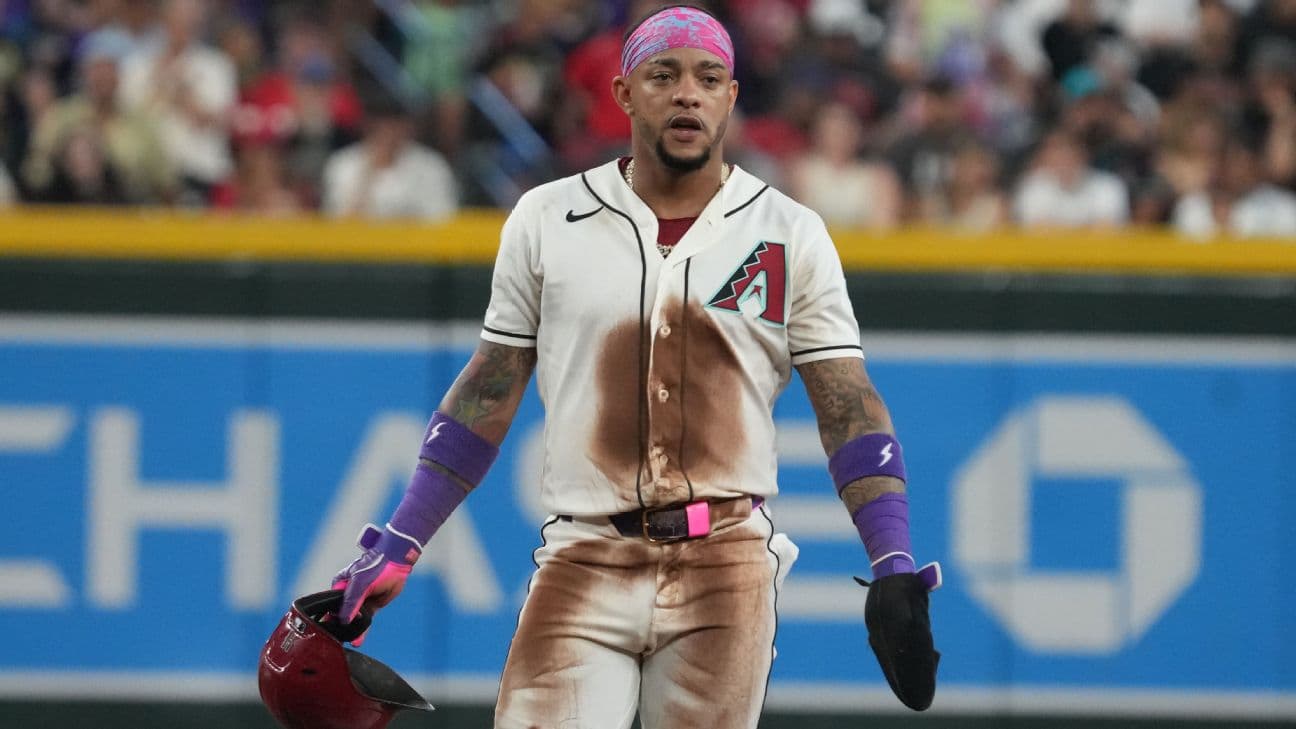
The Tampa Bay Rays reportedly plan to be aggressive buyers ahead of the Aug. 3 trade deadline, and multiple reports have connected them to Arizona Diamondbacks second baseman Ketel Marte. Per reporting from Bob Nightengale of USA Today and follow-ups across national outlets, the Rays view the American League as wide open and have kicked the tires on a short list of impact bats and arms, with Marte among the marquee names alongside Tarik Skubal and Luis Arraez. Nothing is close, and the framing matters: this is reported interest, not a deal in motion. But for fantasy managers and bettors, even the rumor reshapes how you value one of the more underrated stars in the sport.
The reason to care early is simple. Marte's fantasy profile changes meaningfully depending on where he plays the rest of the season, and Arizona's decision to hold or sell ripples through two infields at once. Managers who wait for the transaction wire to confirm a move are the ones who miss the window to buy low or sell high. The time to price this in is now.
The news, framed correctly
To be precise about what is and is not confirmed: as of this writing, Marte remains a Diamondback. The reported Rays interest is real, and it has been echoed by several outlets, but Arizona has not signaled it is shopping him. In fact, the reporting cuts the other way. Multiple outlets, including CBS Sports and others citing Nightengale, have indicated Marte is expected to stay put, and Arizona has reportedly relayed to interested clubs that a deal is unlikely. So treat any "Marte to Tampa Bay" chatter as exploratory due diligence by a buyer, not a signal that the player is available.
There is also a hard structural obstacle. Marte reportedly holds full no-trade protection through 10-and-5 rights (10 years of MLB service, the last five with the same club), which gives him the ability to veto any deal he does not like. Reporting suggests he intends to use it, and he has publicly framed Arizona as home. A player with a full no-trade clause is not a rental a contender can simply pry loose. He has to want to go, and there is no public indication he does.
Why Arizona's standing is the swing factor
The whole premise hinges on whether the Diamondbacks decide they are buyers, sellers, or something in between. Coming out of the All-Star break, Arizona sat on the fringe of the National League wild-card race, reportedly within a few games of the final spot and coming off a strong stretch that included a sweep of the Dodgers. That is the profile of a team leaning toward buying, or at least standing pat, rather than one tearing down.
That matters because sellers create fantasy opportunities and contenders freeze them. If Arizona keeps winning, the odds of a Marte trade drop toward zero and the story ends as a footnote. If the D-backs stumble in the two weeks before the deadline and slide out of the race, the calculus shifts, and a club that suddenly sees a long road back might at least listen. Even then, the no-trade clause remains the gatekeeper. For now, the base case is that Arizona holds, and every fantasy decision should start from that assumption.
Fantasy fallout if Arizona sells
Start with Marte himself. His fantasy value is anchored by elite plate skills, real power, and second-base eligibility, a combination that keeps him a top-tier option at a shallow position regardless of uniform. A move to Tampa Bay would be roughly park-neutral to slightly unfavorable for raw power compared to Arizona's hitter-friendly environment, but the bigger swing is lineup context and health. In a Rays lineup built around contact and traffic on the bases, his counting stats (runs and RBI) would depend heavily on where he hits and who surrounds him. The Verdexed read: a trade would not crater his value, but managers banking on a power spike from a change of scenery are likely to be disappointed. His floor travels; his ceiling is tied to lineup role.
Staying in Arizona is the friendlier fantasy outcome. Marte in the middle of a Diamondbacks order that is fighting for a playoff spot keeps his run-production environment intact and removes the injury and adjustment risk that comes with an in-season move. If you own him, the reported interest is a reason to feel good, not to panic-sell.
The secondary effects are where managers can actually gain an edge. If Marte were dealt, Arizona would open regular at-bats and a lineup slot for its other infielders, boosting the streaming appeal of whoever inherits the keystone and the middle-of-the-order role. That is a classic post-deadline value creation event in deeper and NL-only formats. On the Tampa Bay side, adding Marte would compress playing time and push a current infield piece down the depth chart or into a utility role, quietly denting the value of a player some managers are still rostering. In dynasty and keeper leagues, the ripple reaches prospects and bench bats whose paths to at-bats narrow or widen depending on which way this breaks.
The Verdexed model take
Verdexed projections treat this as a low-probability trade with an outsized branch of outcomes, which is exactly the kind of situation where disciplined managers profit. The model's lean is that Marte finishes the season in Arizona. The combination of a full no-trade clause, a player who has publicly tied himself to the franchise, and a team still within striking distance of a wild card is a heavy anchor against any deal. Reported buyer interest does not move that needle much on its own.
That lean informs a clear strategy. If you own Marte, hold, and if a leaguemate is spooked by the rumor into a discounted offer, buy. If you own the Arizona infielders who would benefit from a sale, the model does not yet justify paying up on speculation, but they belong on your watch list to grab the moment any real movement surfaces. On the Tampa Bay side, do not preemptively cut a useful infielder over a rumor that has a low chance of landing.
The betting and model angle runs parallel. A Marte trade would nudge team win totals and playoff-odds markets on the margins for both clubs, and it would reshape individual player prop baselines, particularly runs and RBI markets tied to lineup role. But because the base rate of this specific deal is low, the sharper position is to fade overreaction. Markets and managers tend to price splashy rumors as if they are likely; the Verdexed lean is that this one is not, which creates value in taking the other side of any premium built on the assumption Marte is moving.
What's next
Watch two things over the next two weeks. First, Arizona's record: if the Diamondbacks hold their ground in the wild-card race, expect the front office to buy or stand pat, and the Marte talk to fade. Second, any shift in tone around the no-trade clause, which remains the true switch on this entire scenario. Until both of those move, treat Marte as a Diamondback and manage accordingly.
The actionable takeaway: hold Marte and buy him at a discount if a nervous owner offers one, stash the Arizona infield beneficiaries on your watch list without overpaying, and fade any betting or trade-market premium built on the assumption this deal gets done. The rumor is real. The move, for now, is not, and the Verdexed model is pricing it that way.