 MLB2026-07-01
MLB Prospect Stock Watch: The Second-Half Call-Up Candidates Fantasy Managers Should Stash Now
By Verdexed MLB Desk
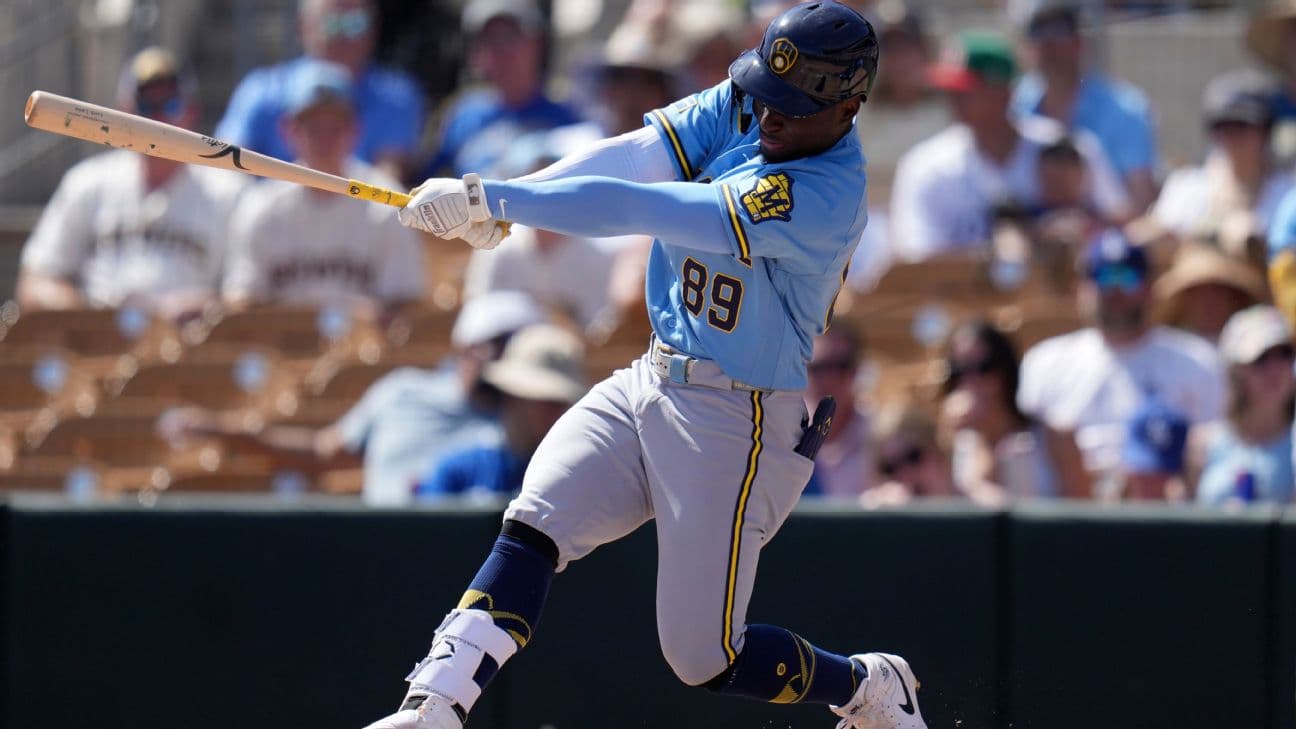
As the calendar flips to July and the second half of the MLB season comes into view, fantasy rosters are about to get shaken up. The trade deadline lands on August 3, and the roster churn that surrounds it, combined with the annual wave of injuries, breakouts, and surprise promotions, is about to open new call-up paths across the league. Managers who wait for the official announcement will be fighting over scraps on the waiver wire. Managers who stash early win that war before it starts.
The midseason period is the most volatile stretch of the fantasy baseball calendar. Contenders deal from their farm systems to add proven talent, which clears blocked prospects for playing time. Sellers move veterans and hand the keys to the kids they are building around. Prospect graduations reshape depth charts overnight. The result is a market where opportunity, not raw talent, is the currency that matters most. Below, Verdexed breaks down the names worth rostering now, the one to approach carefully, and the framework for prioritizing your limited bench spots.
Why stashing beats streaming right now
The instinct in fantasy is to hold bench spots for players who are producing today. In late June and early July, that instinct is a trap. The best return on a bench spot comes from securing a player before his promotion becomes obvious to the rest of the league. Once a prospect is called up and slotted into a lineup, his ownership spikes and the acquisition cost climbs.
The key is to weigh the path to playing time above everything else. A toolsy prospect blocked by two healthy veterans is worth less to a fantasy manager than a solid contributor with a clear runway to at-bats or innings. When evaluating stashes, opportunity is the multiplier that turns talent into production.
The stash targets
Luis Lara, OF, Brewers (age 21). Lara is the profile fantasy managers dream about at the top of a lineup. Over 73 games and 324 plate appearances for Triple-A Nashville, the switch-hitting outfielder was batting .330/.443/.461 with 7 home runs and 20 stolen bases. That is a rare blend of contact, on-base skill, and speed for a 21-year-old at the highest level of the minors. He has posted more walks than strikeouts, a marker of advanced plate discipline that tends to travel well to the majors, and his 20 steals underline the category that fantasy managers can never have enough of.
The power is modest, so nobody should expect a middle-of-the-order slugger. But in points leagues, the elite on-base profile keeps the value flowing even on nights the hits do not fall, and in roto formats the stolen bases address the scarcest offensive category on the board. If the Brewers create an outfield opening through a trade or a promotion of their own, Lara has the resume to force his way into regular at-bats. He is the priority stash of this group.
Ty Johnson, RHP, Rays (age 24). Johnson is trending up at exactly the right time. The right-hander recently tossed five innings of no-hit ball against Triple-A Norfolk and has lowered his ERA to 2.64 over nine starts for Triple-A Durham. Most encouraging for fantasy purposes, he racked up 18 strikeouts over his last two outings, the kind of swing-and-miss surge that gets a pitcher noticed by a big-league staff.
The Rays have a long track record of promoting arms the moment they are ready and of leveraging the deadline to reshape their rotation. Johnson is the type of prospect who can pitch his way into a promotion rather than wait for one to be handed to him. Strikeouts and a strong ERA at Triple-A are the two ingredients that most reliably translate to fantasy relevance, and Johnson is supplying both. He belongs on the radar of anyone in a league deep enough to reward proactive pitching stashes.
Proceed with caution
River Ryan, RHP, Dodgers. Ryan is the cautionary tale in this cycle. The right-hander recently struggled badly, allowing 10 hits and eight runs in a Triple-A outing, and then landed on the injured list with a strained hamstring. He carried a 4.46 ERA at Triple-A Oklahoma City before the setback. This is a hold-or-fade situation rather than a call-up push.
The combination of an elevated ERA, a rough recent outing, and an injury removes any near-term promotion case. Managers who were speculatively stashing Ryan on upside can let him go in most formats, and those tempted to add him should recognize that the runway is now blocked by health as much as performance. Talent alone does not earn a bench spot when the path forward is closed. Ryan can be revisited if he returns healthy and reestablishes his stuff, but he is not a second-half stash today.
How to prioritize your bench spots
With call-up season approaching, a simple hierarchy keeps stash decisions disciplined. First, chase opportunity over pedigree. A clear path to playing time is worth more than a higher prospect ranking sitting behind a crowded depth chart. Second, target the scarcest categories. Steals and saves are the hardest production to find on the wire, so a speed-first bat like Lara or a potential late-inning arm carries outsized value. Third, favor skills that translate. Contact and plate discipline for hitters, and strikeouts paired with a strong ERA for pitchers, are the traits that survive the jump to the majors.
Apply that filter and the tiers sort themselves. Lara checks the opportunity, scarcity, and translatable-skills boxes at once. Johnson checks the translatable-skills box emphatically and sits on an organization that promotes aggressively. Ryan fails the opportunity test entirely for now.
The Verdexed angle
The deadline is the accelerant here. Every veteran moved by a selling team and every prospect dealt away by a buyer changes somebody's playing-time math, and those changes rarely announce themselves in advance. The managers who profit are the ones holding the beneficiaries before the news breaks. That is the entire case for stashing now rather than reacting in August.
It also means being honest about the downside. Stashes tie up a bench spot, and not every one pays off. That is precisely why the framework matters: concentrate the speculation on players whose path and skills point the same direction, and cut bait quickly on names like Ryan whose situations have turned. The discipline is in what you drop as much as what you add.
The takeaway
Stash Luis Lara first. His on-base and stolen-base profile addresses the scarcest offensive category in fantasy and gives him a real second-half runway if an outfield spot opens in Milwaukee. Add Ty Johnson next in any league deep enough to value pitching, because his strikeout surge and 2.64 Triple-A ERA make him a prime candidate to pitch his way into a Rays promotion. Let River Ryan go, or hold only in the deepest formats, until his hamstring and his stuff both bounce back. Move now, before the deadline rewrites the depth charts and the rest of your league catches on.