Oneil Cruz Is Back in Center Field for the Pirates After 58 Games and a Broken Hand
By Verdexed MLB Desk
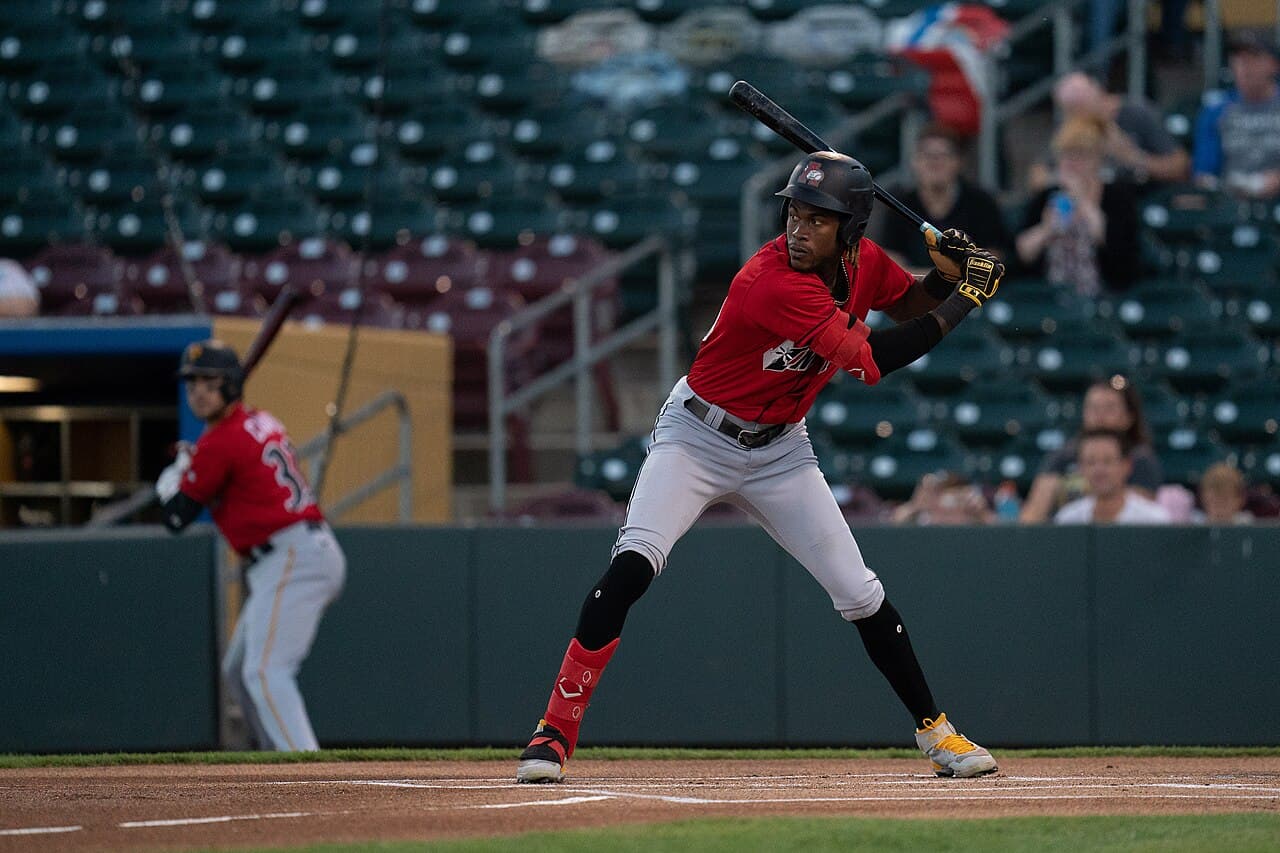
The Pirates activated Oneil Cruz from the 60-day injured list ahead of their series with the Tigers, ending a 58-game absence caused by non-displaced fractures of the fourth and fifth metacarpals in his left hand. Cruz was hurt sliding into home against the Braves in early June and had not played since. He is reclaiming center field, with Pittsburgh optioning outfielder Ronny Simon and left-hander Hunter Barco to Triple-A in the corresponding moves.
The timing is close to the worst possible for the Pirates and close to the best possible for fantasy managers. Pittsburgh is not playing for anything in late August. Cruz is, and he returns to an everyday role with six weeks of runway and no reason for the organization to manage his playing time conservatively.
What he was doing before the injury
Cruz was on pace for the best season of his career when the hand broke. Across 64 games he had hit 14 home runs with 44 RBI and a career-best batting average around .264, a line that combined the power that has never been in question with contact quality that had been.
The average is the part worth dwelling on. Cruz has always had elite raw power and elite sprint speed, the two traits that produce fantasy value most efficiently, and his limiting factor has been strikeouts. A season in which he was hitting for a respectable average while maintaining the power output is the version of Cruz that profiles as a first-round fantasy asset rather than a frustrating fourth-rounder.
The hand injury caveat that has to be priced
Metacarpal fractures are the injury type most reliably associated with a suppressed power output on return. The mechanism is straightforward: the bones that just healed are the ones that absorb the force of contact, and hitters routinely report discomfort on mishit balls for weeks after they are cleared to play.
The empirical pattern is a period of reduced exit velocity and pulled-fly-ball rate, followed by a recovery that is usually complete by the following spring. How long that period lasts varies enormously by player, and there is no reliable way to forecast it from the outside. What can be said is that expecting Cruz to hit like his pre-injury self immediately is optimistic, and expecting him to hit like a replacement-level bat is pessimistic.
The speed should return faster than the power. Running does not stress a healed hand, and stolen bases are the component of Cruz's game least likely to be affected. For fantasy managers in category leagues, that matters: a Cruz who steals bases at his normal rate while the power ramps back is still a valuable roster piece.
Fantasy fallout
Cruz should be rostered in every league of any depth, and he almost certainly is not in shallow ones. A player who missed 58 games gets dropped in twelve-team formats without an injured list spot, and this is exactly the profile of add that decides a September.
The action item for managers in contention is to check waivers immediately. A power-speed center fielder with an everyday job and no competition for playing time is a better bet than most of what is available at this point in the season, and the acquisition cost is a claim rather than a trade.
For managers already holding him, the recommendation is patience rather than an immediate insertion into a championship lineup. Give him a week of at-bats before treating him as a must-start, and watch the batted-ball quality rather than the results. A Cruz who is hitting the ball hard and getting unlucky is a buy. A Cruz who is not hitting the ball hard is a wait.
The Verdexed model take
Verdexed's return-from-injury adjustments are position and injury specific, and hand fractures for power hitters carry one of the steeper early discounts in the system. The model reduces projected isolated power for a defined window after activation and lets it converge back toward the player's established baseline over subsequent weeks, with the length of the window scaled to the length of the absence.
For Cruz, that produces a rest-of-season projection that is below what his pre-injury pace implied but well above the level his current roster rate in most leagues suggests. The gap between those two numbers is the value, and it exists because fantasy managers price returning players off their last box score rather than off their role.
The stolen base projection barely moves, which is the model's most confident output here. Sprint speed does not decay from a hand injury, and Pittsburgh has no incentive to hold him back on the bases in games that do not matter to the standings.
Betting angle
Pirates team totals are not moving on a single position player return, and Pittsburgh's remaining schedule is largely irrelevant to the postseason picture. The market for a non-contender in late August is thin and efficient enough that there is no obvious edge in the game lines.
Player props are the exception. Cruz is the kind of hitter whose home run props are priced conservatively immediately after a return, because books lean on recent playing time rather than on established true talent. Any Cruz home run price that reflects an assumption of diminished power for longer than a couple of weeks is a number worth taking, particularly in favorable ballparks.
What's next
The things to watch are the lineup spot and the batted-ball data. If Cruz hits in the middle of the Pittsburgh order every day, the counting-stat opportunity is intact. If he is dropped down or given scheduled rest days, the projection shrinks.
The other thread worth tracking is what Pittsburgh does with him for the rest of the season. A club out of the race sometimes uses September to look at younger players, and Cruz's return pushes someone else's at-bats out of the lineup. Nothing about the Pirates' current plan suggests that is a risk, but it is the kind of decision that gets made quietly in the first week of September.