Malik Nabers' Week 1 Is in Real Doubt, and His Draft Price Has Not Caught Up
By Verdexed Fantasy Desk
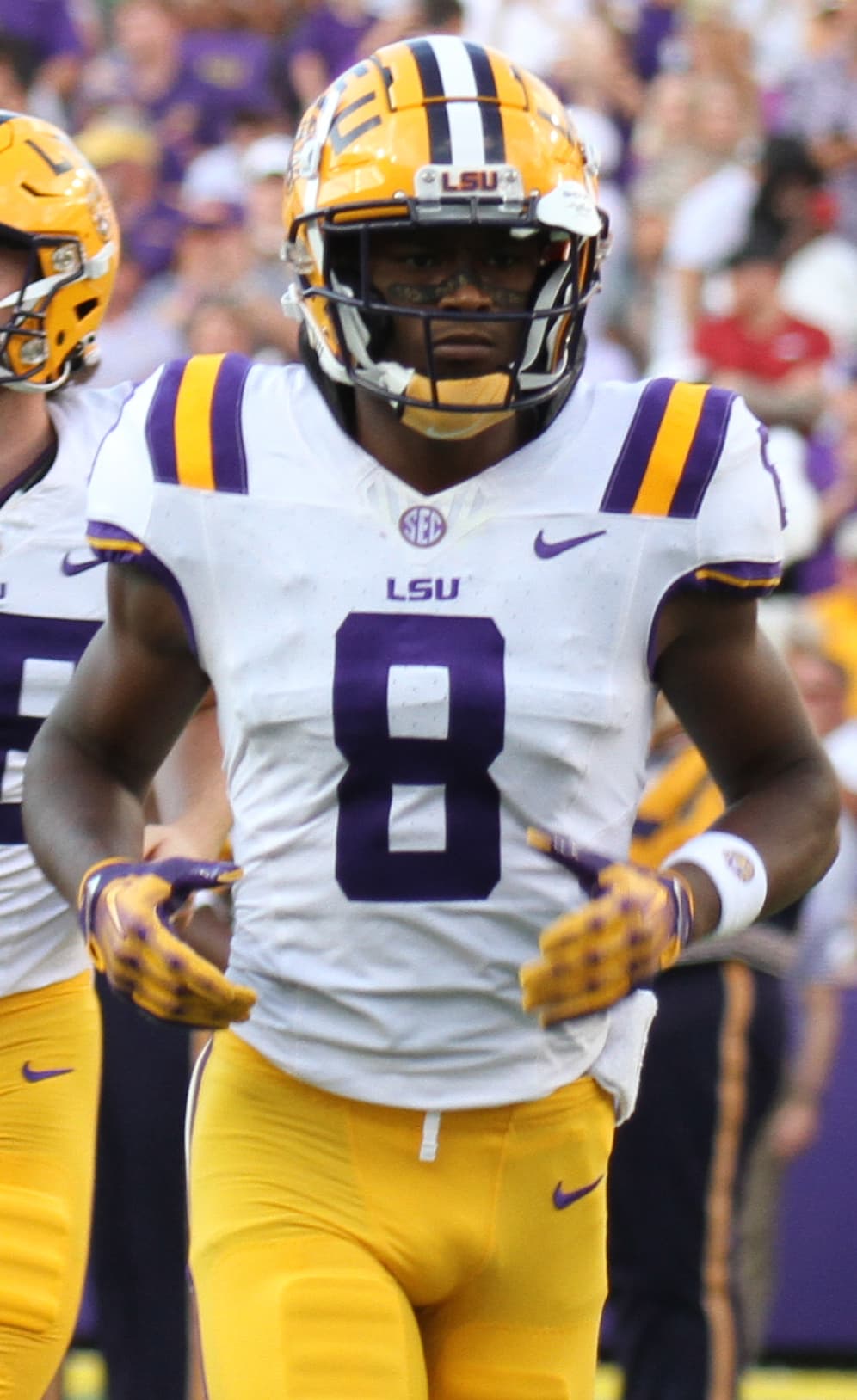
Malik Nabers' availability for the Giants' Week 1 game against Dallas is genuinely uncertain, and the fantasy market is only starting to price it. The New York receiver underwent a second procedure on his right knee this offseason, a cleanup to remove scar tissue that had built up after his ACL tear last September and was limiting his ability to fully extend the joint.
The team has publicly held the line that Nabers is targeting Week 1. That is the reported goal, and it is not the same thing as a timeline. Outside evaluators looking at the same set of facts have suggested a longer runway, with some projecting he could miss the opening month. Both of those things can be true at once when the second surgery was about mobility rather than a new structural injury, and neither is confirmed.
What is actually known
Here is the confirmed part. Nabers tore his right ACL in September. He had a second, smaller procedure this offseason described as a cleanup, performed because restrictive scar tissue was blocking full extension during rehab. The Giants have said they are hopeful he is available for the opener. He has been on the field for practice work in recent weeks, including route running.
Here is the unconfirmed part. Whether he plays Week 1. Whether he is on a snap count if he does. Whether the extension issue is fully resolved or something that recurs under game-speed load. Reporting on this has ranged from optimistic to openly pessimistic depending on the outlet, and the Giants have not committed to anything beyond hope.
Scar tissue cleanups are a common and generally minor follow-up to ACL reconstruction. The concerning version is the one where the athlete needs a second operation because rehab stalled, because that is a signal the knee was not progressing on schedule in the first place. That is the version being described here.
Why the ADP has not moved enough
Nabers has slipped in drafts, generally from the third round toward the fourth. That is a real move, but it is not a move that reflects a player who might miss four or five games. It reflects a player managers expect to be a little late.
The math is unforgiving. A receiver drafted in the third round is being paid for roughly a top-15 seasonal finish. If he misses four games, he needs to produce at a top-five weekly rate across the remaining thirteen to justify that price, and he needs to do it in his first season back from a torn ACL, on a snap count, in a new offense. That is a narrow path.
The counterargument is real and worth stating. Nabers, when healthy, is a target hog on a team without another proven alpha receiver, and target volume is the single most stable input in receiver scoring. The Giants under new head coach John Harbaugh brought in Matt Nagy as offensive coordinator, and Nagy arrives from Kansas City, where he coordinated an offense built around getting the ball to its best player in space. Second-year quarterback Jaxson Dart threw for 2,272 yards with 15 touchdowns and five interceptions as a rookie while adding 487 yards and nine scores on the ground, a profile that suggests a functional passing game rather than a broken one.
Fantasy fallout
The people who benefit here are the ones who always benefit: the second and third targets. Wan'Dale Robinson and the Giants' complementary pass catchers are worth watching in the last rounds of drafts, especially in PPR formats where a short-area target share can be turned into flex production for a month. That is not a season-long bet. It is a bet on four weeks of concentrated volume, and it costs almost nothing.
Jaxson Dart's fantasy stock takes a hit in any world where Nabers is out. Second-year quarterbacks who run are always live in superflex and single-QB streaming, but the passing floor drops materially without his best receiver. If you were drafting Dart as a cheap upside QB2, discount the first month.
For Nabers himself, the honest ranking is somewhere in the WR20 to WR25 range with the acknowledgment that his ceiling remains WR8 if the knee cooperates. That is a fourth-to-fifth round player, not a third-round player, and the gap between where he is going and where he should go is the actionable item.
What to do in your league
If you are drafting this weekend, let someone else take him in the third. The price is not right and the information is not settled. If he falls to the fifth, that is a different conversation, because at that price you are buying the upside and paying for the risk.
If you already have him, the move is to draft a bench receiver you can actually start in September rather than a lottery ticket. Managers routinely handcuff an injured receiver with a player who only has value if the injured player is out, which is precisely backwards. Take a receiver with a defined Week 1 role.
If you are in a league with an IR spot that accepts questionable designations, the calculus flips entirely and Nabers becomes a value at his current cost. Check your league settings before your draft, because that single rule changes his price by a full round.
The Verdexed model take
Verdexed's model handles post-ACL returns by separating two questions that get conflated in most public analysis: will he play, and will he be himself. The second procedure moves both distributions in the wrong direction, but it moves the availability question much further than the production question.
The reason is that scar tissue cleanups do not damage the reconstructed ligament. They address a rehab complication. Athletes who need one tend to return later than the original timeline suggested and then perform close to their expected post-ACL baseline, which is itself below their pre-injury baseline in year one. The model's read, therefore, is that the most likely outcome is a Nabers who misses some early games and then produces at roughly 80 to 90 percent of his prior efficiency, with the volume intact because the volume is a function of the roster around him rather than his knee.
For betting purposes, the model treats the Giants' Week 1 team total and Dart's passing props as sensitive to a designation that will not arrive until the Friday injury report. That is a spot to wait on rather than bet into. The market will price a confirmed inactive quickly, but it tends to underprice a player who is active on a snap count, which is the likeliest version of Nabers in September if he plays at all.
What's next
The first real signal comes from preseason Week 2 and 3 practice reports: whether Nabers is taking full-speed team reps, and whether he is doing it on consecutive days. Consecutive-day participation is the tell with soft-tissue and mobility issues, because it is the thing that separates a player who is cleared from a player who is managed.
After that, the Giants' first official injury report of the regular season settles it. Until then, treat anything stated with confidence about his Week 1 status, in either direction, as a guess.