 NFL2026-08-28
Leonard Williams Got Three Years and $90 Million to Anchor Seattle's Defense
By Verdexed NFL Desk
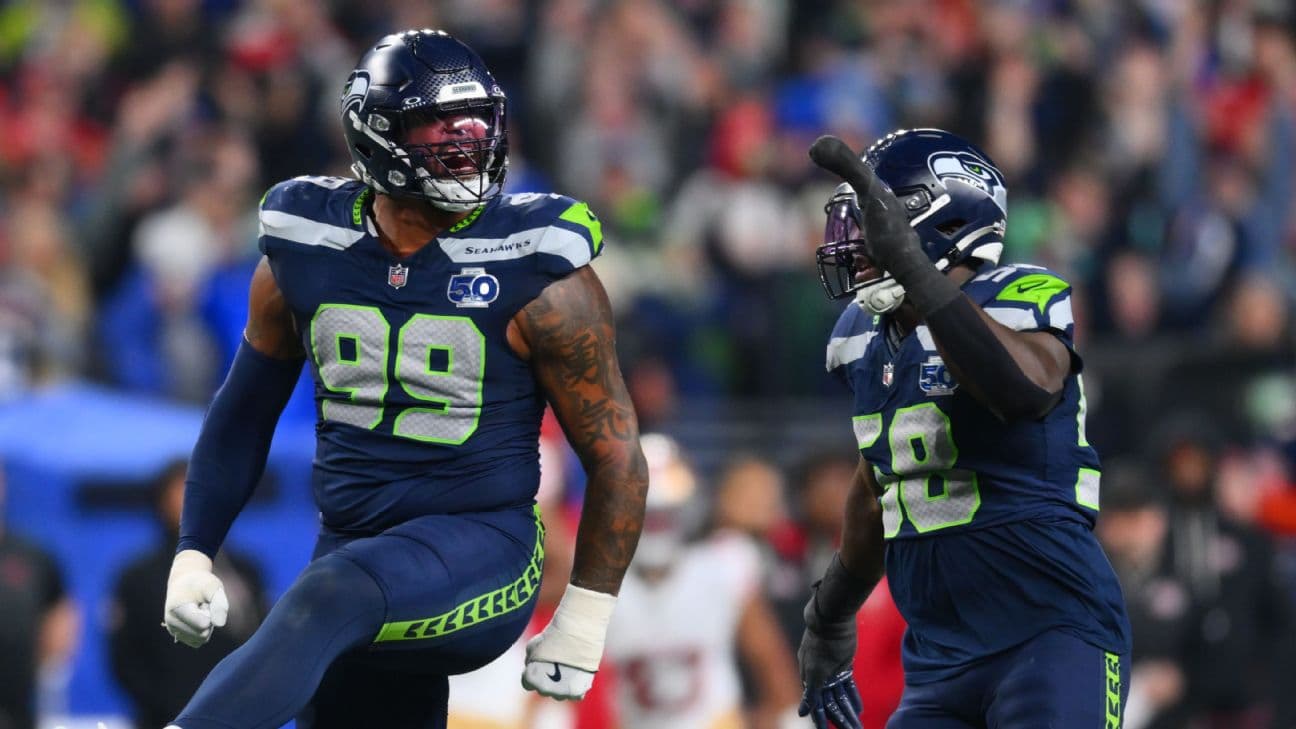
Seattle agreed to a three-year, $90 million extension with defensive tackle Leonard Williams on Thursday, a deal reported to include $56 million guaranteed and to run through 2029. The contract places Williams among the top five interior defensive linemen in average annual value and commits the Seahawks to a 32-year-old as the centerpiece of a defense that just won a Super Bowl.
Williams has spent the last two and a half seasons in Seattle, earning consecutive Pro Bowl selections and a second-team All-Pro nod, and the last two years have produced 18 sacks and 126 tackles including 25 for loss. He was central to the defensive performance that shut down New England in Super Bowl LX, and the Seahawks open their title defense against those same Patriots on September 9.
Why Seattle paid a 32-year-old
Interior defensive line is the one position where the aging curve is friendlier than the position's physical demands would suggest, and the reason is that the job depends more on leverage, hand technique, and diagnosis than on top-end athleticism. Edge rushers fall off a cliff. Interior disruptors tend to decline gradually. Paying through age 35 is a real risk, but it is a smaller one than a comparable deal on the edge.
The more important context is structural. A defense that just won a championship is under enormous pressure to keep its identity intact, and Williams is the player around whom the rest of the front operates. Losing him in free agency next spring would have meant replacing the interior pressure that made Seattle's coverage scheme work, and the market for that skill set does not have a cheap version.
The guarantee structure is the part worth watching. Fifty-six million guaranteed on a $90 million deal is a substantial commitment but not an ironclad one, and it gives Seattle a realistic exit after the second year if the decline arrives faster than the projection. That is the shape of a contract a front office signs when it believes in the player and also believes in its own ability to move on.
The fantasy fallout
Individual defensive linemen matter in IDP leagues and almost nowhere else, but this deal has real consequences for the fantasy asset that does trade: the Seattle defense and special teams unit.
Seattle has been the consensus No. 1 DST on most 2026 boards, and the case rested on continuity. That case just got stronger. A DST's fantasy scoring is driven by sacks, turnovers, and points allowed, and interior pressure is the single most reliable driver of all three, because pressure up the middle collapses the pocket faster than pressure off the edge and forces the throws that become interceptions.
The practical question is whether Seattle is now overpriced. A DST going in the range where the consensus No. 1 goes is usually a mistake, because the position is the most replaceable in fantasy football and the week-to-week variance swamps the talent gap. That is still true here. Seattle is the best defense on the board and it is still not worth reaching two full rounds for, particularly with a Week 1 opener against a Patriots offense that had a full offseason to study the Super Bowl film.
For IDP managers, Williams is a top interior lineman and his price in tackle-heavy scoring formats has never fully caught up to his production. That is a real edge in leagues that reward tackles for loss.
The betting angle
Seattle opened as a 3.5-point home favorite for the Wednesday night season opener against New England, and the Seahawks entered August behind only the Rams in Super Bowl futures pricing. The Williams extension does not change the roster, since he was under contract for this season regardless, but it does remove a distraction that occasionally becomes one.
The more useful betting read is on Seattle's season-long defensive markets. A team returning its entire defensive front with the interior anchor locked up is a strong candidate for fewest points allowed and for team sack totals, and those markets tend to price on last year's raw numbers rather than on continuity. Continuity is worth more on defense than on offense, because defensive performance depends heavily on communication and on players knowing exactly where their help is.
The opener is the harder bet. Super Bowl rematches in Week 1 are unusual, both teams have had eight months to prepare for each other, and New England arrives with a new play-caller. That is a game to watch rather than a game to bet.
The Verdexed model take
Verdexed's model grades Seattle's defense as the best in the league entering 2026 and, more relevantly, as the most stable. The model's defensive projections weight returning snap continuity heavily, and Seattle's front seven returns nearly intact from a unit that finished the season by holding a championship offense in check.
The model's caution is about regression. Championship defenses almost always allow more points the following season, not because they get worse but because turnover luck does not repeat and because opponents adjust. The model projects Seattle to remain a top-three unit while allowing meaningfully more points than last season, which is exactly the pattern that makes a No. 1 DST a fine fantasy asset and a poor investment at a premium price.
What it means
Seattle just bought certainty at the most important position on its defense, and it did so at a price that is expensive in dollars and reasonable in risk given the guarantee structure. The team enters its title defense with the same front that won the championship and a quarterback situation that has not changed.
For fantasy managers, the takeaway is narrow and useful: Seattle's defense is the best available and should be drafted like the best available defense, which means late, not early. For bettors, the season-long defensive markets are where the continuity edge lives. And for anyone building a Week 1 card, the opener between the champion and the team it beat is the one game where eight months of preparation on both sides make the number close to meaningless.