Case Keenum Starts on Monday Night for the Bears With Williams and Bagent Out
By Verdexed NFL Desk
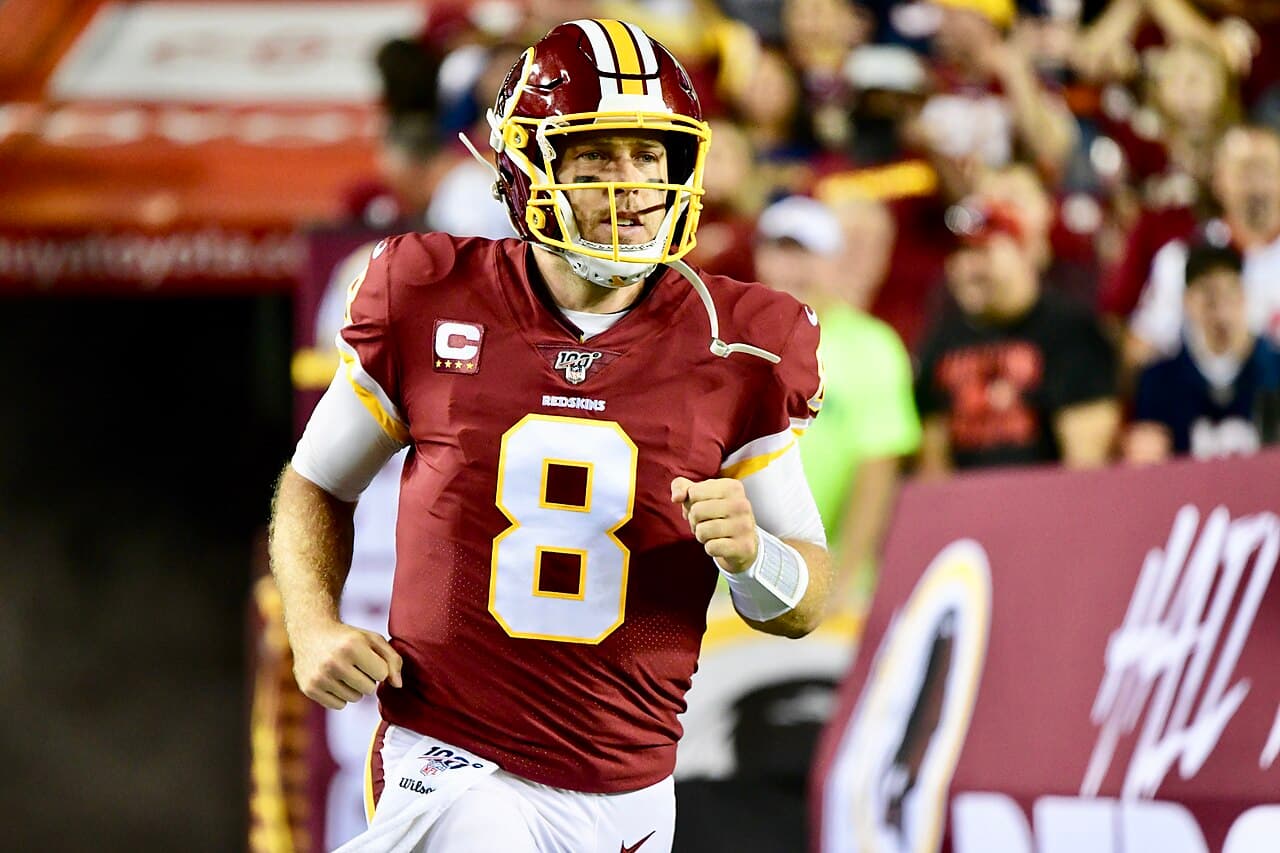
The Bears will start Case Keenum at quarterback against the Eagles on Monday night, the result of two injuries suffered in the same fourth quarter of the same game. Chicago has stuck with the 38-year-old veteran as its Week 3 plan through Friday, with Caleb Williams still recovering from a hamstring strain and Tyson Bagent still in the concussion protocol. For fantasy managers holding Bears skill players, and for anyone looking at a Monday night total, this is the kind of quarterback change that rewrites every projection on the slate.
Keenum has not appeared in a regular season game since 2023. He is on the roster as insurance, not as a bridge starter, and he is now being asked to open on national television against one of the better defenses in the league.
How Chicago got here
Williams strained his hamstring while being sacked in the fourth quarter of the Bears' Week 2 home loss to Minnesota, a game reported as a 9-3 defeat. Bagent replaced him and finished the game. Head coach Ben Johnson described Williams as week to week and said his quarterback would likely miss some time, while stopping short of formally ruling him out for the Eagles game. Initial imaging was reported as encouraging, and one early report suggested Williams could conceivably play in Week 3, but the more recent reporting from NFL Network pointed the other way and Chicago has practiced all week as though he is unavailable.
Bagent's situation is the complication nobody planned for. He entered the concussion protocol after relieving Williams and did not practice on Friday, which in practice means he is not clearing in time for a Monday kickoff barring an unusual sequence of events. That leaves Keenum.
The compounding matters more than either injury alone. A team that loses its starter still has a plan. A team that loses its starter and its backup in the same quarter is improvising.
What Keenum actually is at this point
Keenum's résumé is real. He was a productive starter in Minnesota in 2017 and has started games for several franchises since. But he is 38, he has been out of regular season action for multiple seasons, and he is stepping into an offense he has been running as the third arm in practice, not as the primary operator.
The realistic expectation is a conservative game plan: heavier early-down run usage, shorter throws, more play-action and boot-action to simplify reads, and a deliberate effort to keep the Bears out of third and long. That is the version of this offense Chicago can survive with. It is not a version that supports fantasy ceilings.
Fantasy fallout for the Bears skill players
Downgrade everyone, and downgrade the perimeter receivers hardest. Rome Odunze was already a shaky Week 3 start with Williams healthy, and several national start-and-sit boards had him outside starting lineups before the quarterback situation deteriorated further. He is a fade now. The same logic applies to any Bears receiver whose value depends on intermediate and deep volume, because those are the throws a third-string quarterback in his first start in years is least likely to attempt.
The Chicago running backs are the exception, and only in a specific way. A conservative game plan means more carries, and a team trailing against Philadelphia means more checkdowns. Volume can hold up even when efficiency does not. Treat the Bears' lead back as a floor play rather than a ceiling play, and understand that the floor is partly propped up by garbage-time receiving work.
The tight end is the position most likely to be quietly useful. Third-string quarterbacks throw to the middle of the field and they throw to their check-down options. If Chicago's tight end room is healthy, that is where the targets concentrate.
Betting angle
The Eagles opened as road favorites and there is no version of this news that moves the number back toward Chicago. The two questions worth having an opinion on are how far the spread should travel and what happens to the total.
On the spread, be careful about chasing. Quarterback downgrades are the most efficiently priced injury in the NFL, and by Monday night the market will have had a full weekend to absorb the Keenum news. Buying Philadelphia at an inflated number after everyone else has already bet it is how favorites get backed into bad prices.
The total is the more interesting side. A Chicago offense run by its third quarterback should produce fewer plays, fewer explosive gains, and more punts. Philadelphia is also perfectly happy to control a game on the ground and take the air out of it with a lead, which suppresses the pace from both directions. The structural case for the under is stronger than the structural case for laying more points.
The Verdexed model take
Our model treats a drop from a starting quarterback to a third-string quarterback as a significant efficiency penalty on top of the raw talent gap, because it also degrades protection adjustments, pre-snap communication, and audible frequency. That compounding is why the model's read on this game leans toward Philadelphia comfortably on the moneyline while showing much less enthusiasm for the spread as it climbs.
Where the model shows its clearest separation from the market is in Chicago's projected scoring distribution. It shifts meaningful probability into the lowest scoring outcomes, the kind of single-digit and low-teens results that make team totals and unders more attractive than the side. Bears passing props, particularly any receiving yardage line still priced off Williams-era expectations, are the softest numbers on the board.
What to watch Monday
Three things. First, whether Williams is formally ruled out or carried as questionable, because a surprise activation would move the number late. Second, whether Bagent clears protocol at the last moment, which would change the backup picture but probably not the start. Third, Chicago's early-down run rate, which will tell you within one quarter whether the Bears are trying to win the game or trying to survive it.
For lineup purposes, the instruction is simple. Do not start a Chicago pass catcher who needs volume and efficiency to pay off, treat the backfield as a volume-only play, and look at the under before you look at the spread.