 NBA2026-06-27
Timberwolves Land LaMelo Ball in a Blockbuster: The Fantasy Fallout for Edwards, Ball, and Naz Reid
By Verdexed NBA Desk
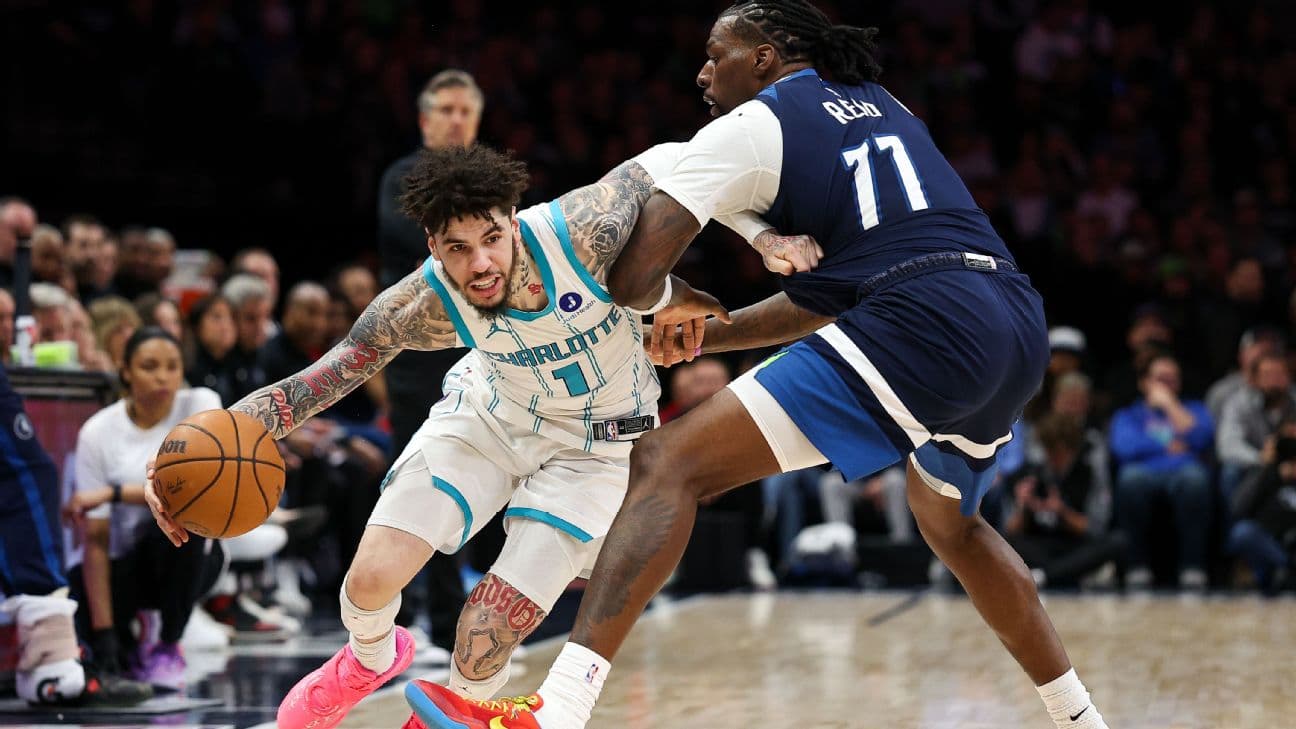
The Minnesota Timberwolves added a second offensive star, agreeing to acquire LaMelo Ball and Josh Green from the Charlotte Hornets for Naz Reid, a first-round pick, three first-round pick swaps, and three second-round picks. The deal reshapes Minnesota's ceiling, hands Charlotte a draft-capital windfall, and moves fantasy value in both directions. For managers, the headline is a new All-Star backcourt of Anthony Edwards and Ball, and the questions it raises about usage are the most interesting part.
The deal
Charlotte sends Ball, a former All-Star, along with Green, and receives Reid plus a war chest of picks: a 2033 unprotected first-round selection, swaps in 2028, 2029, and 2030, and second-rounders in 2029, 2032, and 2033. Ball is coming off a season in which he averaged roughly 20 points, seven assists, and five rebounds while shooting in the mid-30s from three across 72 games, his most available campaign in years. Availability has long been the swing factor in his fantasy value, and a healthy 72-game sample is exactly the kind of season that makes a contender comfortable paying this price.
Minnesota's new core pairs Ball and Edwards, both 24, with 25-year-old wing Jaden McDaniels. That is a young, long, and explosive group, and it signals that the Timberwolves are pushing their window wide open now.
Fantasy fallout: LaMelo Ball
The instinct is to worry that sharing a backcourt with Edwards caps Ball's counting stats, and there is some truth to it. Ball has been a high-usage, ball-dominant guard whose assist and scoring totals were inflated by how much of Charlotte's offense ran through him. In Minnesota, he will not command the ball on every possession.
But the offsetting factors are real. Ball should see cleaner looks and less defensive attention with Edwards drawing the top perimeter defender, his three-point volume could rise playing off a true number-one option, and a better team context usually means more competitive minutes and fewer garbage-time benchings. The likeliest outcome is a modest dip in assists and a steadier, more efficient scoring line. Draft him as a strong fantasy starter whose ceiling is slightly trimmed and whose floor, thanks to the improved roster, is firmer than it was in Charlotte.
Fantasy fallout: Anthony Edwards
Edwards remains the centerpiece and the first option, so his scoring should hold. The wrinkle is on the playmaking side. With Ball now initiating a chunk of the offense, Edwards may not need to carry as much creation load, which could nudge his assists down even as it improves his efficiency by giving him more catch-and-attack opportunities. For fantasy purposes, treat Edwards as the same elite scorer with a slightly different shot diet, not as a player whose value is threatened.
Fantasy fallout: Naz Reid and the Hornets
Reid is the most direct fantasy winner. Moving from a deep Minnesota frontcourt to a rebuilding Charlotte roster should hand him a larger, more stable role and the kind of usage that turns a quality reserve into a standalone fantasy asset. A bump in minutes and touches is exactly what his stretch-big profile needs, and he becomes a player to target a round or two earlier than his Minnesota price.
For the Hornets more broadly, this is a pivot toward youth and flexibility. Charlotte now controls six first-round picks over the next three years and can build around young guard Kon Knueppel without the pressure of contending immediately. That rebuild generally means more shot attempts to distribute, which makes Charlotte a roster to mine for late-round upside as roles settle.
The category-league nuance
In category formats, the Edwards-Ball pairing creates a subtle redistribution worth planning for. Ball has been an elite source of assists and three-pointers, and even with a reduced on-ball role, those are sticky skills that travel. His steal rate, a quietly valuable category, should hold or even tick up in a more competitive defensive scheme. Where the dip is likely is in raw points and total assists, simply because there is one basketball and now two stars who want it. Managers should draft him expecting a more efficient, slightly lower-volume version of the player Charlotte rostered.
Edwards owners, meanwhile, should not overthink it. Elite scoring wings are the most matchup-proof and teammate-proof assets in fantasy basketball, and pairing him with a secondary creator is far more likely to preserve his value than threaten it. The realistic worst case is a modest assist trim, which is a price worth paying for the cleaner looks a second star generates. The Reid-to-Charlotte side remains the cleanest standalone value gain in the deal.
The Verdexed model take
The model views this as a clear win-now move that compresses Minnesota's fantasy value rather than destroying any of it. Two stars sharing a backcourt almost always means the combined counting stats land below the sum of their previous individual lines, but both Edwards and Ball stay inside the early-round conversation. The cleanest standalone value gain is Reid, who inherits opportunity in Charlotte.
What's next
The details to watch are the rotation and the on-ball split. If Minnesota staggers Edwards and Ball to keep one creator on the floor at all times, both hold near-full value and the bench guards behind them lose standalone appeal. If the two share heavy minutes together, expect a touch more variance in the box scores. Either way, this trade turns the Timberwolves into one of the more fascinating fantasy roster puzzles in the league, and it gives Charlotte a clean runway to rebuild.