 NBA2026-07-23
LaMelo Ball Joins Anthony Edwards in Minnesota: The Fantasy Fallout of a Blockbuster Backcourt
By Verdexed NBA Desk
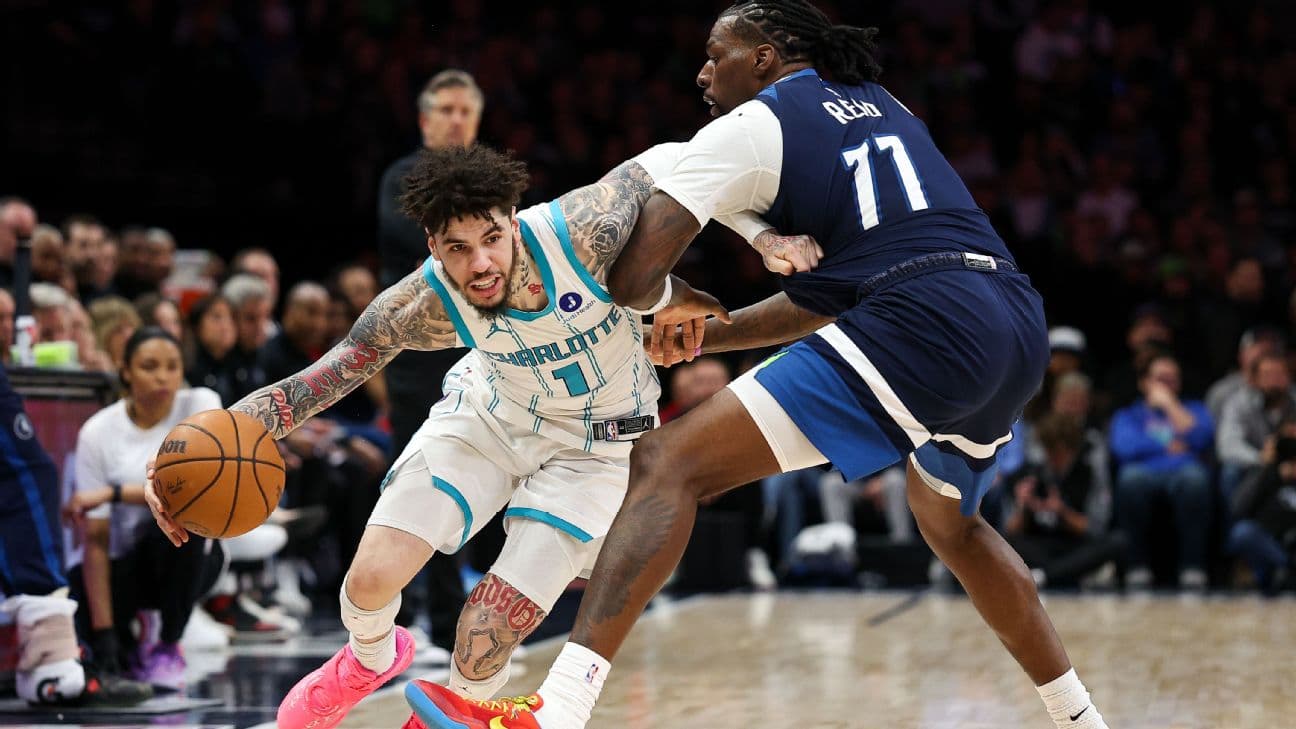
LaMelo Ball is heading to the Minnesota Timberwolves. In a four-team blockbuster involving the Hornets, Timberwolves, Nets, and Bulls, Charlotte moved its franchise point guard, with Ball and Josh Green landing in Minnesota and the Hornets receiving Naz Reid along with a package of draft picks. Ball, coming off a season in which he averaged around 20 points, seven assists, and nearly five rebounds per game, now shares a backcourt with rising superstar Anthony Edwards. For fantasy managers, the fit raises real questions about how the two ball-dominant guards coexist.
The move gives Minnesota two players capable of putting up 20-plus points per night, a potentially lethal pairing in the Western Conference. But two high-usage guards sharing a backcourt almost always means at least one sees his individual numbers compress, and that dynamic is the central fantasy story. Ball's value has always been driven by volume: points, assists, threes, and steals piled up as the unquestioned engine of Charlotte's offense. In Minnesota, he will not have that offense to himself.
The fit next to Edwards
Edwards is Minnesota's established alpha, and the offense will continue to run through him. That reality caps Ball's usage relative to the featured role he held in Charlotte, where he commanded the ball on nearly every possession. The most likely fantasy outcome is a modest dip in Ball's scoring and assist volume as he adjusts to sharing creation duties with a superstar who is not ceding his own touches.
The offsetting factor is efficiency and team context. Playing next to Edwards and a stronger supporting cast should give Ball cleaner looks and reduce the defensive attention he faced as Charlotte's lone star. His three-point volume and steal production, two categories less dependent on usage, should travel well. The realistic read is a slightly reduced but more efficient version of Ball, one whose fantasy value shifts from raw volume toward balanced, efficient production.
Charlotte's side of the deal
Naz Reid arrives in Charlotte as the fantasy winner on the Hornets' end. Moving from a crowded Minnesota frontcourt to a rebuilding Charlotte team should hand Reid a larger role and more minutes, boosting his scoring, rebounding, and three-point output. A stretch big who was often the third or fourth option in Minnesota could become a featured piece for the Hornets, making him one of the more appealing ascending values from the trade.
Charlotte's broader rebuild also opens opportunity for its returning young pieces, who inherit the usage that Ball's departure leaves behind. A team that trades its franchise guard has a lot of shots to redistribute, and the Hornets' remaining core and new arrivals all stand to benefit. Deep-league managers should map out who absorbs Ball's vacated volume in Charlotte, because that is where the cheapest new production sits.
Josh Green and the Minnesota rotation
Josh Green is the secondary piece heading to Minnesota, and his fantasy value depends entirely on the minutes he can carve out in a deeper rotation. A three-and-D wing joining a contender typically settles into a role-player function, which caps his standalone fantasy appeal but keeps him relevant in deep leagues if he earns steady minutes. Managers should treat Green as a monitor-the-role situation rather than a draft-day priority, since a crowded Minnesota wing rotation could limit his opportunity.
The arrival of Ball also nudges the rest of the Minnesota rotation. A second high-usage guard changes how the Timberwolves distribute touches and could trim the ball-handling responsibilities of their existing role players. Anyone rostering a secondary Minnesota piece should reassess after this trade, because adding a player of Ball's usage profile inevitably reshapes the touches available to everyone else on the roster.
The injury history caveat
Ball's fantasy profile has always carried durability risk, and any projection has to account for his history of missed time. A move to a contender with a deeper roster could actually help here, since Minnesota has less incentive to overextend him than a lottery-bound Charlotte team did. Managers valuing Ball should factor in both the usage dip and the games-played risk, which together argue for a discount off his peak fantasy ceiling.
The upside case is that a healthier, more efficient Ball in a winning environment provides balanced production across categories with less wear. The downside case is that reduced volume plus injury risk erodes the elite scoring-and-assist package that made him a fantasy centerpiece. The truth likely sits in between, which is why his new price should reflect a talented guard in a diminished but more sustainable role.
The Verdexed model take
Verdexed's model projects a modest reduction in Ball's usage and assist rate alongside Edwards, offset partially by improved efficiency and stable production in the volume-independent categories of threes and steals. The system treats him as a strong but no longer elite fantasy guard, with a games-played discount baked in for his injury history. Naz Reid grades as the trade's clearest fantasy riser, with the model projecting expanded minutes and a featured role on a rebuilding Charlotte squad.
On the team level, the model reads Minnesota as a bolder, higher-variance contender whose ceiling depends on the two guards coexisting, and Charlotte as a rebuild that just redistributed a franchise player's worth of opportunity. For bettors, the Timberwolves' upside rose on the move, while the fantasy value quietly shifted toward the pieces inheriting minutes in Charlotte.
What to do in your league
Draft Ball at a discount that accounts for both the usage dip next to Edwards and his injury history, and value him for balanced, efficient production rather than the raw volume he posted as Charlotte's engine. Target Naz Reid aggressively as an ascending value in a bigger role, and speculate on the Hornets' young pieces who inherit Ball's vacated touches.
The actionable read is that this trade lowered LaMelo Ball's fantasy ceiling while raising his floor and efficiency, and it created clear new value in Charlotte. Chase the opportunity, price the risk, and remember that in fantasy basketball, the touches a superstar leaves behind are often worth more than the superstar's new, smaller share.