 NBA2026-07-15
LaMelo Ball Lands in Minnesota: A New Wolves Backcourt and the Fantasy Fallout
By Verdexed NBA Desk
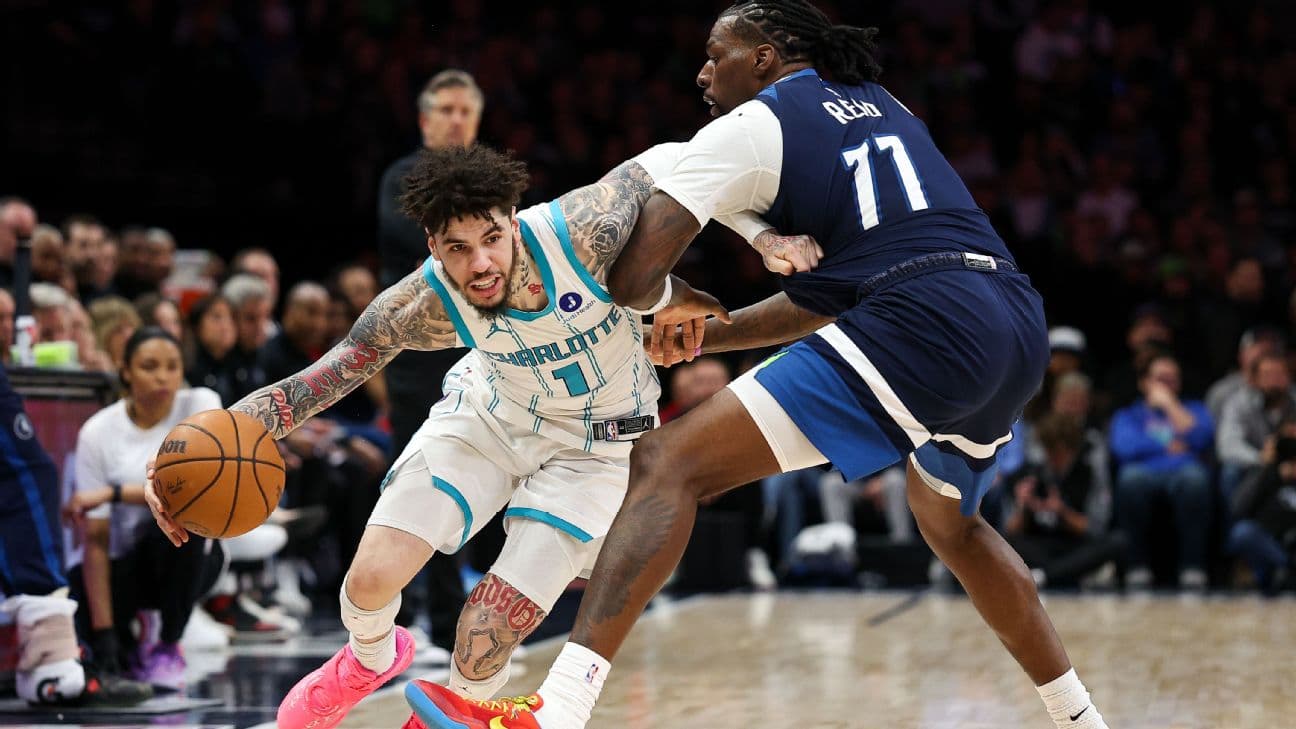
The Timberwolves have pulled off the summer's boldest swing, acquiring LaMelo Ball in a four-team blockbuster that reshapes the Western Conference and sends fantasy ripples across two rosters. Ball heads to Minnesota alongside Josh Green, while Naz Reid and a substantial package of draft capital, including a future unprotected first-round pick and a bundle of pick swaps and second-rounders, land in Charlotte. As part of the same multi-team deal, Minnesota moved forward Julius Randle to Brooklyn. The result is a new-look Wolves backcourt and a Hornets rebuild that just added significant assets.
For Minnesota, the appeal is obvious. Pairing Ball with Anthony Edwards creates one of the most dynamic and high-usage backcourts in the league, a combination built to raise the team's postseason ceiling. For fantasy managers, a change of scenery for a player of Ball's caliber is always worth a close look, because usage, pace, and shot distribution all shift when a star moves.
Ball's fantasy outlook in Minnesota
The headline for Ball managers is health, then fit. He was finally healthy last season, playing 72 games after injuries limited him in prior years, and he produced across the board with strong scoring, rebounding, and elite assist numbers for the position. That across-the-board line is what makes him a fantasy cornerstone when available, a source of points, threes, and dimes.
The fit question is usage. In Charlotte, Ball was the unquestioned engine. In Minnesota, he shares the floor with Edwards, one of the league's premier shot-creators. That could trim Ball's scoring volume and usage rate somewhat, but it may also mean easier looks, better spacing, and, importantly, more winning basketball, which tends to keep stars on the floor and out of the fourth-quarter blowout benchings that can cost fantasy production. The realistic projection is a slight scoring dip offset by efficiency and continued elite playmaking, keeping Ball firmly in the early-round fantasy conversation as long as he stays healthy.
The Charlotte side: opportunity for the young wings
The more actionable fantasy angle may be in Charlotte. With Ball's massive usage out of the picture, the Hornets' young perimeter players stand to inherit a large share of touches. Kon Knueppel and Brandon Miller are the names to target, both in line for expanded roles and higher usage in an offense that no longer runs through Ball. In fantasy terms, a usage vacuum on a rebuilding team is a gift, and these are the players positioned to fill it.
Naz Reid also arrives in Charlotte and will factor into the frontcourt picture, another player whose role and touches are worth monitoring as the Hornets reorganize around their younger core.
How the fit actually works on the floor
The on-court question that determines Ball's fantasy ceiling is how Minnesota staggers its two ball-dominant guards. Both Ball and Edwards are at their best with the ball in their hands, and there are only so many possessions to go around. The optimistic reading is that a smart rotation lets each run the offense for stretches, keeping both productive while the other plays off the ball, and that the gravity of two elite creators generates cleaner looks for everyone. The pessimistic reading is that they cannibalize each other's usage and neither reaches his individual ceiling.
The most likely outcome is somewhere in between, and it tilts toward the optimistic side for a simple reason: Ball's passing makes him a natural fit next to a high-volume scorer. He can create for Edwards, thrive as a spot-up and secondary-attack threat, and still control the offense when Edwards rests. That versatility is why the pairing projects to work basketball-wise even if it trims Ball's raw counting stats. For fantasy purposes, the assists and threes travel; it is the scoring volume that absorbs the hit.
The Verdexed model take
Verdexed's model views the trade as a modest fantasy negative for Ball's per-game ceiling but a positive for his availability and efficiency. The model's usage projection trims Ball's shot volume in deference to Edwards while lifting his true-shooting outlook and preserving his elite assist rate, netting out to a player who remains a top-tier fantasy guard but perhaps a rung below his ceiling as a lead ball-handler. The dominant swing factor, as it has been throughout his career, is games played.
On the Charlotte end, the model flags Knueppel and Miller as ascending-usage buys, the kind of players whose fantasy value tends to be underpriced immediately after a star departs because the market waits for confirmation before adjusting. That lag is the edge for managers willing to move early.
Betting angle
For Minnesota, the Ball-Edwards pairing raises the team's offensive ceiling and its projected pace, which supports a bump in the Wolves' win-total and postseason-odds outlook. The bet is on fit and health: a healthy Ball next to Edwards is a genuine title-tier backcourt, and the market will price Minnesota accordingly. Charlotte, meanwhile, tilts firmly toward the rebuild, and its win total reflects a team playing for the future and the development of its young core.
What it means
In fantasy drafts, Ball remains an early-round pick with a slightly recalibrated role, still elite when healthy but sharing the ball with a bona fide star. The sharper value plays are the Hornets who inherit his old touches. Draft Ball for the ceiling and the assists, target Knueppel and Miller for the usage bump, and treat availability as the variable that decides whether this trade makes Ball a fantasy bargain or a cautionary tale.