 NFL2026-09-11
Jeremiyah Love Is Trending Toward Playing Against the Chargers and Arizona Will Not Say How Much
By Verdexed Fantasy Desk
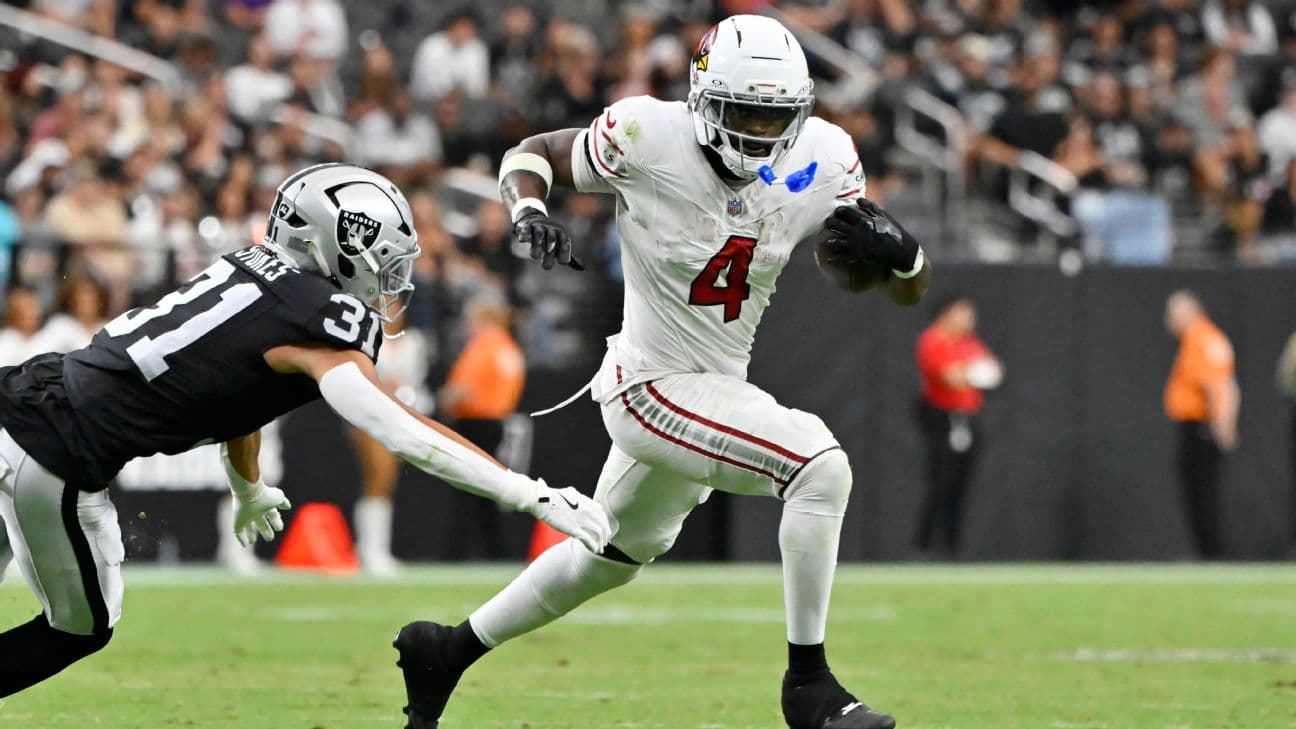
Jeremiyah Love is expected to be available for Arizona's opener against the Chargers, roughly four weeks after suffering a high ankle sprain in an August 13 preseason game against the Raiders. Head coach Mike LaFleur said this week that he is optimistic the first-round rookie plays, noting Love was moving well in a walkthrough and has been progressing.
Love practiced on a limited basis late in the week and appeared on the injury report with the ankle. He told reporters he would play whether the ankle felt 100 percent or considerably less than that, which is what every competitive rookie says and which tells fantasy managers nothing about his snap count.
High ankle sprains and the four-week line
The reason this story has been unresolved for a month is that high ankle sprains do not follow a clean timeline. They are ligament injuries between the tibia and fibula, they respond poorly to cutting and pushing off, and the functional recovery window in the NFL typically runs from two to six weeks depending on grade. Four weeks puts Love at the early-but-plausible end of that range.
The more important point is what a high ankle sprain does to a running back who is cleared. Even after a player returns, the injury suppresses lateral explosiveness and contact balance, which are the exact traits that made Love a first-round pick. Backs coming off these injuries frequently look a step slow for two to three weeks after they are activated, and Arizona knows it.
That is why the honest projection here is not binary. Love is likely to be active. He is unlikely to play a full workload, and the Cardinals have an established veteran in James Conner who exists precisely so the team does not have to force the issue in Week 1.
Fantasy fallout
Love is a flex play, not an RB2, and anyone who drafted him as a weekly starter should have a contingency. A rookie returning from a high ankle sprain, in his first NFL game, in a backfield with a competent veteran, is the definition of a capped opening week.
The counter-argument is talent and draft capital. Teams do not use a first-round pick on a running back and then split the work evenly, and if Love is genuinely healthy he should take over the backfield within a month. That is a redraft-season argument, not a Week 1 argument.
Conner is the actual Week 1 play in this backfield. He is the veteran, he is healthy, he has run this offense, and he is the back Arizona will lean on if Love's ankle limits him in the second half. Managers who rostered Conner as a Love handcuff should start him with reasonable confidence, and managers in leagues where he is available should claim him before Sunday.
The broader Cardinals offense is the other consideration. Arizona has a thin margin against a Chargers defense that has been among the more difficult run funnels in the league, which caps the ceiling on whichever back gets the work.
Betting angle
Rushing props are where a limited-snap running back does the most damage to a bettor. The market prices Love's rushing yardage number off his draft capital and the expectation that he is the lead back, and it adjusts more slowly than the injury report does.
The disciplined play is the under on Love's rushing yards if the number is set as though he will handle a full workload, and the over on Conner's attempts if the market has priced him as a backup. These are the classic opening-week inefficiencies, because books are working with the same limited practice information everyone else has and are relying heavily on preseason depth-chart assumptions.
Anytime touchdown markets deserve a look too. If Arizona is protecting Love, the goal-line work goes to Conner, and short-yardage touchdown equity is the single most valuable thing a running back can own in a low-scoring game.
The Verdexed model take
Running back models handle injury returns by discounting both the projected snap share and the projected efficiency, because a back coming off a lower-body injury is worse at the thing he is being asked to do and is asked to do it less often. Stacking those two discounts produces a much lower projection than the simple "he is active, so start him" heuristic that drives most public rankings.
Applied here, the model treats Love as roughly a 55 percent snap-share back with efficiency graded a tick below his projected baseline, which lands him in flex territory rather than as a starter. Conner moves up correspondingly and grades as the more reliable of the two for this specific week.
The season-long projection is unchanged. Love remains the back with the higher ceiling and the clearer path to a large role, and a manager who paid a premium for him in August should not be discouraged by a quiet opener.
What to do in your league
Start Love in leagues deep enough that the alternative is worse, bench him if you have a healthy starter available, and start Conner if you have him. Do not trade Love this week in either direction, because his price is being set by an injury report rather than by anything anyone has seen on a football field.
Watch the second half on Sunday. If Love is still taking early-down carries in the fourth quarter, the ankle is behind him and he is a weekly starter from Week 2 forward. If Conner closes the game, this backfield is a committee until the bye.