 NBA2026-07-07
Jaylen Brown Traded to the 76ers for Paul George: A Blockbuster That Reshapes Title Odds and Both Fantasy Outlooks
By Verdexed NBA Desk
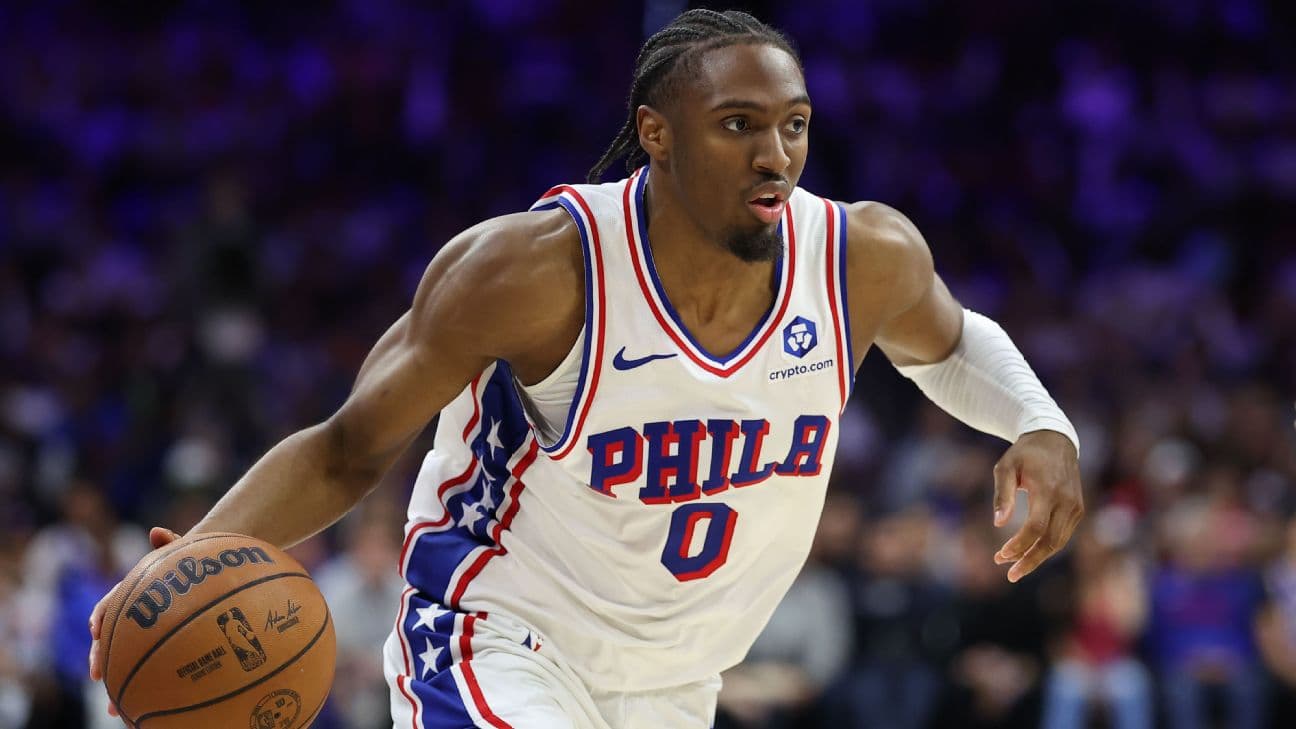
The Boston Celtics have traded Jaylen Brown to the Philadelphia 76ers for Paul George and a package of draft picks, a franchise-altering swap that became official on July 6. Philadelphia lands a 28-year-old two-way star entering his prime, while Boston takes on an aging, injury-prone George plus two first-round picks and two second-rounders. For fantasy managers and bettors, this is one of those trades that forces a full reprice on both sides, and the ripple effects reach well beyond the two headliners.
Brown, a 2024 Finals MVP and an All-NBA selection last season, is coming off a year in which he averaged roughly 28.7 points, 6.9 rebounds, and 5.1 assists. George, 36, never approached his nine-time All-Star form across an injury-marred, incident-marred Philadelphia tenure that included a lengthy suspension. On paper, this is a star-for-star deal; in practice, it reads as one team going all-in and another beginning to retool.
Why Philadelphia made the move
The 76ers are betting on a win-now core built around Joel Embiid, Tyrese Maxey, and now Brown. Swapping out an oft-injured, declining George for a younger, healthier, more complete two-way wing is a clear upgrade to their championship equation, and it should shorten their title and conference odds in the market. Brown gives Philadelphia a second shot creator who can defend at a high level and take pressure off Embiid in the half court.
The fantasy implication in Philadelphia is a usage puzzle. Brown, Maxey, and Embiid all need the ball, and Brown's arrival trims the ceiling on Maxey's shot volume relative to the season he just played as a primary initiator. Brown himself should remain a high-usage, multi-category producer, but managers drafting him should expect his scoring average to hold while his assist and shot totals settle into a shared hierarchy. Embiid's fantasy value hinges, as always, on health, and the addition of another self-creating scorer only helps his efficiency and rest.
What Boston is signaling
Boston's return, headlined by George and a pick package that includes a 2028 first with swap protections favorable to the Celtics and an unprotected 2031 Philadelphia first, plus two seconds, is the sort of haul a team collects when it is prioritizing future flexibility over the present. Coming on the heels of missing on other star pursuits this offseason, moving Brown for an older player and draft capital points toward a reset rather than a reload.
For fantasy purposes, George is the more complicated asset. When healthy and engaged, he is still a plus multi-category contributor: threes, steals, assists, and scoring. But his availability is the entire question. A 36-year-old on an expiring-timeline roster carries real load-management and trade-again risk, which caps his draft-day appeal and makes him a value that lives and dies with his games played. If Boston leans into development, the more interesting fantasy names may be the young players whose roles expand around him.
The Verdexed model take
Verdexed's model treats this as a decisive title-odds shift toward Philadelphia and a clear step back in the market for Boston's win total. A healthy Brown next to Embiid and Maxey is a top-tier offensive trio, and the model views the 76ers as one of the biggest odds movers of the offseason, contingent, as ever, on Embiid's health holding up over 82 games.
On the player-value board, the model's read is straightforward: Brown remains a confident early-round fantasy pick whose profile travels to any roster, with a mild usage haircut baked in. George is a boom-or-bust mid-round gamble priced almost entirely on availability. And Maxey slides a notch in scoring projection while gaining efficiency from playing next to another creator, which is a fair trade for a fantasy manager who values a stable floor.
Betting angle
The cleanest market reaction is on Philadelphia's futures. The 76ers should see their championship and conference odds shorten, and their regular-season win total should tick up if books have not already adjusted. The counterweight is Embiid's injury history, which is precisely why the market may not move Philadelphia as far as the talent suggests, leaving potential value for bettors who trust the health.
Boston's win total is the other side of the trade. Subtracting a two-way star and adding an aging, uncertain George should push the Celtics' number down, and any further moves that lean into a rebuild would push it lower still. Bettors should watch how Boston fills out the roster before committing to the under, since the pick capital gives them the ammunition to pivot in either direction.
The dynasty and keeper angle
In dynasty formats, this trade sharpens the divide between the two franchises. Brown, at 28 and attached to a win-now core, is a stable long-term asset whose value holds so long as he stays healthy and Philadelphia contends. George, at 36 and heading to a team that just collected draft capital, is the opposite: a short-window veteran whose dynasty value is fading and who could be moved again, making him a sell-if-you-can piece rather than a hold.
The more rewarding dynasty play is on the periphery. Boston's pivot toward picks tends to open developmental minutes for younger players, and dynasty managers who identify the Celtics' beneficiaries early can buy low before roles crystallize. A rebuilding-leaning Boston roster is exactly where cheap long-term value tends to hide.
What to do in your league
Draft Brown with confidence as an early-round anchor, adjusting his assist projection slightly for the shared backcourt. Treat George as a high-variance mid-round pick you are comfortable dropping if his availability wavers, and do not reach for him on name value. Bump Maxey for efficiency and hold his scoring expectation steady rather than elevated. And keep an eye on Boston's depth chart in the coming weeks, because a reset in Boston tends to create exactly the kind of expanded roles that produce late-round fantasy value.