 NBA2026-07-02
Jaylen Brown Traded to the 76ers for Paul George: A Blockbuster That Reshapes the East and the Fantasy Board
By Verdexed NBA Desk
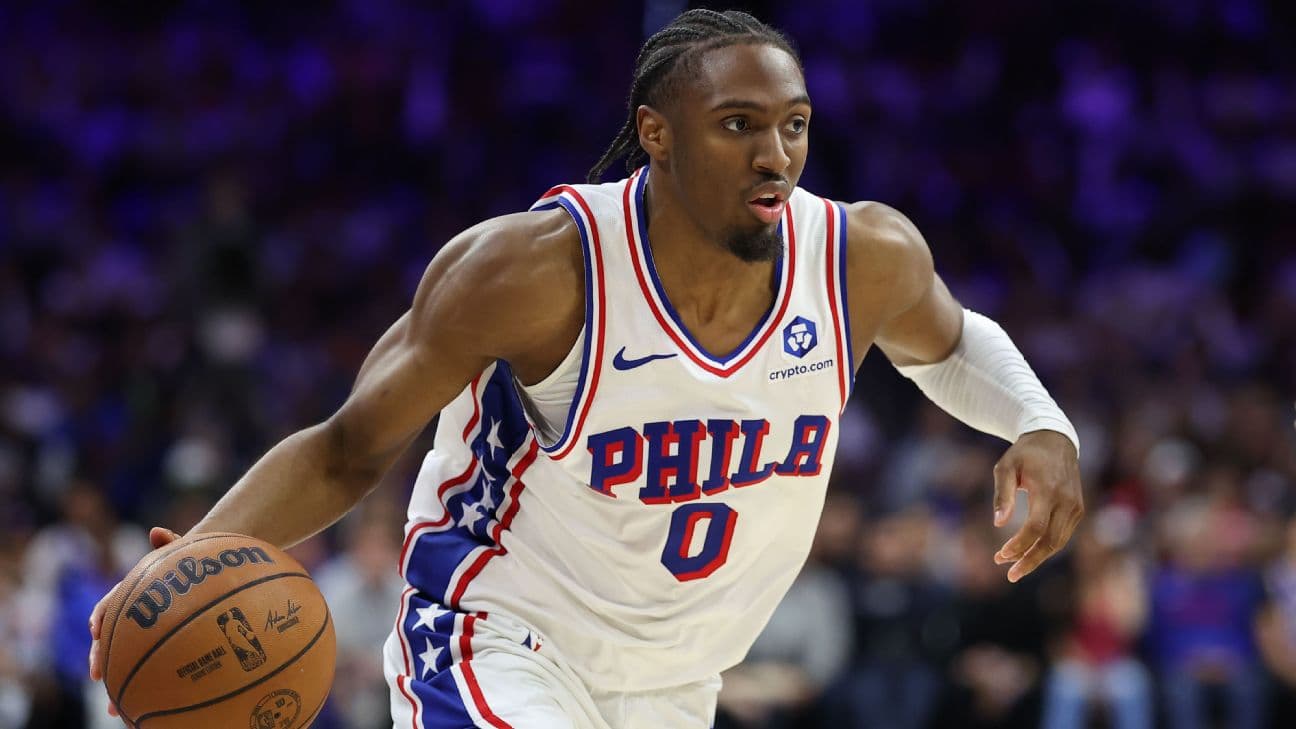
The Boston Celtics agreed to trade former NBA Finals MVP Jaylen Brown to the Philadelphia 76ers, sending one of the league's premier two-way wings to a division rival in exchange for Paul George, two first-round picks, and two second-round picks. It is the kind of trade that resets an entire conference and, for anyone managing a fantasy roster or setting a futures ticket, forces a full re-rank of two rosters at once.
The deal landed after Boston spent days shopping Brown around the league, according to multiple reports, and after the Celtics missed on a swing for Giannis Antetokounmpo that ultimately went to Miami. Brown, per those reports, never requested a trade. He is simply the price Boston paid to reshape its books and its roster around Jayson Tatum, who is working back from an Achilles injury.
The deal in plain terms
Philadelphia acquires Brown coming off a career year: reported averages of 28.7 points, 6.9 rebounds, and 5.1 assists while carrying a heavy offensive load. Boston receives Paul George, a nine-time All-Star whose game has trended toward efficient off-ball scoring and defense as he has aged, plus draft capital that includes first-round picks in 2028 and 2031 and two second-rounders. The immediate market reaction was stark: Philadelphia's odds to win the Eastern Conference shortened dramatically, and its NBA Finals number moved from a long shot into the middle of the contender pack.
For fantasy managers, the headline is simple. Brown moves from a shared, Tatum-centric hierarchy into a new one alongside Joel Embiid, Tyrese Maxey, and young guard VJ Edgecombe. George moves from that Philadelphia mix into a Boston team that now runs through Tatum. Every usage projection on both rosters shifts.
Fantasy fallout in Philadelphia
Brown is the clear winner for real value and the clear question mark for fantasy ceiling. He is a better player than the version of Paul George Philadelphia was getting, and he immediately becomes the second option next to a healthy Embiid and the co-lead when Embiid sits. The concern is touches. Maxey is a bona fide lead guard who needs the ball, Edgecombe is a rising usage piece, and Embiid, when available, commands the offense in the halfcourt. Brown's scoring should hold, but his assist and rebound rates could dip from the inflated numbers he posted while shouldering Boston's offense without Tatum.
The more actionable fantasy read is on the players around him. Maxey's efficiency could rise with a genuine secondary shot-creator drawing defensive attention, though his assist volume may compress. Edgecombe is the name to monitor closely: a young, athletic guard whose developmental runway just got more crowded. In deeper leagues, his path to consistent minutes and usage matters, and Brown's arrival caps his short-term ceiling even if it helps his efficiency. Embiid's fantasy value, as always, is a health question more than a usage one, but a Brown-Maxey-Embiid trio, when whole, is a top-tier scoring core.
Fantasy fallout in Boston
Boston's roster is now unambiguously Tatum's. Paul George slots in as a complementary scorer and perimeter defender, and his fantasy value depends heavily on how Boston chooses to manage his minutes as he ages and as Tatum ramps back from the Achilles. If Tatum's return is measured early in the season, George could see a temporary usage bump that makes him a useful streaming target in the opening weeks. Once Tatum is fully unleashed, George settles into a lower-usage role that plays better in points leagues than in categories.
The secondary Boston names, from the returning guards to the frontcourt rotation, all gain a sliver of opportunity with Brown's shot attempts leaving town. None of them replaces a 28-point scorer, but the vacated usage has to go somewhere, and in the early season that is worth tracking on the waiver wire.
The Verdexed model take
Verdexed's model treats this as a clear present-value win for Philadelphia and a bet-on-the-future move for Boston. Swapping an aging George for a wing entering his prime, and adding two first-round picks, is the kind of talent-plus-flexibility haul that models reward. The market agreed, moving Philadelphia sharply up the Eastern Conference and Finals boards.
From a projection standpoint, the model expects Brown's per-game scoring to hold in the mid-to-high 20s but his combined assists and rebounds to regress toward his career norms rather than last season's career highs, simply because he no longer has to do everything. That nuance matters in category leagues, where Brown's value is very good but not elite once his counting stats normalize. In Boston, the model views George as a low-end starter or high-end bench piece in standard formats, with a short-lived early-season bump possible if Tatum's ramp is cautious.
Betting angle
The futures market has already moved, which means the easy edge is gone. The more interesting bets are the derivatives: Philadelphia's regular-season win total, Embiid's games-played props given his history, and Eastern Conference award markets where Maxey and Brown could split a team's scoring in a way that helps or hurts individual candidacies. Boston, meanwhile, becomes a fascinating win-total question. A Tatum-led team with George and fresh draft capital is not a rebuild, but it is a step back from a championship core, and the number should reflect a team recalibrating rather than reloading.
What to do in your league
If you drafted or hold Brown in a dynasty format, his real-life value is fine, but temper the category-league expectations that his Boston workload created. In redraft, treat him as a strong but not top-five wing whose counting stats will normalize. Buy Maxey with confidence as a lead guard who now has a genuine co-star. Watch Edgecombe's minutes before committing a roster spot. And on the Boston side, keep Paul George on your early-season streaming list, because the first month, while Tatum ramps up, is where his fantasy value will peak.
The bigger picture is that the East just got more top-heavy. Miami added Giannis, Philadelphia added Brown, and Boston pivoted toward the future. For fantasy managers, that churn is opportunity: the usage is moving, and the managers who re-rank fastest will win the waiver wire in October.