 NBA2026-07-13
Jaylen Brown to the 76ers, Paul George to Boston: The Fantasy Fallout of the Summer's Biggest Swap
By Verdexed NBA Desk
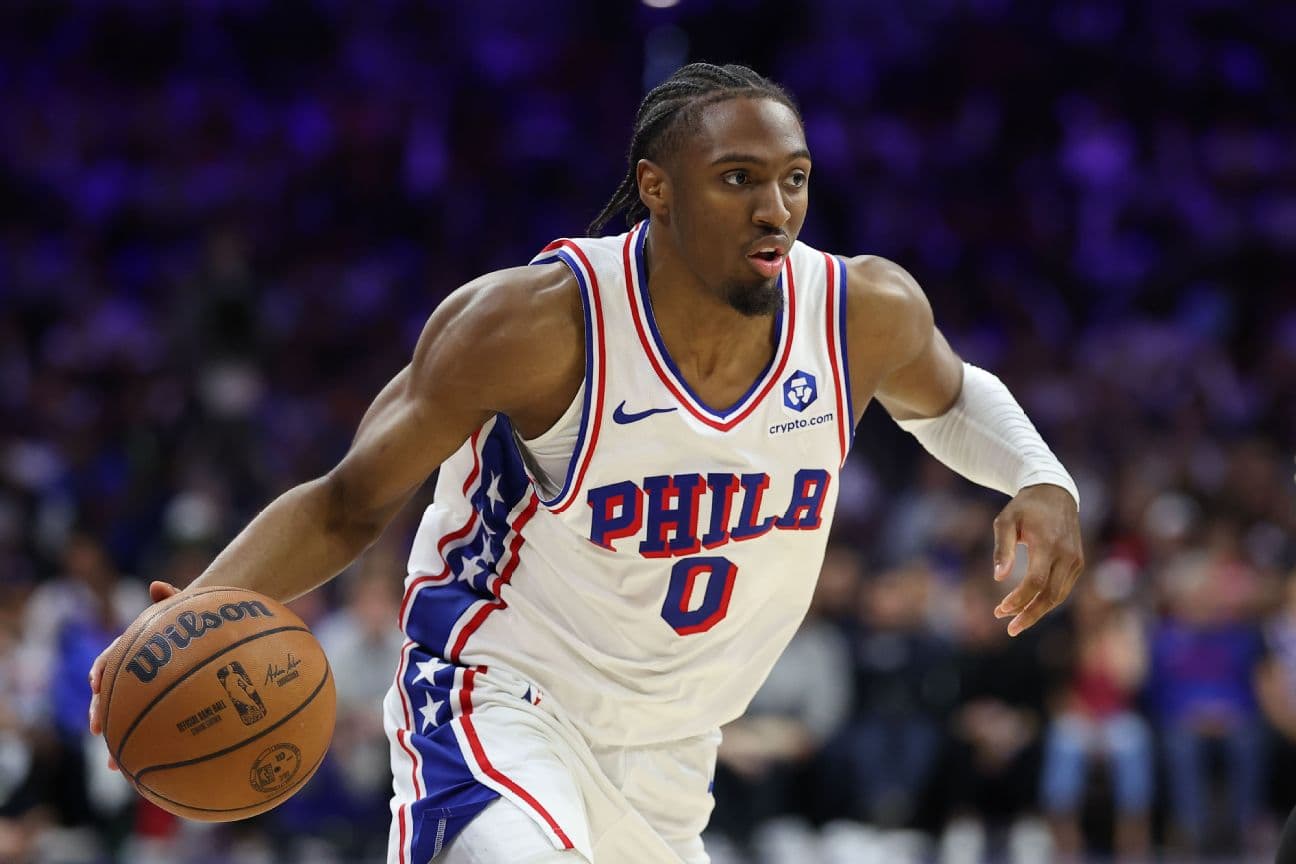
The Boston Celtics and Philadelphia 76ers pulled off the offseason's biggest blockbuster, with Boston sending Jaylen Brown to Philadelphia in exchange for Paul George and a package of draft picks that became official in early July. It is a franchise-altering swap for both teams and a significant one for fantasy managers, because it changes the roles, supporting casts, and usage projections for two established stars. Here is what the trade means on the court and in fantasy lineups.
The deal
Boston traded Brown to the 76ers for George plus two first-round picks and two second-round picks, according to reporting first surfaced by ESPN and confirmed by multiple outlets. The pick package includes a 2028 first that can convert to a more favorable swap for Boston, a 2031 unprotected first, and two seconds drawn from the most favorable of several teams' picks. The move ends Brown's decade-long run in Boston, which included five All-Star appearances, and reshapes both rosters around a new star.
For Philadelphia, acquiring Brown is a bet on a younger, two-way wing entering his prime. For Boston, taking on George and the pick haul is a calculated pivot, adding a veteran star while banking future assets. The framework reflects two front offices making very different bets: the 76ers on winning now with a younger core piece, the Celtics on flexibility and the long game.
Jaylen Brown in Philadelphia
Brown lands in Philadelphia as a featured scorer, and his fantasy profile should remain strong. He has been a high-usage, two-way wing capable of filling the box score across points, rebounds, and steals, and a change of scenery to a team that acquired him to be a centerpiece should preserve or even elevate his role. The key question is the fit alongside Philadelphia's existing stars and how the touches are distributed, because Brown's scoring average depends on his usage rate in a new pecking order.
If Brown slots in as a primary or co-primary option, his fantasy value holds firm as a mid-first-round to early-second-round asset. If the 76ers' hierarchy compresses his usage, his counting stats could dip modestly. The most likely outcome is that a team trading a star and four picks to acquire him gives him the ball enough to remain a strong fantasy contributor, but managers should monitor the preseason usage signals before locking in his ranking.
Paul George in Boston
George's move to Boston is the more uncertain fantasy situation. A veteran wing joining a new team and a new hierarchy, George's value hinges on his health and his role in the Celtics' revamped rotation. When healthy and featured, George is a multi-category producer who contributes points, threes, assists, and steals, the kind of well-rounded profile fantasy managers love. The risk is availability, as George's recent seasons have included missed time, and his age adds to the durability concern.
For Boston, George represents a win-now veteran who fills the scoring void left by Brown's departure, and his usage should be substantial on a team that just traded its homegrown star. That points to a meaningful fantasy role if he stays on the floor. Managers drafting George are essentially betting on health, because the per-game production is there when he plays, and the Celtics have every incentive to feature him.
The Verdexed model take
Verdexed's model sees Brown as the safer fantasy bet of the two post-trade. His age, two-way production, and the fact that Philadelphia surrendered significant capital to get him all point to a secure, high-usage role, which the model rewards with a tight projection band. George carries more variance: his per-game value remains strong, but the model widens his range of outcomes to account for the availability risk that has defined his recent seasons.
For bettors, the trade moves both teams' futures. Philadelphia's addition of a prime two-way wing tightens its playoff and conference odds, while Boston's pivot toward George and future picks introduces short-term uncertainty that the market is still digesting. On the player-prop side, Brown's scoring and combined-stat season totals are the cleaner over, while George's are a health-dependent bet best approached with caution given his injury history.
What to do in your league
Draft Brown with confidence as a mid-first to early-second-round asset, monitoring only how Philadelphia distributes touches among its stars. His floor is high, his role is secure, and the acquisition cost guarantees he will be featured. He is the safer of the two players to build around this season.
Approach George as a talented but risky pick whose ceiling is a multi-category producer and whose floor is a player who misses chunks of the season. Draft him a tier below where his healthy production would suggest, and make sure you have the roster depth to absorb missed games. If he stays on the floor, he returns value; if he does not, you want insurance.
What's next
Preseason usage will clarify both situations. Watch how Brown fits into Philadelphia's hierarchy and whether George is fully healthy and featured in Boston. The trade reshapes the fantasy landscape for two stars, and the managers who read the new roles correctly will find value on draft day. For now, Brown is the safer bet and George the higher-variance one, and both are worth a close look as the season approaches.
The ripple effects
The trade does not just move Brown and George; it reshapes the supporting casts around them. In Philadelphia, adding a high-usage wing like Brown compresses the touches available to the 76ers' complementary scorers, which could nudge down the fantasy value of secondary options who thrived on volume before the deal. Managers should reassess the entire Philadelphia rotation, not just Brown, because a new alpha changes everyone's usage. In Boston, the departure of a homegrown star and the arrival of a veteran on a shorter timeline opens opportunity for the Celtics' younger players to absorb more responsibility, which can create sleeper value further down draft boards.
The four picks Boston received also matter for the longer view. A team that banks that much future capital is signaling flexibility, and further moves are possible before the season tips off. For dynasty and keeper managers, that uncertainty is worth tracking, because a follow-up trade could shift roles again. The immediate fantasy read centers on Brown and George, but the smart managers will watch how both rosters settle around them in the weeks ahead.