 NBA2026-07-20
Jaylen Brown to the 76ers for Paul George: The Fantasy Fallout of Boston's Blockbuster
By Verdexed NBA Desk
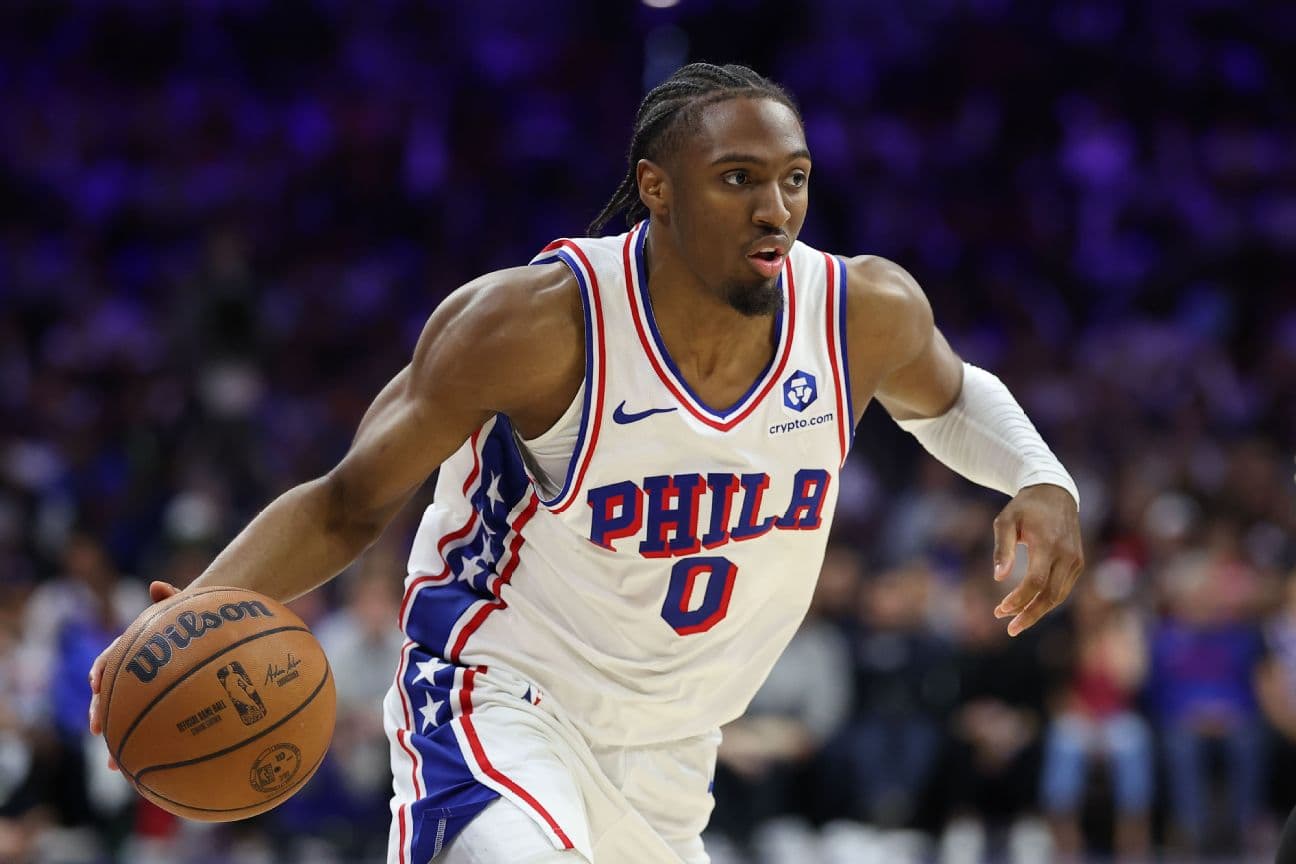
The Boston Celtics traded Jaylen Brown to the Philadelphia 76ers for Paul George and a package of draft picks, a blockbuster that sends a former Finals MVP to one of Boston's chief rivals and reshapes the fantasy outlook for both rosters. The deal, which became official in early July, is one of the summer's most consequential swaps, and its fantasy implications run deeper than a simple name-for-name exchange because the two players are at very different points on their career arcs. Here is what it means for category leagues, points leagues, and draft boards.
The deal
Boston sent Brown to Philadelphia in exchange for George, two first-round picks, and two second-round picks. Brown is coming off arguably the best individual season of his career, a year that saw him finish in the top ten of MVP voting, and he was just two seasons removed from Finals MVP honors. He spent a decade with the Celtics, and the reporting around the deal underscored how significant a franchise pivot it represented for Boston.
For Philadelphia, the move adds a bona fide two-way star entering his prime. For Boston, it is a talent-for-flexibility trade, taking on George's contract and production while banking a haul of picks that signals a longer-term recalibration.
Fantasy fallout: Jaylen Brown in Philadelphia
Brown's fantasy value hinges on his role and usage in a new setting. In Philadelphia, the questions are about the shot distribution alongside the Sixers' existing pieces and how the offense flows through him. A star of Brown's caliber will command a high usage rate regardless, which keeps his scoring, boards, and defensive counting stats in the elite range that made him a top-tier fantasy option in Boston.
The category profile to watch is efficiency. Brown's fantasy value in nine-category leagues has always been slightly tempered by turnovers and free-throw volume, and a new offensive hierarchy could nudge those numbers in either direction. In points leagues, his scoring floor makes him a safe early-round pick. The realistic read is that Brown remains a high-end fantasy asset whose exact tier depends on how cleanly Philadelphia integrates him, and drafters should treat the transition as a modest source of variance rather than a reason to fade a proven producer.
Fantasy fallout: Paul George in Boston
George is the more complicated fantasy case because of age and durability. When healthy, he is a multi-category contributor who fills the box score with points, threes, steals, and assists, exactly the profile fantasy managers covet. The risk is availability, and his fantasy value in Boston will be a function of how many games he plays as much as how he produces in them.
A move to Boston could actually stabilize George's role, slotting him next to the Celtics' remaining stars in a system that generates open looks. If he is healthy, he is a strong multi-cat option whose three-point volume and defensive stats provide category balance. Draft him for the production, but price in the games-missed risk that has followed him, and value him higher in formats that reward per-game averages over cumulative totals.
The ripple effects
Every star swap reshuffles the pecking order around it. In Philadelphia, Brown's arrival compresses the usage available to the Sixers' other scorers, a small negative for the secondary options' ceilings. In Boston, George's addition and Brown's departure redistribute touches among the Celtics' remaining core, potentially lifting the usage of the players who stay. Those redistributions are where mid-round fantasy value is created, and drafters should track how each team's rotation settles in the preseason.
The betting angle
The trade nudges both teams' outlooks. Philadelphia adding a prime two-way star firms up its ceiling and supports a more aggressive stance on its win total and conference odds, assuming health across the roster. Boston's calculus is murkier, trading present production for flexibility and picks, which the market may read as a slight step back in the immediate term even as it strengthens the long-term picture.
For player props and season-long awards markets, Brown's usage in a new offense is the variable to monitor, because a high-usage role in Philadelphia keeps his scoring markets robust.
The Verdexed model take
The model treats Brown as the higher-floor fantasy asset of the two, citing his age and the best-season-of-his-career trajectory, and it prices George for production tempered by availability risk. It projects Brown to retain elite usage in Philadelphia and George to be a strong multi-category contributor in Boston when on the floor.
The actionable takeaways: draft Brown as a top-tier option with a small transition discount, value George for his multi-cat production while docking him for games-missed risk, and watch the preseason rotations for the secondary players whose usage rises in the wake of the swap. This is a trade that changes tiers at the top and creates opportunity in the middle rounds for both franchises.
The dynasty read
In dynasty formats, this trade sharpens the age divide that redraft managers can afford to ignore. Brown, in his prime and coming off a career year, is a franchise cornerstone whose dynasty value climbs with a fresh high-usage role in Philadelphia. George, further along his arc, is a win-now piece whose dynasty stock trends down even as his redraft production stays useful when healthy. Dynasty managers should treat Brown as a buy and George as a sell-high-into-a-contender asset, and the pick capital Boston collected only reinforces that the Celtics are playing a longer game than the Sixers.
The players to stash are the ones inheriting minutes and usage on both sides. Boston's reshuffled hierarchy could elevate a younger Celtic into a larger role, and those breakout candidates are exactly the cheap dynasty darts worth acquiring before the market catches up to their new opportunity.
What is next
Preseason will clarify how each team integrates its new star, and that clarity is what turns these projections into draft-day decisions. Watch Brown's usage and shot profile in Philadelphia and George's availability in Boston, because those two variables decide whether this blockbuster produces two elite fantasy seasons or one, and at what cost to the players around them.