 NFL2026-09-06
Jadarian Price Will Start Seattle's Opener and the Seahawks Backfield Belongs to a Rookie
By Verdexed Fantasy Desk
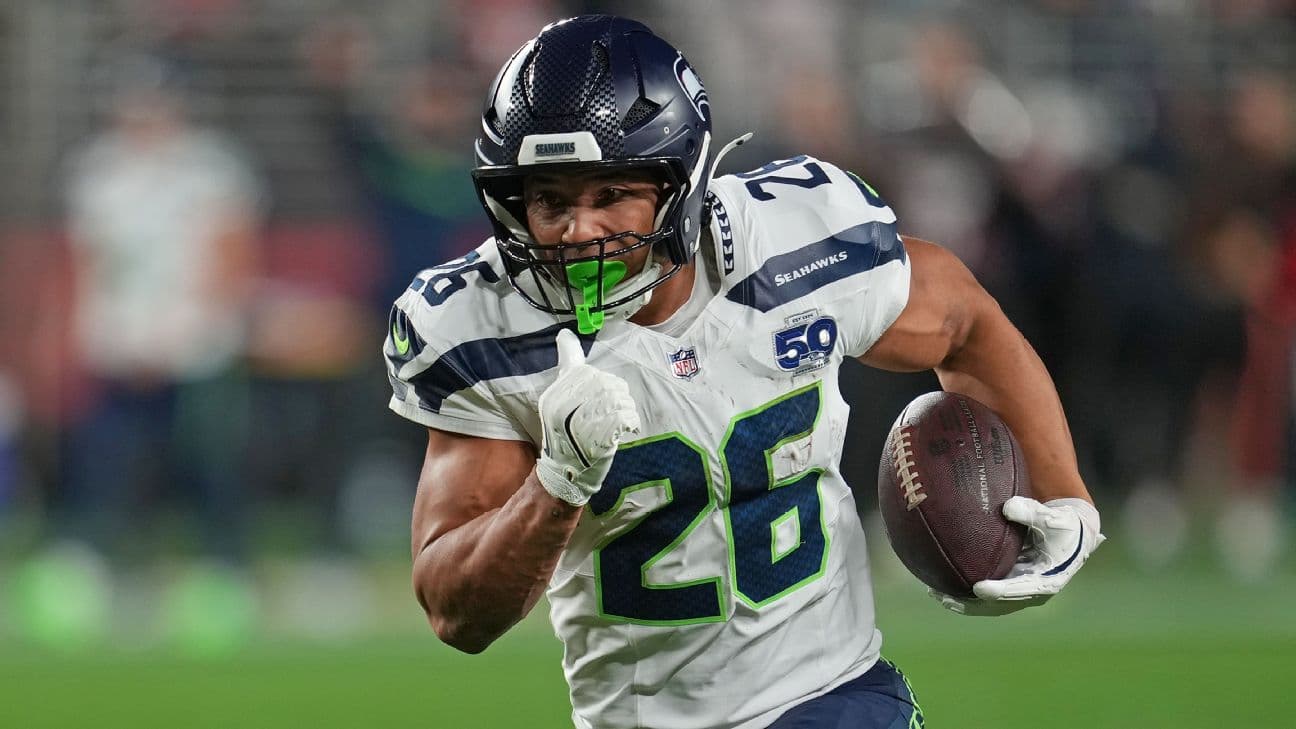
Jadarian Price will make his NFL debut Wednesday night when the Seahawks host New England to open the 2026 season, and he will do it as Seattle's lead runner. The Notre Dame back, taken at No. 32 overall in April, arrived in a backfield that lost its starter to free agency and its other established option to a knee injury, and the depth chart now reflects that.
Zach Charbonnet is on the reserve/physically unable to perform list after tearing an ACL in Seattle's January playoff game against San Francisco, which means he must miss at least the first four games of the regular season. Kenneth Walker III signed with Kansas City in free agency after leading the Seahawks in rushing last year. What is left on the 53-man roster is Price, George Holani, and Emanuel Wilson, with Holani expected to handle third downs and pass protection.
The job Price inherits
This is not a committee that a rookie has to win his way into over six weeks. It is a vacancy. Seattle spent a first-round pick on a running back for a reason, and the reason was staring the front office in the face in January when Charbonnet went down and the free agency market for Walker looked expensive. The team drafted its replacement, and circumstance handed him the opening night start.
The usage question is narrower than the role question. Holani's presence on passing downs caps Price's receiving ceiling in a way that matters in points-per-reception formats, and first-year backs generally do not get full pass-protection trust in Week 1. What Price should get is the early-down work, the goal-line work, and the closing carries in a game Seattle is favored to win. That is a functional RB2 workload in a good offense.
The other variable is what happens in October. Charbonnet is eligible to return after four games, and when he does the Seahawks have said nothing to suggest Price keeps the whole job. The realistic path is a split that resembles what Charbonnet and Walker ran last season, which was a genuine timeshare in which both backs were fantasy-relevant and neither was a set-and-forget starter. Price managers get four weeks of clean volume and then a negotiation.
Fantasy fallout
Price is a start in Week 1 in every format. That is the easy part. The harder call is how to value him in leagues that are drafting this weekend, because his average draft position has been climbing all camp and the four-week runway is now public information rather than an edge.
The answer is that he is worth the price if you are getting him as an RB2 and not if you are paying an RB1 tax. A rookie back with a four-game window, a pass-down committee partner, and a returning veteran waiting on the PUP list is a volatile asset, not a foundational one. Draft him where the volume justifies it, then plan a trade window in late September while his production and his job security both still look permanent.
Charbonnet is the other half of this trade. He is essentially free in most drafts because he cannot play until October, and managers who can carry a stash spot are buying a back with a track record of a double-digit touchdown season in a timeshare in this exact offense. That is the profile of a player who wins leagues in November for people who drafted him in September.
The betting angle
Seattle opened as a 3.5-point favorite over the Patriots with the total at 44.5 and slight juice to the under. A rookie starting at running back in a low-total game is not a profile that supports a big rushing-yardage number, and the market has priced Price's props accordingly, which is the opposite of the fantasy market's enthusiasm.
The more interesting derivative is the anytime touchdown market. If Seattle is the favorite in a game the market expects to stay inside the low forties, the winning script is almost certainly a lead protected on the ground, and Price is the back who would be on the field for it. Goal-line work is the least contested part of his role.
The Verdexed read
Verdexed's model treats vacated touches as the most reliable predictor of first-year running back production, more reliable than draft capital or preseason usage. Seattle vacated a full starter's workload through free agency and lost its next man through injury, and the team then invested a first-round pick specifically to replace both. That is about as clean a signal as this position produces.
The caveat the model applies is duration. Four games of guaranteed opportunity is not a season. The projection that matters is not what Price does against New England but what the split looks like on the day Charbonnet is activated, and there the honest answer is that nobody knows yet, including Seattle.
What to do in your league
Start Price Wednesday. Draft him as an RB2 rather than reaching into the early rounds. Spend a late pick or a waiver claim on Charbonnet in any league with an injured reserve slot or a deep bench, because the return date is known and the price will never be lower.
If you already roster Price, put a reminder on your calendar for the week Seattle activates Charbonnet. That is the week his trade value peaks and the week the ambiguity begins, and the managers who move first on that transition are the ones who capture the value.