 NBA2026-07-26
Ja Morant in Portland: The Blazers Backcourt Math That Decides His Fantasy Value
By Verdexed NBA Desk
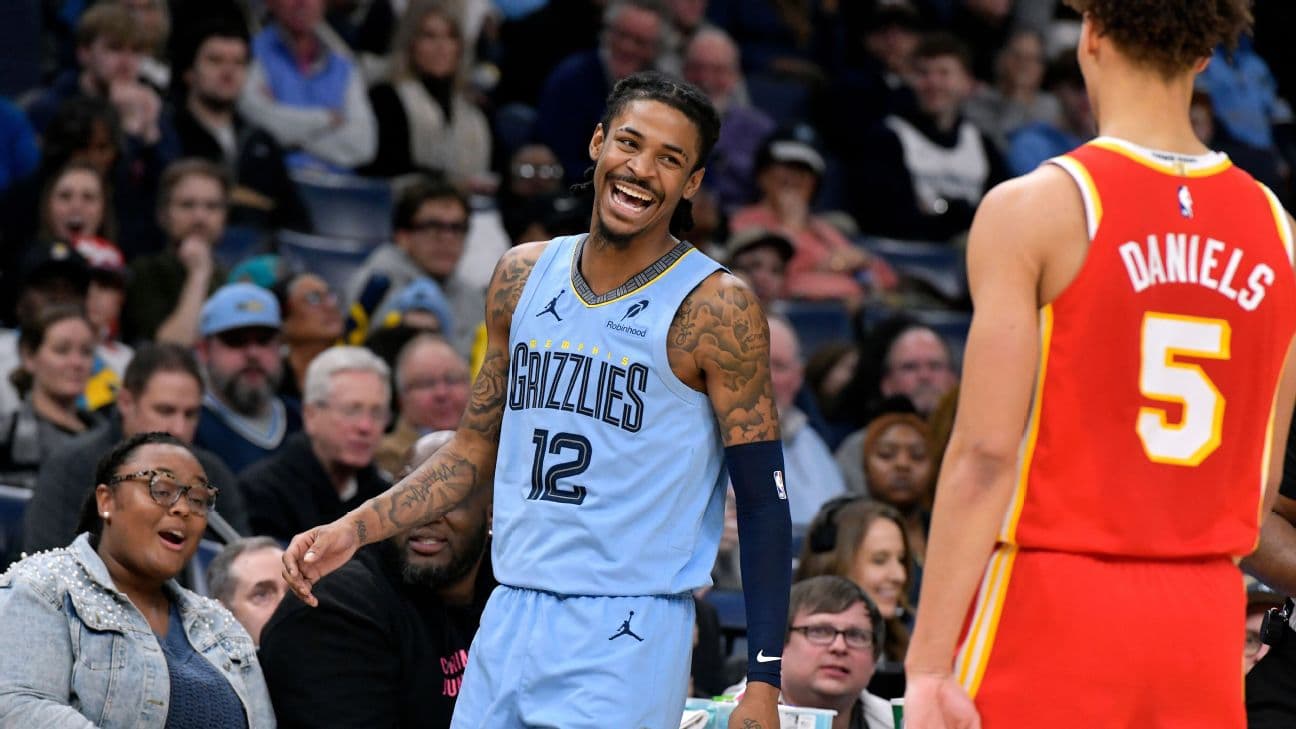
The Memphis Grizzlies traded Ja Morant to the Portland Trail Blazers for Jerami Grant and Kris Murray, a deal reported in late June that could not be formally completed until the league's moratorium lifted in early July. With the offseason now largely settled and camp roughly two months out, the fantasy question has moved past the headline and onto the harder problem: what Morant's role actually looks like in a backcourt that was already full.
Morant is 26. The context that every projection has to reckon with is availability. Reporting around the trade noted he had played only 79 games across three seasons since his second consecutive All-Star selection in 2023, a stretch shortened by both injuries and off-court suspensions. That is the single most important input in any fantasy valuation of him, and no change of scenery alters it.
The roster he joined
Portland is coming off its first playoff appearance since 2021, a season headlined by the emergence of Deni Avdija. The guard rotation Morant walks into includes Jrue Holiday, Shaedon Sharpe, and Damian Lillard, alongside Toumani Camara on the wing. By salary, Morant is the largest number on the books at a reported $42.1 million, with Holiday at roughly $34.8 million, Sharpe near $20 million, and Camara around $18 million.
That is a lot of money and a lot of minutes committed to players who need the ball. It is also a roster that just lost two rotation forwards in Grant and Murray, which pushes the frontcourt burden onto Avdija and Camara and, indirectly, raises the offensive load the guards have to carry.
The fantasy-relevant tension is between two readings. The optimistic one says a team that traded significant assets for a max-salary point guard intends to build the offense around him, and Morant's usage will reflect that. The skeptical one says Portland's coaching staff spent last season establishing a system that worked without him, and adding a fourth high-usage guard to a group that already includes two accomplished veterans produces a smaller share for everyone.
Fantasy fallout
Morant's fantasy profile has always been usage-dependent and category-narrow. He generates points and assists at an elite level, contributes almost nothing in blocks, and has historically been a below-average free throw and three-point volume asset relative to his draft cost. That combination means his value collapses faster than most stars when usage drops even modestly, because he has no secondary category to fall back on.
A reduced role in Portland, even a mild one, would push him from a top-25 fantasy asset toward the back of the second round in nine-category leagues. That is the risk being underpriced by managers who are drafting the name and the highlight package.
The more interesting angle is downstream. Sharpe is the player whose value swings most on this. He is on a modest salary relative to his production and has been viewed internally as a starter-caliber guard, and a ball-dominant point guard arriving either unlocks him as an off-ball scorer or squeezes him out of the rotation entirely. That binary makes him the highest-variance draft-day guard on this roster and, at his likely cost, the better risk-adjusted pick than Morant himself.
Avdija is the safest Portland asset in fantasy. Forwards who fill multiple categories and absorb frontcourt minutes on a roster that just subtracted two forwards do not depend on guard-rotation politics.
The Verdexed model take
The model's projection for Morant is built on two multipliers applied to his per-minute production: an availability discount and a usage discount. The availability figure is the harsher of the two. Projecting a full 82-game season for a player with his recent participation record is not a forecast, it is a hope, and the model's expected games played sits well below what his average draft position implies.
On usage, the model's central case has Morant leading Portland in touches but at a lower rate than his Memphis peak, because Holiday and Sharpe are not decorative pieces and Avdija's on-ball role grew last season. The combined effect produces a projection that is comfortably useful but meaningfully below where a name-driven market will draft him.
The team-level read is more favorable. Adding a player of Morant's caliber to a team that already made the playoffs raises Portland's ceiling, and the win total should move up. The model's caution is on variance rather than direction: this is a roster whose outcome distribution is unusually wide, because the same availability question that suppresses his individual projection also drives the team's.
The betting angle
Portland's season win total is the market to watch when numbers post. The reasonable position is that the market will price Morant close to a full season of availability, which historically has not been the correct assumption. If the number reflects a healthy 70-plus game Morant, the under is the disciplined side, not because the team got worse but because the pricing embeds a participation rate the player has not delivered in three years.
The better structural bet, if a book offers it, is on individual player props for Sharpe rather than anything Morant-related, since his role is the genuinely unresolved variable and unresolved variables are where soft numbers live.
What to do in your league
Let someone else draft Morant in the second round. Take Avdija at his price without hesitation, and target Sharpe as a mid-round upside swing where the cost of being wrong is small. In dynasty, Morant is a hold rather than a buy, because his age still supports value but the availability record has now persisted long enough to be treated as a characteristic rather than bad luck.
What's next
Camp is the next real information point. Watch the starting five in preseason, watch whether Holiday moves off the ball, and watch the reported minutes distribution in the guard rotation. Those three data points will settle a fantasy question that no amount of offseason speculation can.