 NBA2026-07-10
Ja Morant Lands in Portland: A Crowded Backcourt Clouds His Fantasy Value
By Verdexed NBA Desk
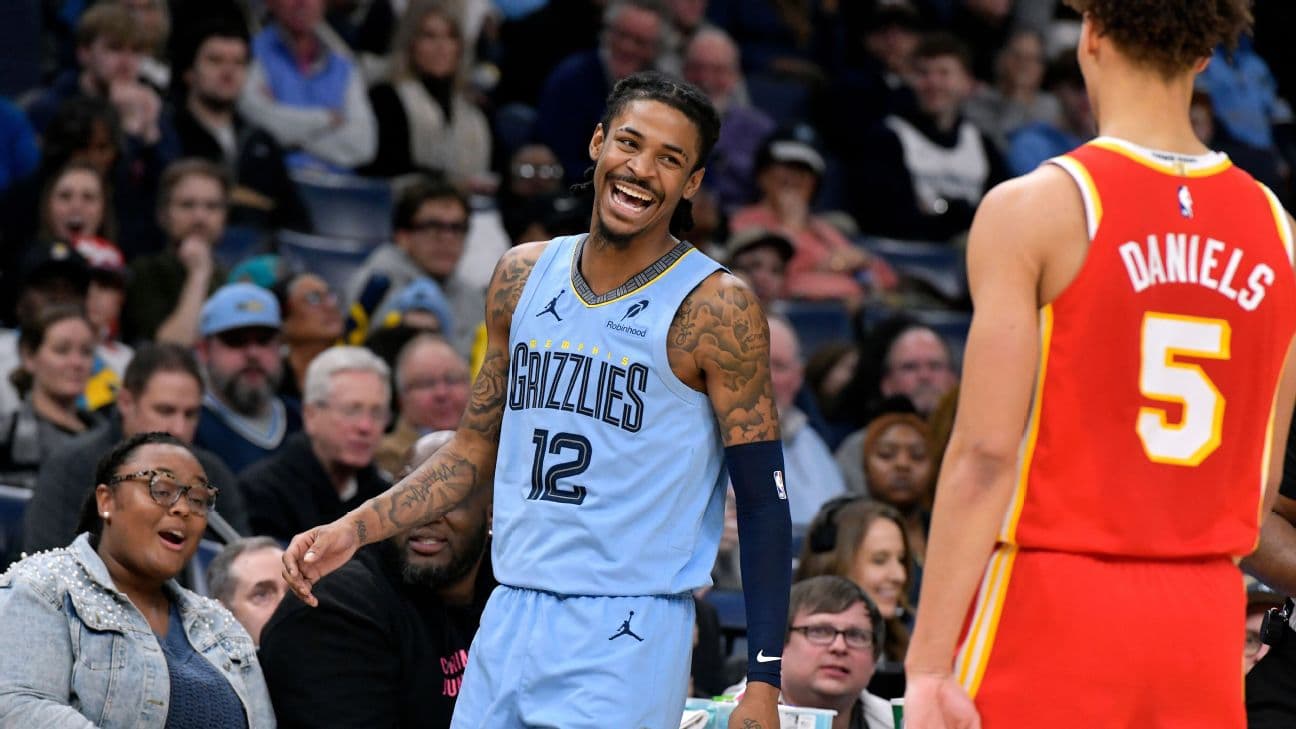
The Portland Trail Blazers swung a blockbuster of their own, acquiring star guard Ja Morant from the Memphis Grizzlies in exchange for Jerami Grant and Kris Murray, plus cash considerations. The move completes a stunning teardown in Memphis, which has now dealt all three of the franchise cornerstones it built around, and it drops one of the league's most electric guards into a Portland backcourt that is suddenly very crowded. For fantasy managers, the trade is more complicated than a simple star-changes-teams story.
Morant's talent is not in question. The question is how many touches and how much on-ball responsibility he will command in a guard room that already had plenty of mouths to feed.
The fit questions in Portland
Morant joins a Portland backcourt that already features established veterans and a young lead guard, a group that includes Damian Lillard, Jrue Holiday, and Scoot Henderson. That is a lot of ball-handling talent for one rotation, and it raises immediate concerns about how usage and on-ball reps get divided. Morant is at his best with the ball in his hands, attacking downhill and creating, and a shared backcourt can blunt exactly the aggressive, high-usage style that drives his fantasy production.
There is also the matter of health and consistency. Morant's fantasy value has always been tied to volume and explosiveness, and a reduced or reshaped role in a jammed rotation could trim the counting stats that make him a first- or second-round talent when he is fully unleashed. Managers should not assume he simply reproduces his Memphis numbers in a new, more contested environment.
The fantasy fallout for Morant
On talent alone, Morant remains a high-end fantasy guard capable of elite scoring and assist lines. But the crowded backcourt introduces real downside risk to his usage projection, and that risk is not fully priced if managers are drafting him purely on name and past production. The best-case scenario is that Portland features him as the clear lead creator and the veterans adapt around him; the worst case is a committee that caps his ceiling.
The prudent approach is to treat Morant as a talented but higher-variance asset this season rather than a lock for his previous output. His floor is still strong because elite guards produce even in shared situations, but the path to a true top-tier fantasy line runs through Portland committing to him as the offense's engine, which is not guaranteed given the personnel around him.
The Memphis side
The Grizzlies are now in a full rebuild, and that makes the incoming players fantasy risers. Jerami Grant steps into a roster with minutes and shots to spare, the kind of situation that can rejuvenate a veteran scorer's fantasy value after years in complementary roles. Kris Murray also stands to see expanded opportunity on a team that has cleared out its stars and will lean on its younger and newly acquired pieces.
Memphis having traded away all three of its former franchise pillars means usage is wide open across the roster. For fantasy managers mining a rebuilding team for value, the Grizzlies are now a place to look for role players whose opportunity is about to expand, even if the team's win total craters.
The health factor
Usage is not the only variable clouding Morant's fantasy projection; availability is the other. His game is built on explosive downhill drives and aerial finishing, a high-collision style that has coincided with games missed in recent seasons. For fantasy managers, games played is a category all its own, and a star who suits up for 60 contests is worth meaningfully less than one who plays 75, even at identical per-game rates. A crowded Portland backcourt could cut two ways here: it caps his ceiling, but it also gives the team the depth to manage his minutes and rest him, which could either preserve his health or eat into his volume on any given night. Either way, managers should build in a durability discount rather than projecting a full, uninterrupted season.
The Verdexed model take
Verdexed's model applies a usage haircut to Morant's projection to reflect the crowded Portland backcourt, landing on a line that is still strong but carries a wider range of outcomes than his talent alone would suggest. The model's caution is specifically about touch distribution: elite guards need volume to hit their ceilings, and Portland's roster construction creates genuine uncertainty about whether Morant gets it. The model treats him as a buy-the-dip candidate only if his draft price falls to account for the fit risk.
On the Memphis end, the model bumps the projections of the incoming veterans and young players to reflect the open usage on a rebuilding roster. Grant in particular grades as a value if Memphis leans on him as a primary scorer. The broader model principle is that rebuilds create fantasy opportunity even as they tank team results, and the Grizzlies are now a prime hunting ground for expanded-role bets.
What to do in your league
Do not overpay for Morant on reputation. He is a talented guard, but the crowded Portland backcourt is a legitimate reason to let someone else reach for him and to pounce only if his price reflects the fit risk. Monitor Portland's rotation and usage signals through the preseason, because the difference between Morant as the clear lead creator and Morant in a committee is enormous for his fantasy value.
On the other side, treat the Memphis additions as sneaky-good targets in deeper leagues, since a full rebuild hands out usage to whoever remains. The headline is Morant changing teams, but the cleaner fantasy edges may well be found among the players Portland sent the other way.