Hunter Greene's Second Tommy John Surgery Costs the Reds Two Seasons
By Verdexed MLB Desk
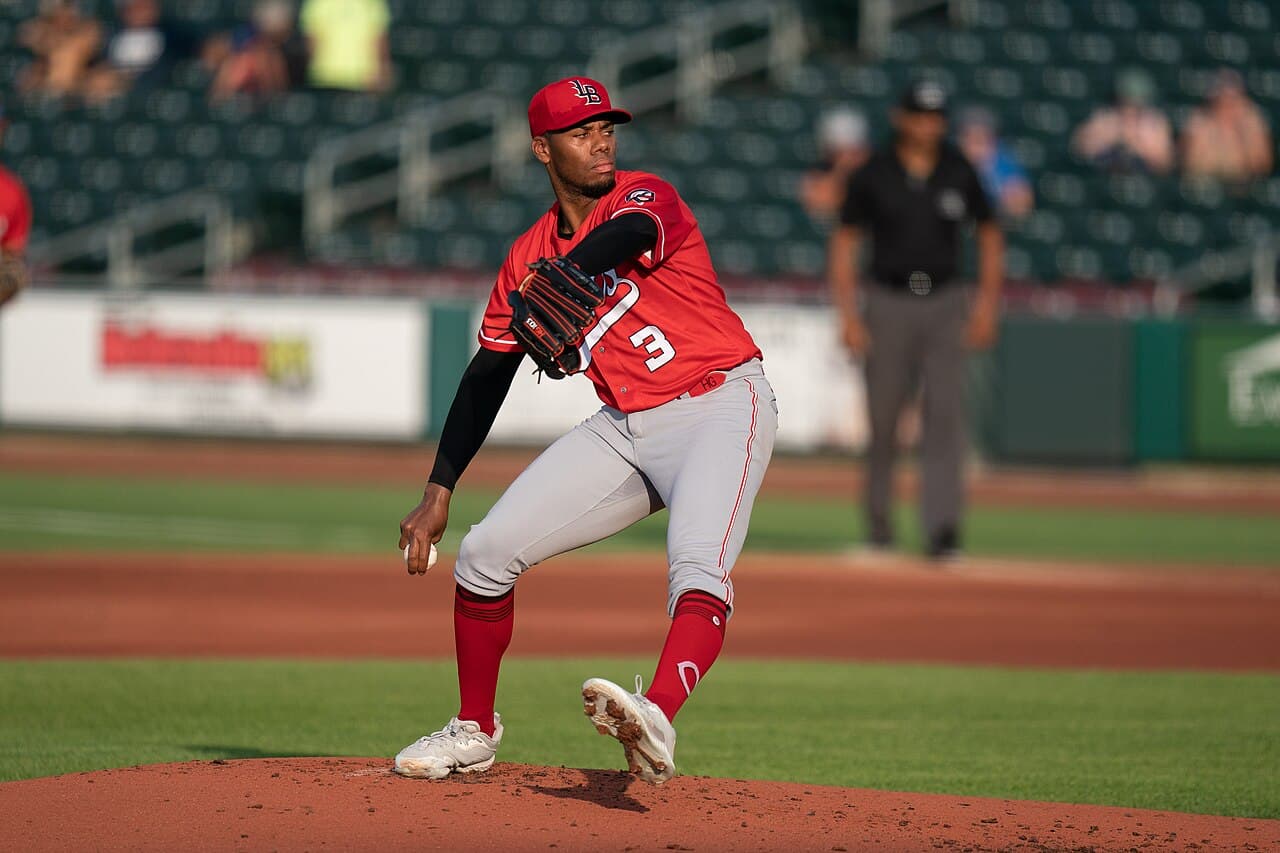
The Reds announced that Hunter Greene underwent Tommy John surgery for the second time in his career, a procedure that ends his 2026 season and, on the stated 12-to-18-month recovery timeline, is expected to cost him all of 2027 as well. Cincinnati had said roughly a week earlier that Greene would need elbow surgery. The reconstruction confirmed the worst version of that news.
Greene made only five starts this season. He had arthroscopic surgery in March to remove bone chips from the elbow, returned to the rotation in July, and allowed 21 earned runs on 29 hits in 27 2/3 innings across those starts, a 6.83 ERA with 33 strikeouts. The strikeout rate held. Nothing else did.
The pattern behind the injury
This is Greene's second UCL reconstruction, following a procedure in 2018 before he had thrown a professional pitch. Second Tommy John surgeries carry substantially worse return rates than first ones, and the pitchers who do come back generally do so with reduced velocity and reduced durability.
The sequence this year is the part that will get re-examined. A March arthroscopic procedure to remove bone chips is a different operation from a ligament repair, but elbow debridement in a pitcher with a reconstructed UCL is often a warning rather than a fix. Greene returned in July, pitched badly for five starts, and needed the ligament rebuilt by the second week of August. Whether the July return was premature is a question the Reds will answer internally.
For a rotation that has spent several years waiting for Greene to convert elite stuff into a full healthy season, this is the outcome that forecloses the possibility for two years.
Fantasy fallout
In redraft leagues, Greene has already been off rosters for weeks and this changes nothing. Cut him if you somehow still have him, and do not use an IL slot on a pitcher who will not throw a competitive pitch in 2027.
In dynasty, this is the more consequential news, and the instinct most managers will have is wrong. The instinct is to sell at any price. The reality is that there is no price, because nobody buys a starter who will miss two full seasons in the middle of August. If you own Greene, you are holding him whether you want to or not.
The better question is what he is worth in the spring of 2028, when he would be back and roughly 28 years old. Pitchers who return from a second reconstruction and hold mid-90s velocity exist, but they are a minority, and the ones who do rarely carry a 180-inning workload immediately. Value him as a high-variance mid-rotation arm two years from now rather than as the frontline starter he was drafted to be, and if a rebuilding manager in your league offers a real prospect for the name, take it.
The knock-on effect within Cincinnati is straightforward. Rotation innings that were nominally Greene's are already being covered by others, and the Reds have leaned on younger arms for most of the season. There is no single beneficiary to add, which is why this news did not produce a waiver-wire scramble when it broke.
The Verdexed model take
Our pitcher projections handle multi-year injuries by carrying forward a durability penalty rather than by resetting to the pre-injury baseline, and Greene's 2028 forecast now sits well below where his stuff alone would place him.
The more interesting model output is what this does to Cincinnati's 2027 outlook, which is where the betting relevance lives. Season win totals for the following year get posted in the winter, and clubs that lose a frontline starter in August are frequently priced in November as though the roster is whole. Cincinnati's 2027 win total, whenever it is posted, will need to account for a rotation without its highest-ceiling arm for the entire season. If it is set at a number that looks similar to this year's, that is a fade.
For the remainder of 2026, the effect is already baked in. Greene has not been a meaningful contributor since March, and the market adjusted long ago.
The broader read on elbows
Greene is the most prominent name in a category that keeps growing: young power arms with elite velocity who reach their late twenties with two reconstructions. The industry has spent several years studying whether velocity, spin-rate chasing and short-outing usage patterns are driving the trend, and no consensus has emerged.
What is clear from a roster-construction standpoint is that the fantasy and real-world markets still underprice this risk. Pitchers with Greene's velocity profile are drafted on their ceiling, and the ceiling requires health that the population-level data increasingly says is unlikely. In dynasty leagues in particular, paying a first-round price for a high-velocity starter with an existing elbow history has been a losing strategy for several years running.
What's next
The practical milestones are far away. A pitcher who had surgery in mid-August 2026 on a 12-to-18-month timeline is looking at a return somewhere between late 2027 and the middle of 2028, and clubs almost always land on the conservative end for a second reconstruction.
For Cincinnati, the immediate question is whether the rotation gets external help this winter, because the plan that had Greene anchoring 2027 no longer exists. For dynasty managers, the question is whether you have the patience to hold a two-year asset. There is no third option, so the answer is probably yes.