 NBA2026-07-10
Giannis Antetokounmpo to Miami: The Fantasy Fallout in Both Cities
By Verdexed NBA Desk
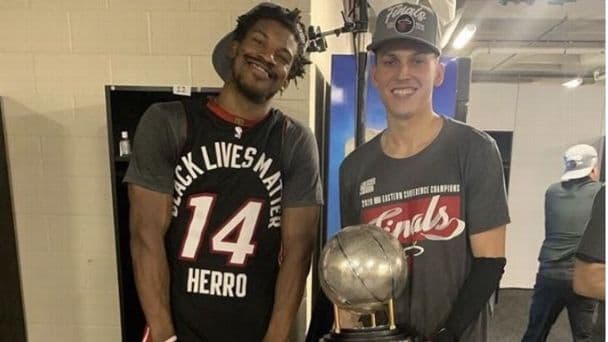
The blockbuster is official. The Miami Heat completed their trade for Giannis Antetokounmpo, acquiring the two-time MVP along with Bobby Portis from the Milwaukee Bucks once the moratorium lifted. In return, Milwaukee received a substantial package headlined by Tyler Herro, Kel'el Ware, Jaime Jaquez Jr., and Kasparas Jakucionis, plus a trove of draft capital that included multiple first-round picks and a pick swap. It is the kind of franchise-altering deal that resets the fantasy landscape for both rosters.
For fantasy managers, a trade of this magnitude creates winners on both sides, and sorting out the usage and role shifts is where the value lies.
What Miami gets
Giannis remains one of the two or three best fantasy players in the entire league, a five-category monster who anchors points, rebounds, assists, blocks, and steals while shooting a high percentage. His fantasy value does not depend on his address; he is a top-of-the-first-round pick wherever he plays, and Miami now has its franchise centerpiece. Bobby Portis comes along as a productive frontcourt piece whose value depends on the minutes and role Miami carves out for him.
The more interesting question is how Giannis coexists with Miami's existing frontcourt anchor. Pairing two high-usage bigs raises spacing and touch questions that can trim the secondary player's rebounding and shot volume. Managers who roster Miami's incumbent big should expect some recalibration, because two paint-dominant stars inevitably share rebounds and interior touches that one of them used to monopolize.
What Milwaukee gets
The Bucks are the fantasy story on the other end, because clearing Giannis opens an enormous usage vacuum that the incoming players will feast on. Tyler Herro is the headliner: moving from a complementary scoring role to a lead-guard, high-usage role on a rebuilding roster is exactly the kind of situation that produces a career-best fantasy season. Herro's assist and scoring projections both climb in Milwaukee, and he becomes a target managers should actively buy up in dynasty formats.
Kel'el Ware is the breakout bet. A young, athletic big stepping into a wide-open frontcourt on a team with minutes to give is the classic profile for a fantasy leap, and his blocks-and-boards upside makes him a name to prioritize. Jaime Jaquez Jr. and Kasparas Jakucionis also see expanded opportunity on a roster shorn of its superstar, turning role players into potential everyday fantasy contributors.
The usage math
The core fantasy principle at work is simple: superstars absorb usage, and when they leave, that usage redistributes to whoever remains. Milwaukee just traded away a player who commanded an enormous share of possessions, and every incoming and returning Buck stands to benefit. That is why the biggest fantasy value in this deal is not Giannis, whose line barely changes, but the players inheriting the touches he leaves behind in Milwaukee.
On the Miami side, the redistribution runs the other way. Giannis will command a huge share of the offense, which compresses the ceilings of Miami's returning secondary options. Managers should downgrade the Heat role players who now share the floor with a ball-dominant superstar, while treating Giannis and, to a lesser extent, Portis as the additions who matter.
The dynasty timeline question
Beyond the immediate box-score effects, this trade splits the two franchises onto very different dynasty timelines, and that matters for how you value their young players. Miami is now in an all-in, win-now window built around a superstar in his prime, which means its young pieces are more likely to be developed within tight roles or dangled in future trades than handed unlimited runway. Milwaukee, having sold its franchise cornerstone for a haul of picks and young players, is squarely in a build-and-accumulate phase where minutes and touches will be handed to ascending talent to see what sticks. In dynasty, that makes the Bucks' incoming youngsters more valuable per unit of talent than they would be on a contender, because opportunity is the scarcest resource in the format and Milwaukee now has it in abundance.
The Verdexed model take
Verdexed's model keeps Giannis firmly in the top tier of its fantasy rankings, essentially unchanged, because his production is scheme- and team-proof. The model's largest projected movements are all in Milwaukee, where Herro's usage-driven scoring and playmaking projection jumps to a career-best range and Ware's minutes-and-role projection spikes into breakout territory. Those are the two names the model flags as the clearest buy-ups from this trade.
On the Miami side, the model trims the projections of the Heat's returning secondary contributors to account for Giannis's usage, while noting that Portis's value is entirely minutes-dependent and could swing based on the rotation Miami settles on. For dynasty managers, the model's instruction is to sell high on any Miami role player whose touches are about to shrink and buy the Bucks' ascending pieces before the market fully prices the opportunity.
What to do in your league
In dynasty and keeper formats, this trade is a call to action. Buy Tyler Herro and Kel'el Ware now, before their new-role production shows up in the box scores and their prices climb. Temper expectations on Miami's returning role players who will cede touches to Giannis. And do nothing rash with Giannis himself; he is the same elite fantasy anchor he has always been, just in a new uniform.
Blockbusters like this one are where dynasty leagues are won and lost, because the usage redistribution is predictable even when the exact minutes are not. The managers who move first on Milwaukee's ascending players will look prescient by opening night, and the ones who cling to soon-to-be-diminished Miami role players will be left holding depreciating assets.