 NFL2026-07-22
Chris Olave Wants an Extension by Camp: The Saints WR1 Whose Health Clouds a Fantasy Bounce-Back
By Verdexed NFL Desk
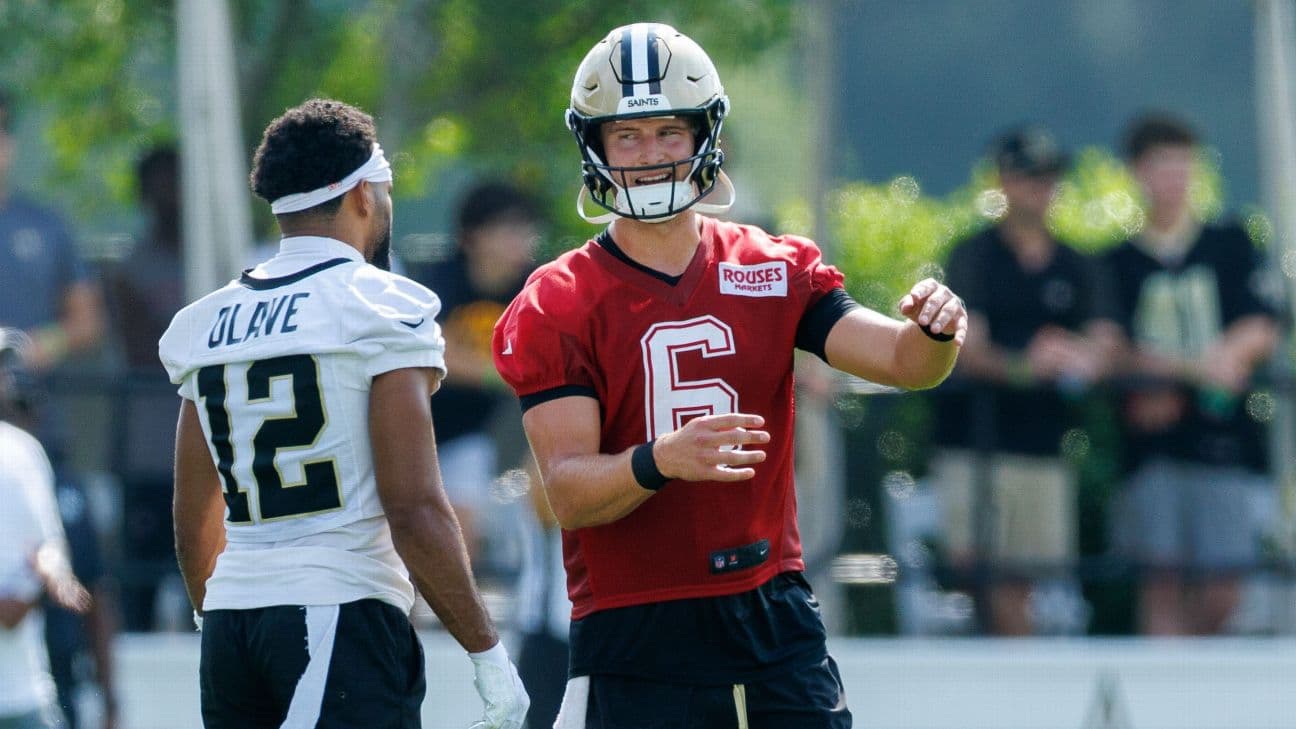
Chris Olave is entering the final year of his rookie contract, and he wants a new one before training camp gets rolling. The New Orleans Saints wide receiver is set to earn roughly $15.5 million in 2026 on his fifth-year option, and rather than hold out he has participated in the offseason program while pushing for an extension that he hopes lands before camp fully ramps up. For fantasy managers, the contract talk is the surface story; the health history underneath it is what actually matters for his draft price.
Olave is coming off the best season of his career, reportedly producing 100 receptions, 1,163 yards, and nine touchdowns while building chemistry with second-year quarterback Tyler Shough. That is a bona fide fantasy WR1 line, and on production alone Olave would be a comfortable top-15 receiver heading into 2026. The complication is a concussion history that both the player and the team are clearly weighing.
The health question is the fantasy question
Olave has dealt with multiple concussions across his career, including a stretch in 2024 when he missed the final eight games of the season after his second concussion of that year. He reportedly avoided one last season on his way to the career-best numbers, but the injury history is significant enough that it may be part of why the Saints have been cautious about meeting his preferred contract number. From the team's perspective, a receiver with documented concussion history carries real long-term risk. From a fantasy perspective, that same history is the tail risk that separates Olave from the safer names in his tier.
This is the balance managers have to strike. On a per-game basis, Olave is a high-end WR2 with legitimate WR1 upside, a target hog in an offense that runs through him. But his season-long floor is dragged down by the elevated probability of missed time, and concussion-related absences are notoriously unpredictable in both timing and length. You are drafting a player who could finish as a top-12 receiver or could lose a month at any point.
Tyler Shough and the offense
The encouraging development is the quarterback fit. Olave's career year came with Shough throwing him the ball, and a young quarterback who has already established a rapport with his top receiver is a meaningful stabilizer for the offense. New Orleans has made Olave the clear focal point of the passing game, and a second year of that connection should keep his target share elevated. An extension would remove any lingering distraction and formalize Olave as the cornerstone of the passing attack for years, which is a modest but real positive for his weekly outlook.
The Verdexed model take
Verdexed's projection model likes Olave's usage profile and flags his availability as the primary risk variable. Our framework projects him as a high-end WR2 on a points-per-game basis, but applies a downward adjustment to his season-long total to account for the elevated missed-time probability his history implies. That gap between his per-game ceiling and his season-long floor is the entire fantasy case: if you draft for upside and can absorb a bye-week-style absence, Olave is a value; if you need a rock-solid every-week producer, his profile carries more variance than his talent suggests.
The extension itself is a mild positive but not a fantasy needle-mover on its own. A new deal does not change the target share, the quarterback, or the offensive scheme; it simply confirms what the usage already tells you, that Olave is the WR1 in New Orleans. The more important signal for managers is any camp reporting on his health and workload, which will tell you more about his 2026 value than the contract number ever will.
The contract mechanics
The structure of Olave's situation is worth understanding because it shapes the incentives. He is playing on the fifth-year option of his rookie deal at roughly $15.5 million, which means the Saints already control him for 2026 regardless of whether an extension gets done. That leverage is part of why the team can afford to be patient, and it is also why Olave's decision to participate in the offseason program rather than hold out is the pragmatic one: a holdout would carry steep fines without much leverage, and it would risk the very chemistry with Tyler Shough that fueled his career year.
For fantasy managers, the practical read is that the extension is unlikely to change his 2026 usage in either direction. Whether he signs a long-term deal now or plays out the option, Olave is the focal point of the New Orleans passing game, and his target share is the number that drives his value. The contract is a story about the team's long-term commitment and the player's peace of mind; the fantasy story is about targets and health, and both of those point to a productive season if he stays on the field.
What to do in your league
Target Olave as a WR2 with WR1 upside and draft him a tick below where his raw production would suggest, banking the discount as insurance against his injury history. He is an ideal second or third receiver on a roster with enough depth to survive a missed game or two, and a shakier anchor if you are thin. Monitor the extension news for confirmation of his standing, but weight the camp health reports far more heavily. Olave's talent is not in question; his availability is, and that is exactly what his draft price should reflect.