 NFL2026-08-24
Cam Ward's Preseason Was Ugly and the Titans Are Not Panicking
By Verdexed Fantasy Desk
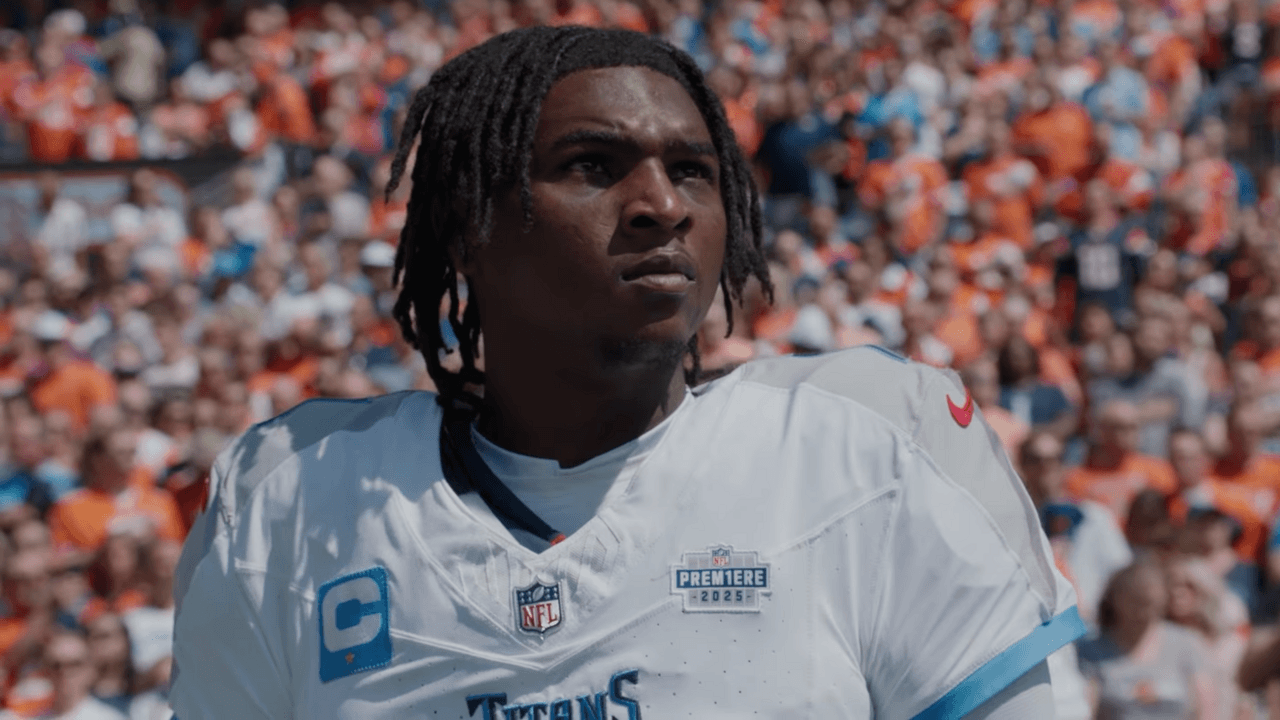
Cam Ward completed five of 12 passes for 57 scoreless yards in his preseason debut against San Francisco, and the reaction in Tennessee has been notably calm. Head coach Robert Saleh said publicly that he has no doubt about what Ward is capable of and pointed to an offense that is still being installed. Offensive coordinator Brian Daboll, per reporting around the team, has spent camp deliberately challenging his quarterback in ways that are not designed to produce clean preseason box scores.
Whether that is coach-speak or an accurate read matters a great deal to anyone deciding where Ward belongs on a fantasy board in the last two weeks of draft season.
What actually happened
The line reads worse than the game did. Tennessee's opening possession was an 11-play, 95-yard drive that ended in a Tony Pollard touchdown, with Ward converting a pair of third downs on designed calls from Daboll. The rest of the outing was where it fell apart: a 41 percent completion rate, no smooth rhythm with his receivers, and an offense that looked clunky as a unit rather than a quarterback failing in isolation.
That distinction is the whole argument. A quarterback missing open receivers is a talent problem. An offense that cannot get lined up and into rhythm in August under a first-year head coach and a first-year coordinator is a calendar problem.
The context that gets left out
Ward was the No. 1 overall pick in the 2025 draft and closed his rookie season as one of the more improved quarterbacks in the league over the back half of the year. That improvement is the reason his second-season expectations were set where they were, and one preseason series does not erase it.
Tennessee also changed nearly everything around him. Saleh is a new head coach. Daboll is a new play caller with a distinct system. The receiver room added Carnell Tate and Wan'Dale Robinson, and Calvin Ridley restructured his contract to stay in Tennessee rather than move on. A quarterback throwing to two new primary targets in a brand new system in his first August with both is going to look out of sync, and preseason is specifically where that happens.
Daboll's history is also relevant. His offenses tend to look different in Week 1 than they do in exhibition games, because the install is sequenced and the preseason reps intentionally exclude the concepts he plans to lead with.
Fantasy fallout
Ward is priced as a low-end QB2 in most formats, and that price is fair rather than a bargain. The honest projection is a quarterback with a realistic path to QB15-range value, which is exactly what a low-end QB2 should be.
The case for taking him is streaming leverage. In a one-quarterback league, the value of a late-round QB is not his season-long average but the number of weeks he produces a top-eight score. Ward has the arm talent and the rushing element to spike, and he plays for a coordinator who will call for explosives rather than manage the game.
The case against is that his floor is genuinely bad. If the offense does not come together, Tennessee is a run-first team with a struggling passer and Ward is unstartable. That is a real outcome, not a tail risk.
The more interesting fantasy angle is downstream. Carnell Tate's value is a direct function of Ward's development, and Tate is being drafted at a price that assumes it happens. Ridley's value depends on the same thing. If you are betting on the Tennessee passing game at all, bet on it in one place rather than three.
The Verdexed model take
Our quarterback projections weight preseason passing statistics close to zero, and for good reason: the correlation between August completion percentage and regular-season efficiency is negligible across every year we have measured. What the model does weight is scheme continuity, and Tennessee grades poorly there. New head coach, new coordinator, new system, and two new starting receivers is close to a maximum-disruption profile.
That disruption input, rather than the preseason line, is what keeps Ward outside our top 12 quarterbacks. It also produces an unusually wide projection band, wider than any quarterback ranked near him. A wide band with a low median is the definition of a player to draft late rather than early.
On the team side, the model reads Tennessee's offense as more likely to improve as the season progresses than to start fast, which has a concrete betting implication.
Betting angle
The Titans' season win total sits in the lower tier of the league. The more precise bet is not the total but the timing. Offenses with new coordinators and new personnel systematically underperform their season-long expectation in the first four weeks and overperform it in the back half, because the install catches up and the market prices the early-season sample as if it were permanent.
That points to two plays. Fade Tennessee early against the number, particularly in September, when a clunky offense will look exactly like it did in August. Then look at the Titans as a live underdog in October and November, when the market has extrapolated the early results and the offense has actually improved.
Ward's own season passing yardage prop is the cleaner long-term expression. If the number was set on his rookie-year back half and has drifted down on preseason noise, that is a stale line worth taking the over on.
What to do in your league
Take Ward in the last two rounds of a one-quarterback league as a second QB with upside, or not at all. Do not take him as your only quarterback. If you want exposure to the Titans' offense, prefer Tate at his current cost, because a receiver's ceiling in a Daboll offense does not require the quarterback to be good, only to be aggressive.
What's next
The preseason finale will tell you almost nothing, because Tennessee has no reason to expose Ward to it. The real evidence arrives in Week 1, and the specific thing to watch is not completion percentage but time to throw. A quarterback getting the ball out on schedule in a new system is a quarterback who has learned it. One holding it and hunting is a quarterback who has not.