Alec Pierce Still Has Not Practiced and the Colts Are Running Out of Camp to Activate Him
By Verdexed Fantasy Desk
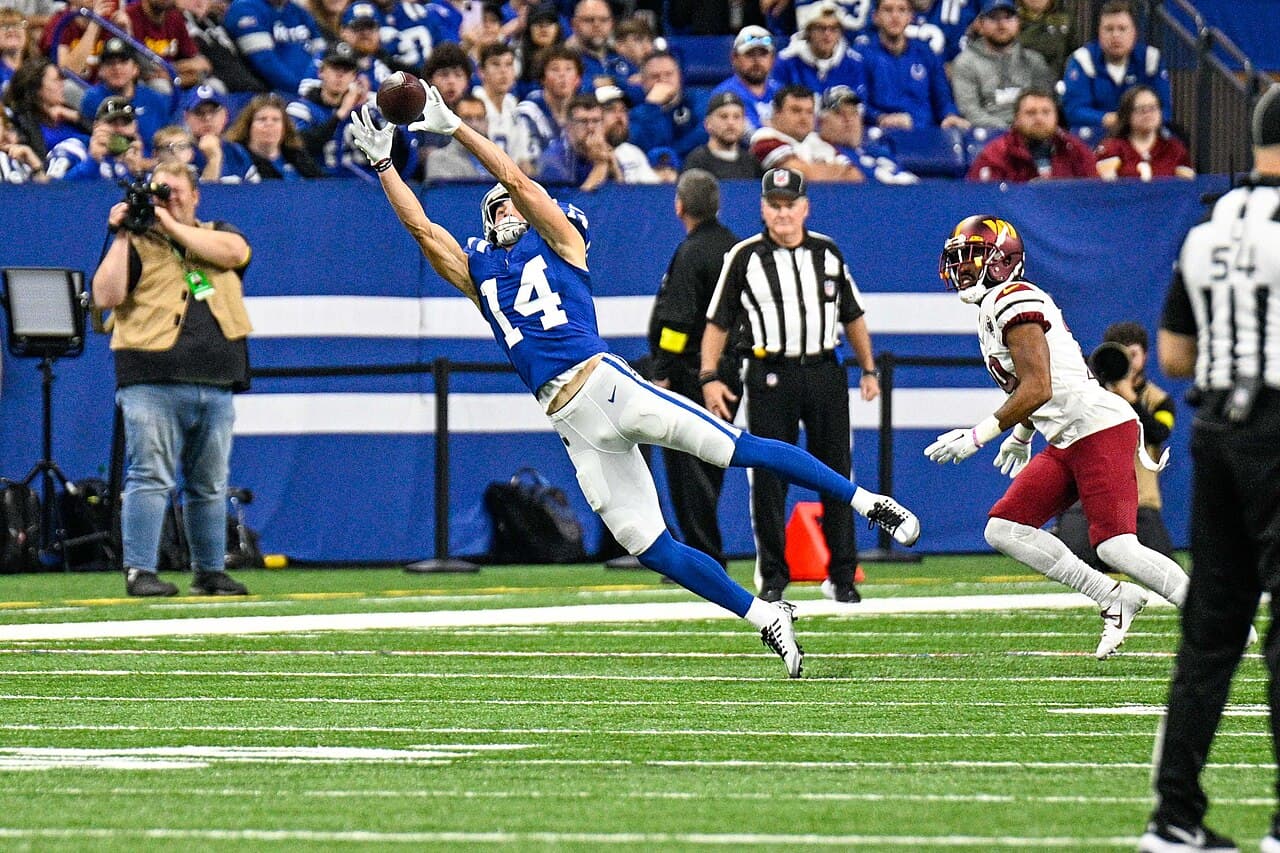
Alec Pierce has not practiced with the Indianapolis Colts this training camp. He opened camp on the Active/Physically Unable to Perform list following an offseason cleanup procedure on a troublesome ankle, and as of this week he remains there, with the roster cutdown deadline now close enough to change what that designation means.
Head coach Shane Steichen has said he expects Pierce back at some point in training camp. That expectation has not yet been met, and the window for meeting it is closing.
The rule that turns this into a real problem
The distinction between the two PUP lists is the entire story, and it is the part that fantasy drafters most often get wrong.
A player on the Active/PUP list during training camp can be activated at any time. He counts against the offseason roster, he can return the moment he passes a physical, and nothing about the designation carries into the regular season. That is where Pierce is now, and it is a benign status.
A player who is still on PUP when a team sets its initial 53-man roster moves to the Reserve/PUP list. That player cannot practice or play until at least Week 5, meaning a mandatory absence for the first four games of the regular season. There is no partial version and no early exemption.
So the Colts have a decision with a hard deadline. If Pierce takes the field in a practice before cutdowns, he is available Week 1. If he does not, he is unavailable through Week 4. There is no middle outcome, and the difference between those two scenarios is roughly a quarter of the fantasy season.
The contract is why this is a story at all
Pierce signed a four-year, $114 million extension with Indianapolis this offseason, a deal that made him one of the highest-paid receivers in football and confirmed the Colts' intent to build the passing game around his vertical skill set.
That contract cuts both ways in this situation. On one hand, a team does not pay a receiver at that level and then casually park him on Reserve/PUP for a month. There is real organizational pressure to get him on the field. On the other hand, a team that has committed that much guaranteed money has every incentive to protect the asset, and a lingering ankle in a player whose entire value proposition is downfield speed is exactly the kind of injury a front office refuses to rush.
The pattern to watch is whether the Colts start describing his absence in terms of the season rather than in terms of camp. That language shift is typically the tell that a team has privately decided to take the four weeks.
Fantasy fallout
Pierce's fantasy profile has always been volatile: a low-volume, high-yards-per-catch deep threat whose weekly scoring is dominated by whether one long ball connects. That profile is already a boom-bust proposition. Layering a four-game absence risk on top of it makes him one of the least draftable receivers relative to name recognition on the board.
The quarterback situation adds another variable. Daniel Jones is full go in Colts camp less than a year after tearing his Achilles, which removes one uncertainty but does not resolve the question of how aggressively Indianapolis pushes the ball downfield in his first season back. Deep-target volume is the single input Pierce's value depends on, and it is the least stable input in the offense.
The beneficiaries of a Pierce absence are the intermediate route runners in the Colts' receiver room and the tight end position, because a missing vertical threat does not simply hand his targets to another deep receiver. It compresses the offense and redistributes volume underneath. Jonathan Taylor, who got his own $44 million commitment from Indianapolis this offseason, is a secondary beneficiary through the passing game and through the increased run rate that typically follows a diminished vertical attack.
The Verdexed model take
Verdexed's projection engine treats Reserve/PUP risk as a binary weighted by observed practice participation, and Pierce's weighting has been moving in the wrong direction for three straight weeks. A player who has not taken a single practice rep by the middle of August is meaningfully more likely to be on Reserve/PUP than one who has been limited but participating.
The resulting projection cut is severe because it is multiplicative. Pierce loses roughly a quarter of his expected games, and the games he loses are the ones in which a receiver builds early-season target rapport. Returning in Week 5 to an offense that has established a rhythm without him historically produces a slower ramp than a clean Week 1 start.
The model's output is straightforward: Pierce should not be drafted as a starting fantasy receiver in any format. He is a bench stash in deep leagues and a complete pass in twelve-team formats, and the price at which he becomes interesting is several rounds below where his contract and reputation have him going.
The betting angle
Colts team totals for the first four weeks are the market that carries this. If Pierce lands on Reserve/PUP, Indianapolis opens the season without its highest-paid pass catcher, and the market's early-season pricing for the Colts offense should reflect a lower ceiling.
The specific opportunity is timing. Reserve/PUP designations become official at roster cutdowns, which is after most Week 1 lines have been posted. Season-long totals and Week 1 numbers set before that deadline will not have priced a Pierce absence, and the adjustment happens in the days after.
What's next
The only thing that matters is whether Pierce takes a practice rep before Indianapolis sets its 53-man roster. Everything else, including public optimism from the coaching staff, is noise until that happens.
Fantasy managers drafting this week should assume the four-game absence is the more likely branch until there is evidence otherwise, and price him accordingly. Anyone who drafted him earlier in the summer at a starter's cost should be shopping him now, while the name still carries more value in a trade than the situation warrants.