 NFL2026-07-29
Alec Pierce Opens Colts Camp on PUP: The Four-Game Risk Behind a $114 Million Contract
By Verdexed NFL Desk
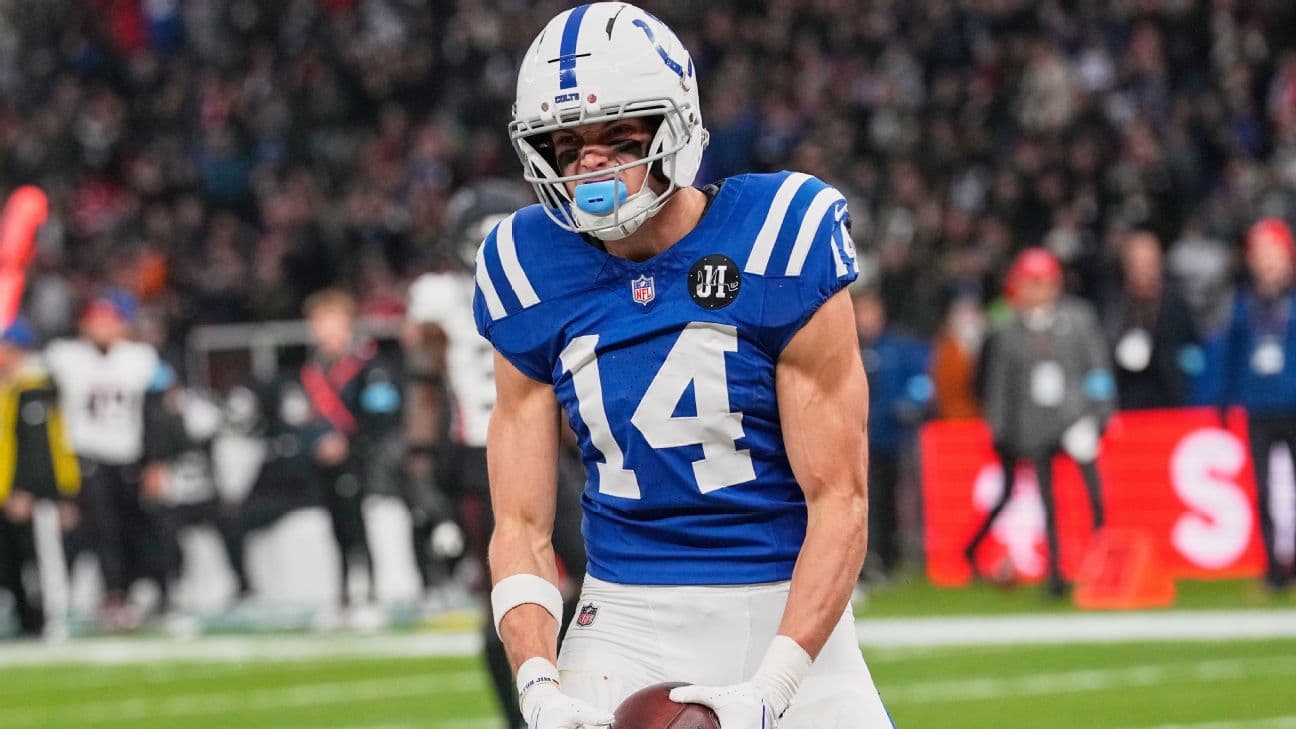
The Indianapolis Colts placed wide receiver Alec Pierce on the active physically unable to perform list to open training camp, with his recovery from March ankle surgery still incomplete. Pierce signed a four-year extension reported at $114 million this offseason and then had the operation weeks later, and head coach Shane Steichen has indicated the team has no interest in accelerating his return through July and August.
For fantasy managers, the PUP designation is where the story gets sharp, because the active PUP list and the reserve PUP list are different things with very different consequences.
The rule that decides his season
A player on the active PUP list at the start of camp can be activated at any point during the preseason and practice normally the moment he is cleared. That is the benign version.
The problem arrives at roster cutdowns. If Pierce is still on PUP when Indianapolis sets its 53-man roster, he reverts to the reserve PUP list and is ineligible to play in the first four games of the regular season. There is no partial credit and no early activation. That is a hard four-week absence for a receiver being drafted in the middle rounds of fantasy leagues.
The timeline math is uncomfortable. Pierce underwent surgery on his left ankle in late March and was reportedly facing a four-to-six month rehab window at that time. The bottom of that range lands in late July, which is where the calendar sits now. The top of the range lands in late September, which would mean missing the opening month regardless.
Why the surgery happened at all
Pierce has said publicly that the operation was unavoidable. The ankle had been a lingering issue dating to 2024 and had progressively worsened, with consistent soreness through the 2025 season. He attempted a platelet-rich plasma treatment in January that did not produce the desired result, and surgery followed.
That history cuts both ways. On one hand, addressing a chronic problem definitively is better than another season of managing it, and a healthy Pierce in 2027 is a better asset than a compromised one. On the other, chronic ankle issues in a receiver whose game is built on vertical separation are exactly the kind of injury that reduces a player's ceiling even after the structural fix.
The contract complicates the read further. Indianapolis paid Pierce like a long-term core piece and then watched him need surgery. That is a team with every financial incentive to be patient rather than aggressive with his return, and Steichen's public posture reflects it.
Fantasy fallout in Indianapolis
Pierce is now a player fantasy managers should treat as a stash rather than a starter. His current cost in drafts assumes availability that is not guaranteed, and the four-game downside scenario is live enough that he should not be drafted as a weekly starter in any format with a short bench.
The immediate beneficiary is Josh Downs, who steps into the clearest role in the Colts' receiver room while Pierce rehabs. Downs has operated primarily out of the slot and profiles as a high-floor PPR contributor, and an offense that loses its vertical presence for the opening month funnels more of its structured passing volume to exactly that player type. Downs is being drafted at a discount relative to the target share he is likely to see in September.
Behind them, the Colts' depth is unsettled. Ashton Dulin, Nick Westbrook-Ikhine, Deion Burks, and Anthony Gould are competing for snaps, and none has an established fantasy profile. That is a camp battle worth monitoring rather than drafting into, though a receiver who wins the perimeter job opposite Downs while Pierce is out would carry real early-season value in deeper leagues.
Daniel Jones, who is fully cleared for camp after last season's Achilles injury, faces a passing offense with a thinner top end than the one Indianapolis expected to field when it handed out the Pierce extension. That trims his ceiling in a market where he was already a streaming option rather than a starter.
The Verdexed model take
The Verdexed model applies a significant availability haircut to Pierce's season-long projection, and the reason is structural rather than medical. The distribution of outcomes here is bimodal: he either clears before cutdowns and plays a full season, or he misses four games and returns to an offense that has already established rhythms without him. There is very little middle ground, and projections that average those two outcomes produce a number that will never actually happen.
The model's read on the Colts' team total for the opening month reflects that. Indianapolis without its vertical threat is a more compressed offense, and the model projects a lower yards-per-attempt profile through September than the market's season-long numbers imply. That points to unders on Colts first-half team totals in early-season games and to a mild fade on Jones passing yardage props for the opening slate.
The cleanest fantasy edge, though, is Downs. The model's projection for him rises meaningfully in the four-game-absence scenario, and his draft cost has not moved to reflect the probability of that scenario.
What to do in your league
Do not draft Pierce as a starter. He is a bench stash in redraft leagues with deep benches and a fine target in best-ball formats, where the four-game absence costs nothing if he produces afterward. In shallow leagues with short benches, he is a fade.
Buy Josh Downs. He is the actionable name in this story, and his price has not adjusted.
In dynasty, hold Pierce. A four-year extension and a definitive fix to a chronic problem is a reasonable long-term profile, and selling into an injury designation in July is how dynasty managers lose value.
What's next
The decision point is Indianapolis setting its 53-man roster at the end of August. Watch for Pierce being activated off the active PUP list at any point in camp, which would remove the four-game risk entirely and restore his draft value in full. If he is still on the list in the final week of August, treat the opening month as a loss and plan accordingly.