 NFL2026-09-10
A.J. Brown's Patriots Debut Ended in a Boot and New England's Passing Game Has a Problem
By Verdexed NFL Desk
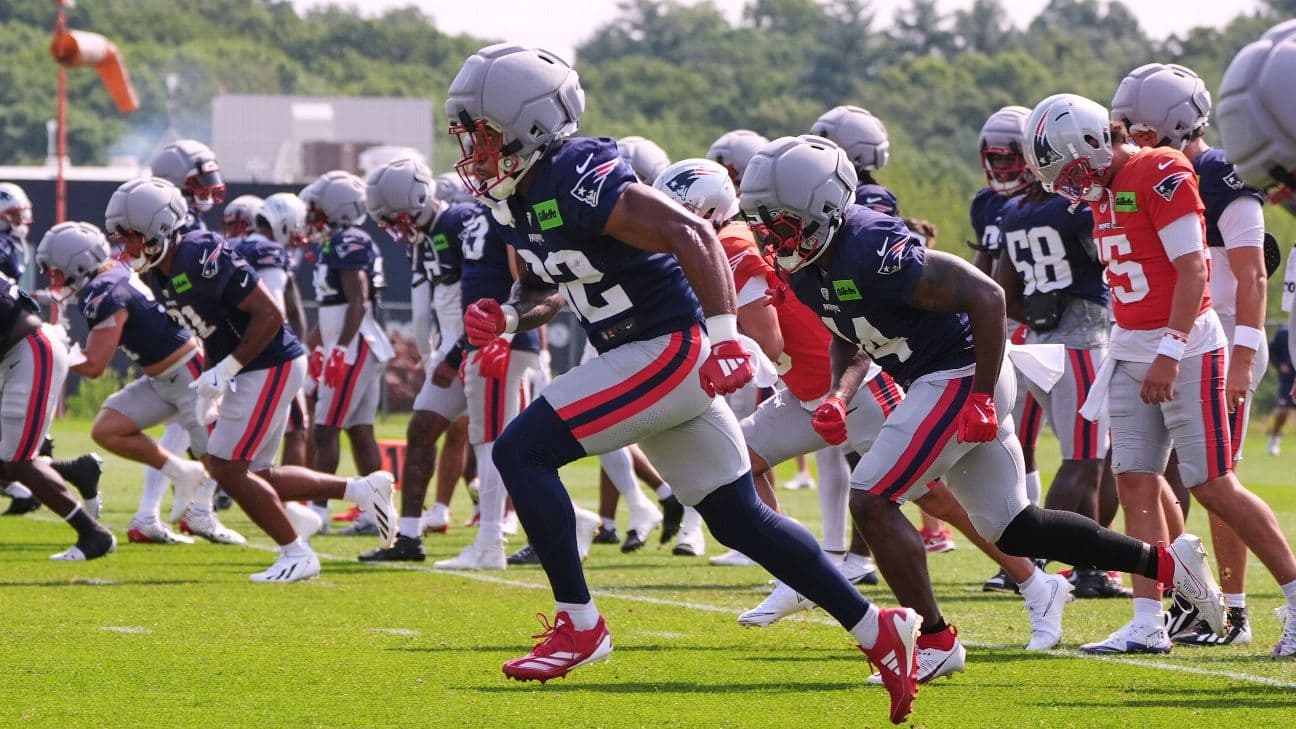
A.J. Brown's first game in a New England uniform ended early in the third quarter of Wednesday's 13-10 loss to Seattle. Brown suffered a right ankle injury while reaching for a low throw from Drake Maye, with his ankle caught between the ground and a defender as he went down. He did not return, and he was seen leaving the locker room afterward wearing a boot on that foot.
The Patriots have not announced a diagnosis or a timeline. Brown had caught three of his first four targets for 26 yards before he left.
Why the boot matters and what it does not tell you
A walking boot after a game is standard precaution, not a diagnosis. Teams put players in boots for low ankle sprains that cost a few days and for high ankle sprains that cost a month. The reason the boot is being read pessimistically is the mechanism: an ankle trapped under a defender's weight and rotated is the classic high ankle sprain sequence, and high ankle sprains routinely cost multiple weeks.
Until New England releases something, treat this as unconfirmed. The reasonable planning assumption is that Brown misses at least one game and possibly several, but that is a probability, not a fact, and the market will price it before the team confirms anything.
The Patriots offense was already thin
New England went into the opener without TreVeyon Henderson, who was ruled out for the game. That left Rhamondre Stevenson as the primary back. Losing Brown in the third quarter took away the one player on the roster capable of winning a contested target outside the numbers, and the result was visible: Drake Maye threw three second-half interceptions, the last of them in the end zone with under 30 seconds left.
Maye finished 23-for-33 for 178 yards, one touchdown, three interceptions, and 47 rushing yards. The completion rate is fine. The yards per attempt is not, and neither is the turnover total. New England led 10-0 late into the third quarter and did not score again.
Fantasy fallout
Brown was drafted as a set-and-forget WR1 in a new situation. If he misses time, the immediate beneficiaries are the players who absorb his targets, and in New England that means the tight end and slot roles, not another alpha outside receiver. The Patriots do not have a second Brown on the roster. They have a group of complementary pieces who become playable in deeper leagues and stay unplayable in shallow ones.
The more useful reframe: Brown's absence hurts Drake Maye more than it helps any single New England pass-catcher. Maye's fantasy appeal this season was built on a rushing floor plus a genuine WR1 to throw to. Remove half of that and he becomes a low-end QB2 in single-quarterback leagues.
Rhamondre Stevenson is the one player whose value clearly rises. With Henderson out and the passing game short-handed, Stevenson is the closest thing New England has to a workload guarantee. He is a flex start with RB2 upside until Henderson is back on the field.
The Verdexed model take
Markets tend to overreact to the identity of an injured star and underreact to what the injury does to an offense's structure. The structural read on New England is that this is now a team that will play at a slower pace and lean on a defense that generated zero takeaways in Week 1 and gave up 13 unanswered points.
The betting angle is on team totals, not sides. A Patriots team without Brown, without Henderson, and with a quarterback who just threw three interceptions is a defensible under lean against any defense that can pressure the passer. If New England's Week 2 team total sits near 21, the under is live.
For sides, wait. The market will move on the Brown news before the team confirms anything, and the value in these situations is usually in betting the number back the other way after an overcorrection, not in front-running the injury report.
What to do in your league
Do not drop Brown under any circumstance. Even a four-week absence leaves the majority of the fantasy season, and he is the kind of player whose replacement value on the waiver wire is close to zero.
If you are thin at receiver, the move is to add a starting-caliber receiver from a different offense rather than to speculate on a New England replacement. The Patriots' target distribution without Brown is genuinely hard to predict, and guessing wrong costs you a roster spot for weeks.
In best-ball and dynasty formats, this is a buy window rather than a sell one. Ankle injuries early in a season rarely change a player's long-term projection, and the price of acquiring Brown from a panicked manager will not get lower than it is in the next 72 hours.
The wider Week 1 receiver picture
Brown is not the only high-priced receiver whose Week 1 changed the shape of a fantasy roster, and that matters for how managers should respond. When several starting receivers go down in the same weekend, the waiver wire clears faster and the replacement-level bar rises, because every manager in your league is competing for the same handful of viable options.
The practical consequence is that speed matters more than precision this week. A receiver with a defined role in a functional offense, claimed on Wednesday, is worth more than a higher-upside speculative add claimed a week later after someone else got there first.
The corollary applies to trades. Managers who lost a receiver in Week 1 are the most motivated trade partners in fantasy football, and they are also the most likely to overpay. If you have depth at receiver and a hole at running back, this is the week to convert it.
What is next
New England is expected to provide clarity through its practice participation reports. A player who does not practice at all on the first two days of the week is very unlikely to play. A limited participant is a genuine game-time decision. The single most informative signal will be whether the Patriots place Brown on injured reserve, which would rule him out for a minimum of four games and settle the question entirely.