Zach Werenski's Name Is Back in Dallas Rumors and Tampa Is Still Where He Wants to Go
By Verdexed NHL Desk
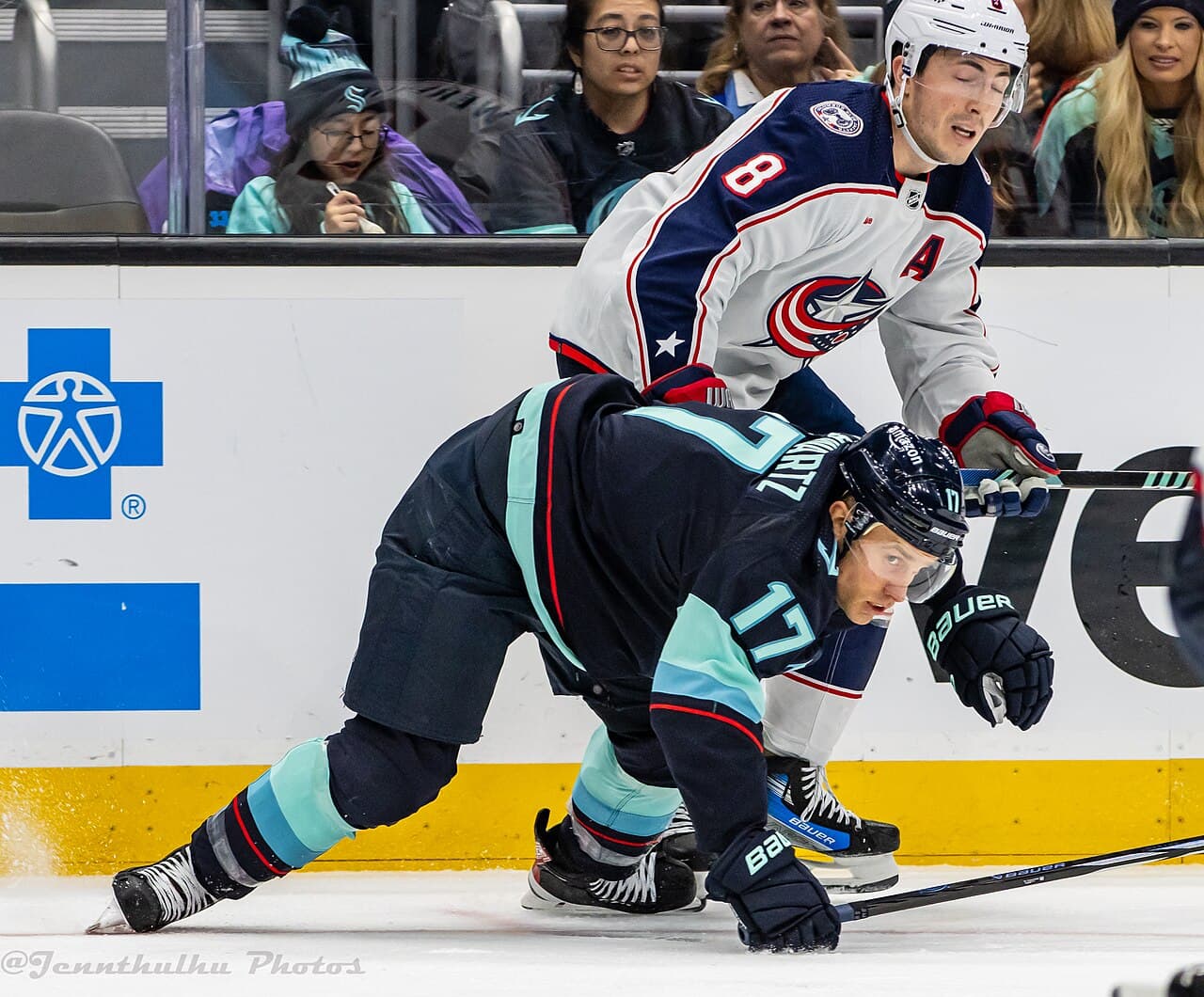
Zach Werenski's name resurfaced in connection with the Dallas Stars over the weekend, roughly a month after the Columbus defenseman used his no trade protection to block a deal that would have sent him there. According to reporting at the time, Columbus and Dallas had verbally agreed to a trade before Werenski declined it, with Thomas Harley reportedly headed the other way.
There is no indication the two clubs are actively negotiating again. What the latest round of reporting establishes is that Dallas has not been ruled out entirely, and that Werenski's own preference has reportedly been to stay in the Eastern Conference, with Tampa Bay believed to be on his short list.
Why this is the most important unresolved fantasy story in hockey
Werenski won the Norris Trophy last season as the league's best defenseman. He carries cap hits reported at $9.6 million for each of the next two seasons. In fantasy hockey, he is not merely a good defenseman. He is the player who anchors the entire first tier at a position where the drop from tier one to tier two is steeper than at any forward position.
Defensemen produce fantasy value primarily through power play time and shot volume, and both are functions of the team a player is on. A defenseman who quarterbacks the top power play unit on an elite offensive team is worth substantially more than the same defenseman on a team that struggles to generate zone time. That is why the destination question is not a curiosity. It is the single largest variable in his projection.
What each destination would mean
Columbus remaining his team is the status quo, and the status quo is fine but not optimal. Werenski produced a Norris season in that environment, which is the strongest possible argument that his production is his own. The risk in staying is that a rebuilding or transitional club limits his ceiling by limiting the offense around him.
Dallas would be an upgrade in team quality and would place him on one of the league's stronger offensive teams. The complication is that Dallas already has significant investment on the blue line, and adding Werenski would create a power play time question rather than solving one. A Norris winner would presumably get the top unit, but the fantasy math on the other Dallas defensemen would change dramatically.
Tampa Bay is the destination his camp reportedly prefers, and it is also the one that would most clearly maximize his fantasy value. Tampa has been among the league's most productive power play teams for the better part of a decade, and a Norris caliber defenseman running that unit is close to the best possible outcome for a fantasy asset.
The Verdexed model take
Our defenseman projections weight power play time on ice above every other input, because a defenseman's fantasy scoring is disproportionately generated with the man advantage. The secondary inputs are even strength ice time, shots on goal, and team level expected goals.
Applying that framework to Werenski produces a projection range that varies by a meaningful margin across the three plausible destinations, with Tampa at the top, Dallas in the middle, and Columbus at the bottom. Critically, even the bottom of that range keeps him inside the top few fantasy defensemen. The trade question is about how much he wins by, not whether he is worth drafting.
The model also flags a second order effect that most fantasy managers will miss. If Werenski moves, the defenseman he displaces on the receiving team's top power play unit loses substantial value, and the defenseman who inherits Columbus's top unit gains it. Those two players are almost always available much later in drafts than Werenski, which makes them the more efficient way to profit from the news.
The no-trade dynamic
The July veto is the fact that should anchor everyone's expectations. A player with trade protection who has used it once has demonstrated both the ability and the willingness to control his destination, and that changes the negotiation entirely. Columbus cannot simply find the best return. It has to find the best return among teams Werenski will approve.
That narrows the market considerably and it lengthens the timeline. Trades requiring player approval take longer than trades that do not, and they frequently do not happen at all. Fantasy managers drafting in the next several weeks should plan for the possibility that this is unresolved when the season starts.
The counterweight is that Werenski has, by the reporting, committed to Columbus in the interim rather than forcing an exit. A player who blocks a trade and then plays is not a distraction. He is simply a player exercising a contractual right.
Betting angle
The market that moves on a Werenski trade is not his individual production. It is the receiving team's Stanley Cup and division odds, and to a lesser extent Columbus's.
Adding a Norris winning defenseman moves a contender's championship price by a real amount, and the market prices those moves quickly and aggressively. That means the value is in anticipation rather than reaction. If you believe Tampa is the likeliest destination, the time to take a position on Tampa's futures is before a deal, not after.
Columbus's season win total is the other market to watch. If Werenski is dealt for futures, the number should come down. If he stays, the number should hold. A club that keeps a Norris winner is a different team than one that trades him, and win totals posted in August frequently do not account for pending trades at all.
What to do in your league
Draft Werenski where you would have drafted him a month ago. He is a top tier fantasy defenseman in any of the three scenarios, and passing on him to avoid uncertainty is a mistake.
The more sophisticated play is on the adjacent assets. If you are in a dynasty or keeper league, identify the defenseman most likely to inherit Columbus's top power play unit and acquire him cheaply now. That is where the asymmetric return sits.
In redraft, simply stay current. This is a story that can resolve in a day, and the managers who react within hours of a trade capture most of the available value on the waiver wire.
What is next
Training camps open in September, and the practical deadline for any move is the start of the season. Teams do not like integrating a top pairing defenseman midseason, and the September 16 change to maximum contract term adds another scheduling pressure to the league's transaction calendar. Watch the week before camps open. That is when summer trades happen.