 NFL2026-07-25
Tyreek Hill Says He Has No Power in His Left Leg: The Fantasy Verdict on an Unsigned Star
By Verdexed NFL Desk
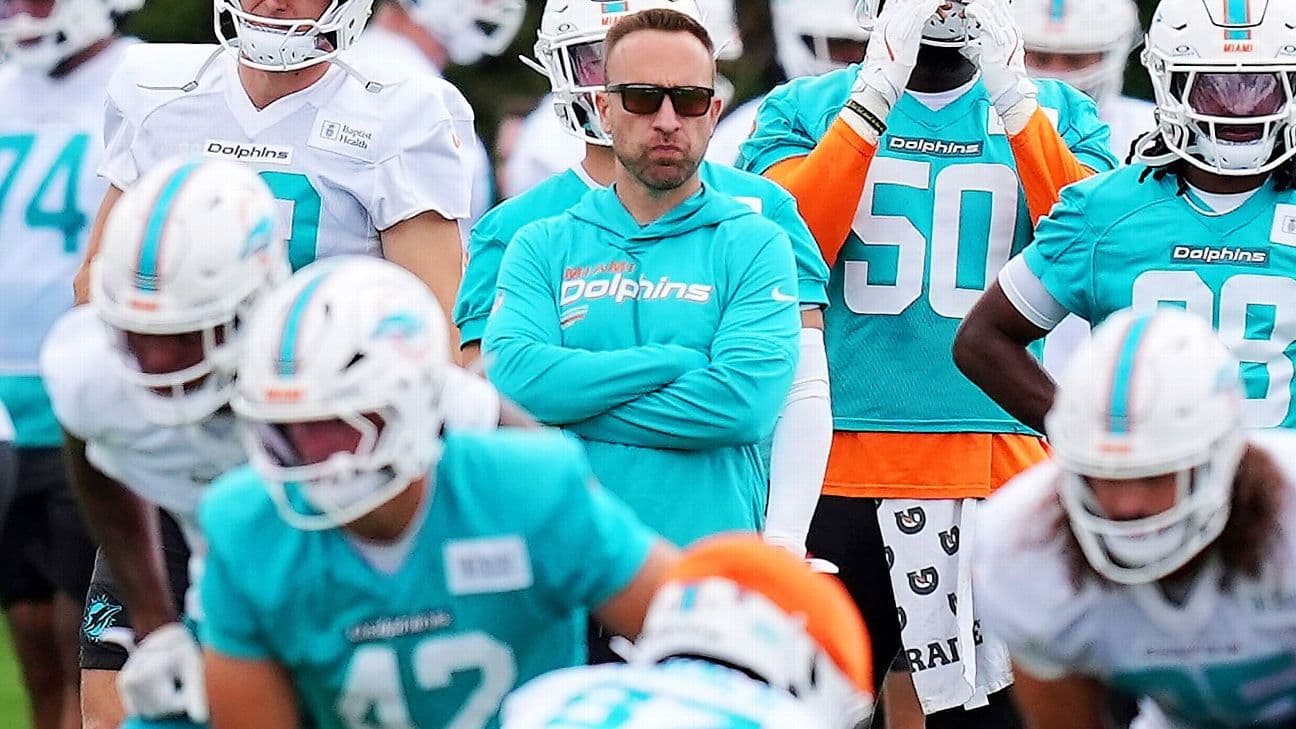
Tyreek Hill remains an unsigned free agent as NFL training camps open, and the reason became clearer this week when the receiver said in a video posted to his own channel that he still has "no power" in his left leg. Hill was released by the Miami Dolphins in February after a Week 4 knee injury against the New York Jets ended his 2025 season, and no team has signed him in the months since. For fantasy managers with a Hill share in a dynasty roster or a lingering attachment to a player who was once the most explosive receiver in football, the update is the clearest signal yet: do not draft him, and do not hold him waiting for a landing spot.
The injury was not a routine ACL. Reports at the time described a dislocated kneecap along with multiple torn ligaments, and Hill has said publicly that he was told at one point he might never walk normally again. He underwent a follow-up procedure in February, reportedly to address the LCL. Roughly ten months removed from the original injury and five months removed from the second surgery, he is posting workout clips and describing a leg that will not generate force.
Why the "no power" language matters more than the timeline
Rehab updates usually arrive in the language of dates. A player is "targeting camp" or "ahead of schedule" or "tracking toward Week 1." Those phrases are about calendars. Hill's description is about function, and function is the harder problem.
A receiver whose game is built on separation does not need to be cleared. He needs to be explosive. Hill's value has always come from the first three steps and from top-end speed that forced defenses into two-high coverage shells and changed how the entire offense was defended. That is a quality that lives in the quadriceps and the extensor mechanism of the knee, exactly the machinery a patellar dislocation and multi-ligament repair compromise. Strength deficits of the kind he is describing are common at this stage of a multi-ligament recovery, but they are also the deficits that most often linger.
There is a second complication that has nothing to do with medicine. Hill turned 32 this offseason. Teams sign 32-year-old receivers coming off catastrophic knee injuries at the veteran minimum with incentives, if they sign them at all, and they do it in August or September once camp bodies start dropping. The market's silence through the entire offseason is itself information.
Fantasy fallout
The redraft verdict is simple. Hill should not be drafted in any format. He has no team, no confirmed timeline, and a self-reported strength deficit in the leg that made him famous. Even the best-case path, a September signing with a contender, produces a player learning a new offense in-season on a rebuilt knee. That is not a bench stash, that is a wasted roster spot in a year when the waiver wire will produce better lottery tickets by Week 3.
The dynasty verdict is only slightly more nuanced. If a leaguemate will still pay a late second-round rookie pick for the name, take it. Hill's dynasty value was already sliding before the injury on age alone, and the injury converted a declining asset into a speculative one. Holding him costs a roster spot in a format where roster spots are the scarcest resource.
The one group with a real decision to make is best-ball and deep-league managers in leagues that draft in August. If Hill signs somewhere with a vacancy, a final-round dart is defensible in 20-round formats. Anything earlier is paying for a memory.
The teams that would have been the fits
The receiver market this offseason absorbed most of the veterans who needed a home, which narrows the landing spots. The teams that would plausibly move on a healthy Hill are the ones with a downfield-oriented quarterback and a thin second and third receiver, and even those teams have spent the offseason building without him. Any signing at this point is more likely to be a September injury replacement than a planned addition.
That matters for fantasy in an indirect way. Hill is no longer a variable that reshapes a depth chart. Whichever team eventually signs him, it will be a low-cost move that does not displace a starter or meaningfully suppress another receiver's target share. Managers should stop pricing Hill into their evaluation of any offense.
The Verdexed model take
Verdexed's projection engine treats multi-ligament knee reconstructions in receivers over 30 as a distinct category rather than as a standard ACL case, because the recovery curves diverge sharply. The model's expectation for a player in that bucket is not simply reduced production, it is a wide distribution with meaningful weight on zero games played. Layered on top of an unsigned status in late July, Hill's projected 2026 receiving output sits close enough to replacement level that he does not appear in the model's top 100 receivers.
The relevant comparison is not Hill's own past seasons. It is the group of high-speed receivers who returned from serious knee injuries in their thirties. That group's collective outcome has been a substantial and usually permanent reduction in separation rate, with the players who did retain value doing so as possession receivers rather than field-stretchers. Hill's entire fantasy profile is built on the skill that group lost.
Betting angle
The practical betting application is narrow but real. Any team-level receiving prop or team total that shifts on a Hill signing is likely to overreact to the name. If Hill signs with a contender in August and that team's implied points or passing total moves, the market is pricing a version of Hill that his own description of his leg does not support. Fading that move is the position with an edge.
There is also a season-long angle in the Dolphins' own numbers. Miami has now spent a full offseason building without Hill, and the market has largely absorbed that. His signing elsewhere should not move Miami's win total at all, and if it does, that is noise.
What's next
Hill has consistently said he intends to play again, and there is no reason to doubt the intent. The question is whether the leg cooperates, and the honest answer in late July is that nobody knows, including Hill. Watch for two specific signals: a reported private workout for a team, which would indicate he can move well enough to be evaluated, and any medical update that comes from a team or agent rather than from Hill's own social channels.
Until one of those arrives, the fantasy instruction is unambiguous. Hill is not a draft pick, not a stash, and not a factor in any 2026 offense's projection. Managers who want exposure to a discounted veteran receiver have better options on the board, and every one of them has a team.