Troy Terry Will Not Play Until Late November and the Ducks Are Already Piling Up Injuries
By Verdexed NHL Desk
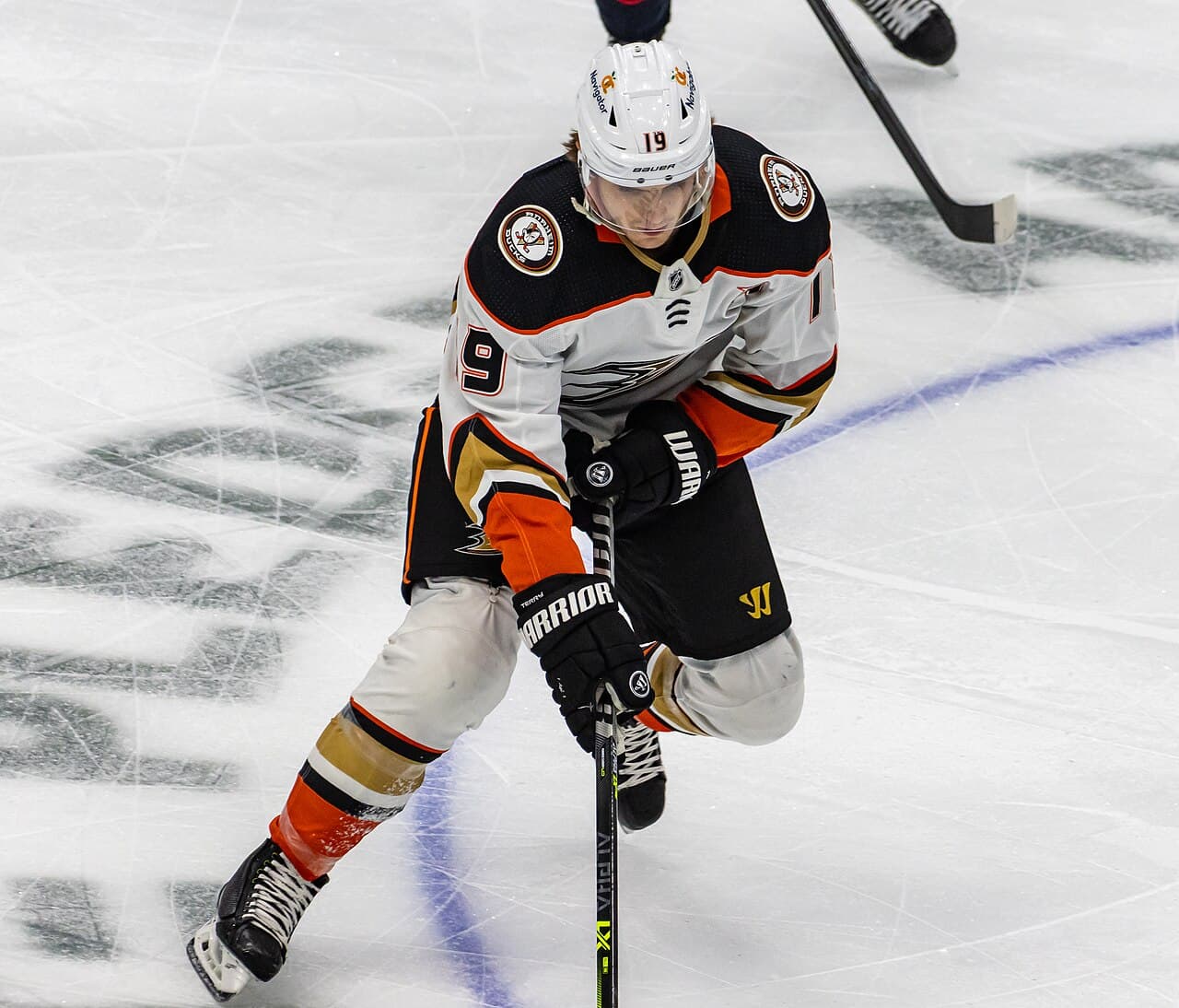
Anaheim will open the season without Troy Terry, who underwent surgery on June 9 to repair a hip impingement and a labral tear with an estimated recovery window of five to six months. That timeline puts his return somewhere between mid-November and mid-December, which means the Ducks' most productive forward will miss training camp, the preseason and somewhere between 15 and 30 regular season games.
Terry was limited to 61 games last season by injury and still finished with 19 goals and 57 points, then added three goals and 11 points in 12 playoff games. That is a point-per-game pace in the postseason from a player whose availability has been the only thing limiting his production.
The rest of the Anaheim injury list
Terry is the headline, but the Ducks' camp has produced a growing list of absences. Anaheim entered the week with multiple players unavailable or limited, a situation that compresses the competition for roster spots and hands opportunity to players who would otherwise be fighting for fourth-line minutes.
That is the practical reality of a September injury report. For a team with playoff ambitions, it is a problem. For fantasy managers and bettors, it is an information advantage, because roster openings created in camp are filled by players whose draft prices were set before the openings existed.
Fantasy fallout
Terry is a fade in redraft formats and a hold in keeper leagues, which is the standard treatment for a productive player with a known absence of this length. Missing 20 games out of 82 is a roughly 25 percent haircut to a season-long total before any consideration of how quickly he returns to form after hip surgery.
Hip labral repairs in skaters have a better recovery profile than Achilles or ACL injuries, because the mechanics of skating place less rotational stress on a repaired hip than sprinting and cutting place on a repaired knee. The production risk is lower than the games-played risk.
The opportunity is in Anaheim's top six. Terry's minutes, his power play time and his role alongside the Ducks' young core all go to somebody for the first quarter of the season. Anaheim's young forward group has been waiting for exactly this kind of runway, and the players who get first-unit power play time in October will be available on waiver wires in most leagues.
The Verdexed model take
Verdexed's model prices Terry's absence as a moderate negative for Anaheim's team projection and a substantial negative for his individual season totals. The team effect is smaller than the individual effect because the Ducks have forward depth and because a first-line winger's replacement is usually a second-line winger rather than a replacement-level player.
On the individual side, the model projects Terry for roughly 55 to 62 games, which caps his point total well below where a healthy season would land him. That makes him a poor value at any draft price built on his per-game rate.
The model's preferred Anaheim exposure is on the young forwards who inherit the vacated minutes, and specifically on whoever wins the power play role. Power play time is the single largest driver of fantasy point production for forwards, and a player who gains first-unit minutes in October carries a projection that no preseason ranking accounts for.
Betting angle
Anaheim's season point total is the market where this is most cleanly expressed, and the direction depends on where the number sits. A Ducks total set before the full extent of the camp injury list was known is a total set on a healthier roster than the one that will take the ice in October.
The more reliable angle is on Anaheim's early-season game markets. A team missing its leading scorer for the first quarter of the season is a team whose October results will be worse than its full-season quality, and markets that price teams on season-long projections systematically overvalue short-handed clubs in the opening weeks.
That effect reverses in December when Terry returns and the market has anchored on two months of poor results. The Ducks in late November and December are a team to back, not fade.
What it means
Anaheim's season has two distinct phases and they should be bet and drafted differently. The first quarter is a short-handed team finding out what its young forwards can do. The rest of the season is a team with its best scorer back and a group that will have absorbed 20 games of development.
For fantasy managers, the practical instruction is to let someone else draft Terry and to pay close attention to Anaheim's power play deployment in the first week of the regular season. The player who emerges there will be the most valuable free agent nobody is watching.
What's next
Watch for an updated timeline in October. Five to six month windows given in June are estimates, and the range between mid-November and mid-December is wide enough that a mid-season update will materially change his value.
Watch also for whether Anaheim's other camp absences resolve. A team that gets healthy everywhere except Terry is a team that can hold its position in the standings until he returns. A team that opens the season with three or four regulars out is a team whose October is already decided.