Troy Terry Hip Surgery: Ducks Forward Out 5-6 Months and Who Absorbs His Role
By Verdexed NHL Desk
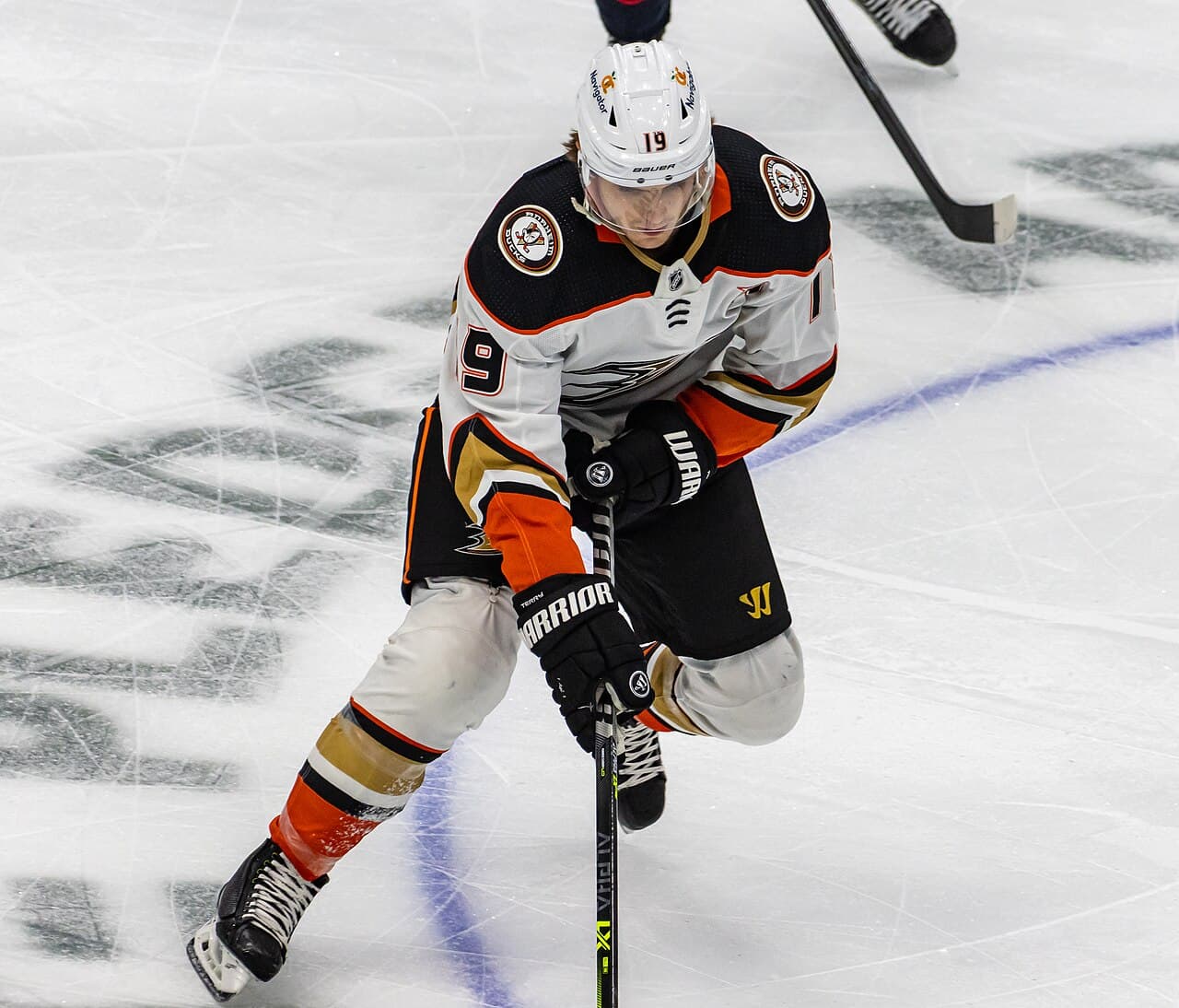
The News
The Anaheim Ducks will open the 2026-27 season without one of their most reliable scorers. Forward Troy Terry underwent hip surgery, reported on June 9, to address hip impingement and a labral tear, and the team has set his recovery timeline at roughly five to six months. That math points to a return window of mid-November to mid-December, meaning Terry will miss the start of the season and likely a meaningful chunk of the first quarter.
The context makes the surgery less of a surprise than the timing. Reporting indicated Terry played through a chronic hip issue during Anaheim's run to its first playoff appearance since 2018, a run that reached the second round before the Ducks fell to Vegas. He produced through the postseason despite the ailment, which is exactly the kind of grind-it-out performance that often precedes a summer procedure. Cleaning up a labral tear and impingement now is the responsible long-term call, but it carries a real short-term cost for both the Ducks and the fantasy managers who rostered him.
The Fantasy and Keeper Hit
Terry has been a steady mid-tier fantasy winger, the kind of multi-category contributor who quietly anchors the middle rounds of drafts. His most recent full season produced a strong points-per-game pace before the playoff run, and he is the type of player whose value comes from reliability rather than ceiling. An injury that erases the first six-plus weeks of the schedule is a direct hit to that profile, because Terry's appeal was never explosive upside; it was floor and availability. Take away a quarter of the games and you take away a meaningful slice of the only thing that made him a draft-day lock.
In redraft leagues, the move is straightforward. Terry slides down boards into the late-middle rounds as a stash candidate rather than a plug-and-play starter. Managers in shallow leagues without injured-reserve flexibility should be cautious about spending a pick on a player who cannot help them until late November. In deeper formats with IR slots, he becomes a value target: the talent and the role are intact for the back three-quarters of the season, and the discount could be steep.
The keeper and dynasty read is more nuanced. Terry is 28, and a labral repair is not a career-altering injury for a skill forward. There is no reason to panic-sell a keeper asset over a single offseason procedure with a clear timeline. The bigger long-term question for dynasty managers is roster context: Anaheim's young core is rising fast, and Terry's standing in the pecking order, particularly on the power play, is the variable to monitor when he returns.
Who Absorbs the Minutes
The more actionable fantasy story is the opportunity Terry's absence creates. Anaheim's forward group has tilted young and dangerous, and the early-season vacancy at top-six wing and on the top power-play unit has to go somewhere.
Leo Carlsson is the centerpiece. The young center is in line for a massive second contract, with reporting floating an AAV in the $14M range, a number that tells you how the organization values him. More usage and more power-play responsibility flow naturally through Carlsson, and his fantasy arrow was already pointing up before this injury.
Cutter Gauthier is the most direct beneficiary on the wing. Coming off a reported 41-goal sophomore season, Gauthier is already a primary scoring option, and Terry's absence only consolidates the high-leverage minutes and power-play looks around him. For fantasy purposes, Gauthier was already a draft riser; this nudges him higher and tightens the case for an aggressive early pick.
Mason McTavish is the swing factor. McTavish was reported to have spent much of 2025-26 in a more limited, third-line-adjacent role despite his pedigree, posting 41 points in 75 games. An opening in the top six and on the power play is precisely the runway he needs. If the coaching staff elevates him to start the season, McTavish becomes one of the more interesting late-round fantasy darts available, a former high pick handed expanded minutes with something to prove.
The Verdexed Model Angle
The Verdexed model treats vacated power-play time as one of the most predictable value transfers in fantasy hockey, because special-teams role is sticky and points-dense. When a reliable top-unit forward like Terry is removed for a defined window, the model's instinct is to redistribute his expected power-play points to the next men up rather than assume the production simply disappears.
The distribution here skews toward the young core. The model would route the largest share of Terry's vacated high-value usage to Gauthier and Carlsson, who are already entrenched, with McTavish as the higher-variance upside play if he claims the open spot. For bettors, that points to player-prop and award markets rather than team totals: Gauthier's season points and goals lines, and any breakout or improvement props tied to McTavish, are where a six-week absence at the top of the lineup can be underbaked by the market in June.
On the team side, the model is more measured. Anaheim is a rising club, but losing a steady producer for the first quarter is a modest drag on the early-season schedule, not a season-defining blow. If the Ducks' win total or playoff odds get marked down hard on this news, the model would lean toward fading that overreaction, on the logic that the young core absorbs the gap and Terry returns for the bulk of the season.
What's Next
The near-term calendar matters. The 2026 NHL Draft runs June 26-27 and free agency opens July 1, and Anaheim's offseason moves will shape exactly how the top six and power play are arranged when camp opens. A free-agent wing addition would complicate the McTavish thesis; standing pat would strengthen it. Terry's own rehab updates through training camp will also refine the return window, and any slippage toward the December end of the range deepens the opportunity for the players behind him.
The actionable takeaway: do not reach for Terry in redraft, but flag him as an IR-stash value in deeper formats and hold him in keeper leagues without flinching. The real edge is on the Ducks who inherit his role: prioritize Gauthier as a draft riser, lock Carlsson as a rising centerpiece, and keep Mason McTavish high on your late-round and post-hype watch list as the player whose value swings most on this absence.