Dylan Larkin's Trade Request Is Frozen in Detroit With No GM to Answer It
By Verdexed NHL Desk
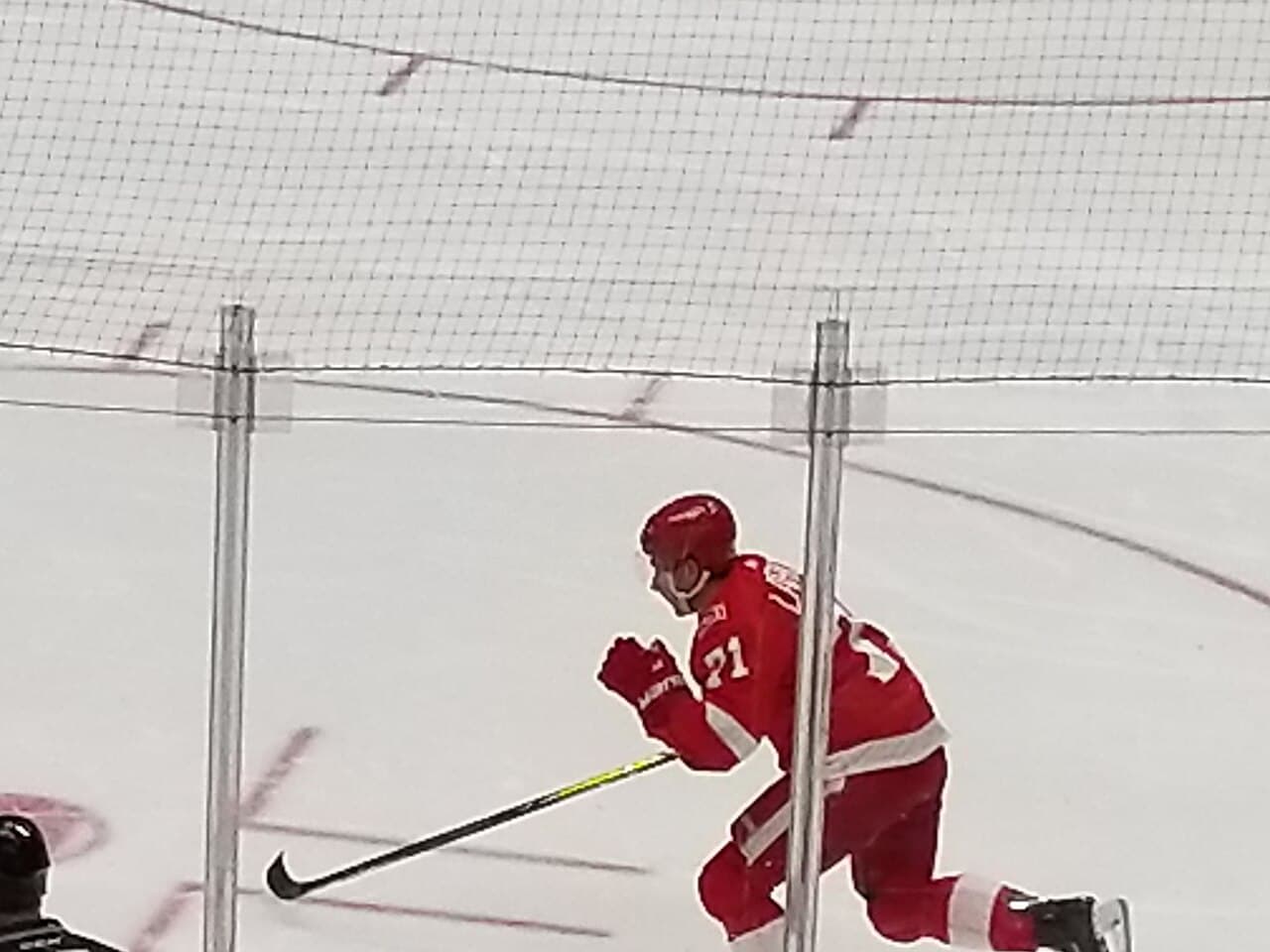
Dylan Larkin asked the Detroit Red Wings to trade him shortly after the season ended, with his agent relaying the request to then-general manager Steve Yzerman. Two months later, the captain is still a Red Wing, the man he made the request to no longer runs the team, and the process has effectively stopped.
Yzerman stepped down as general manager in July and moved into a senior adviser role with the organization, with Detroit beginning a search for his replacement. A franchise conducting a leadership search is not a franchise that trades its captain, which is the simplest explanation for why a story that dominated June has gone quiet in August.
What Larkin is asking for
Larkin signed an eight-year, $69.6 million extension in March 2023 and is entering the fourth season of that deal at an $8.7 million annual cap hit. He also carries a full no-movement clause, which gives him complete control over where he goes.
Reporting has indicated he has approved a short list of destinations: Florida, Minnesota, Vegas, and more recently Dallas. That list is the central obstacle. Four teams is not a market, and three of the four are cap-constrained contenders whose ability to absorb an $8.7 million cap hit requires salary going the other way.
Minnesota reportedly put together a package built around young assets and picks that Detroit declined. Insiders have suggested Larkin will need to expand his list of acceptable destinations for anything to happen at all.
Fantasy fallout: Larkin
Larkin produced 34 goals and 33 assists in 74 games last season, the fifth consecutive campaign in which he cleared 67 points, and he did it while playing top-line center minutes and running a power-play unit. That is a first-line fantasy center with a stable multi-year production history, which is exactly the kind of player whose value is least sensitive to a change of scenery.
The exception is power-play time. Larkin's production has been meaningfully supported by the man advantage, and moving to a contender with an established top power-play unit could cost him that role. In Florida or Vegas he would not automatically be the number one center or the number one power-play option. In Dallas he might not be either.
That makes this a rare situation where a trade to a better team would likely lower his fantasy value rather than raise it. Managers drafting Larkin should be rooting for the request to go unfulfilled.
Fantasy fallout: the Red Wings
Detroit's forward group is the more interesting fantasy question. A team that trades its captain and top-line center redistributes roughly 20 minutes of high-leverage ice time, including first-unit power-play work, and the players who inherit it become immediate breakout candidates.
The problem is that nobody can identify those players with confidence until a new general manager and the coaching staff decide who they are. That uncertainty is itself the fantasy opportunity: Detroit's secondary forwards are being drafted at depth prices in a scenario where one of them could inherit a top-line role.
Simon Edvinsson is the other name that has appeared in Detroit trade reporting, and any deal involving both him and Larkin would be a genuine reset rather than a single-player move.
The Verdexed model take
The model projects Larkin's point production as one of the most stable outputs of any forward in the league, with a rest-of-career profile that has shown very little year-to-year variance. Applied to next season, it puts him firmly in the second tier of fantasy centers regardless of team.
The team-level read is that Detroit loses more by trading him than a four-team market can return. The model's valuation of a 30-year-old first-line center with five straight 67-point seasons on a reasonable cap hit exceeds any package built primarily on prospects and picks, which is precisely the reason Detroit turned down Minnesota's offer.
The most likely outcome, per the model's read of the situation, is that Larkin opens the season in Detroit. A new general manager will want to evaluate the roster before making a franchise-altering trade, and the natural window then becomes the deadline.
Betting angle
Detroit's season win total is the market carrying the most unpriced risk right now. A number set with Larkin on the roster is a different number than one set without him, and the resolution date is unknown. That is a reason to wait rather than to act.
The four named destinations are each worth monitoring for the opposite reason. Adding a legitimate top-six center for a cap hit under $9 million is one of the more efficient in-season upgrades available, and none of those teams' current numbers reflect it.
What to do in your league
Draft Larkin at cost and do not discount him for the uncertainty. His production has survived every version of the Red Wings for half a decade, and the scenarios where he moves are more likely to reduce his role than expand it.
Keep a list of Detroit's secondary forwards for the waiver wire. If a trade happens in October or at the deadline, the player who steps into first-line and first-power-play minutes will be available in most leagues, and the manager who identifies him first gets a month of production for free.
What's next
The general manager hire is the gate. Nothing meaningful happens until Detroit has someone empowered to make the decision, and the new executive's first significant test will be whether to honor a request made to a predecessor. Watch for Larkin expanding his approved list, which would be the clearest signal that both sides still want this resolved.