Matthew Schaefer Enters Year Two as a Top Fantasy Defenseman and a Looming Islanders Cap Problem
By Verdexed NHL Desk
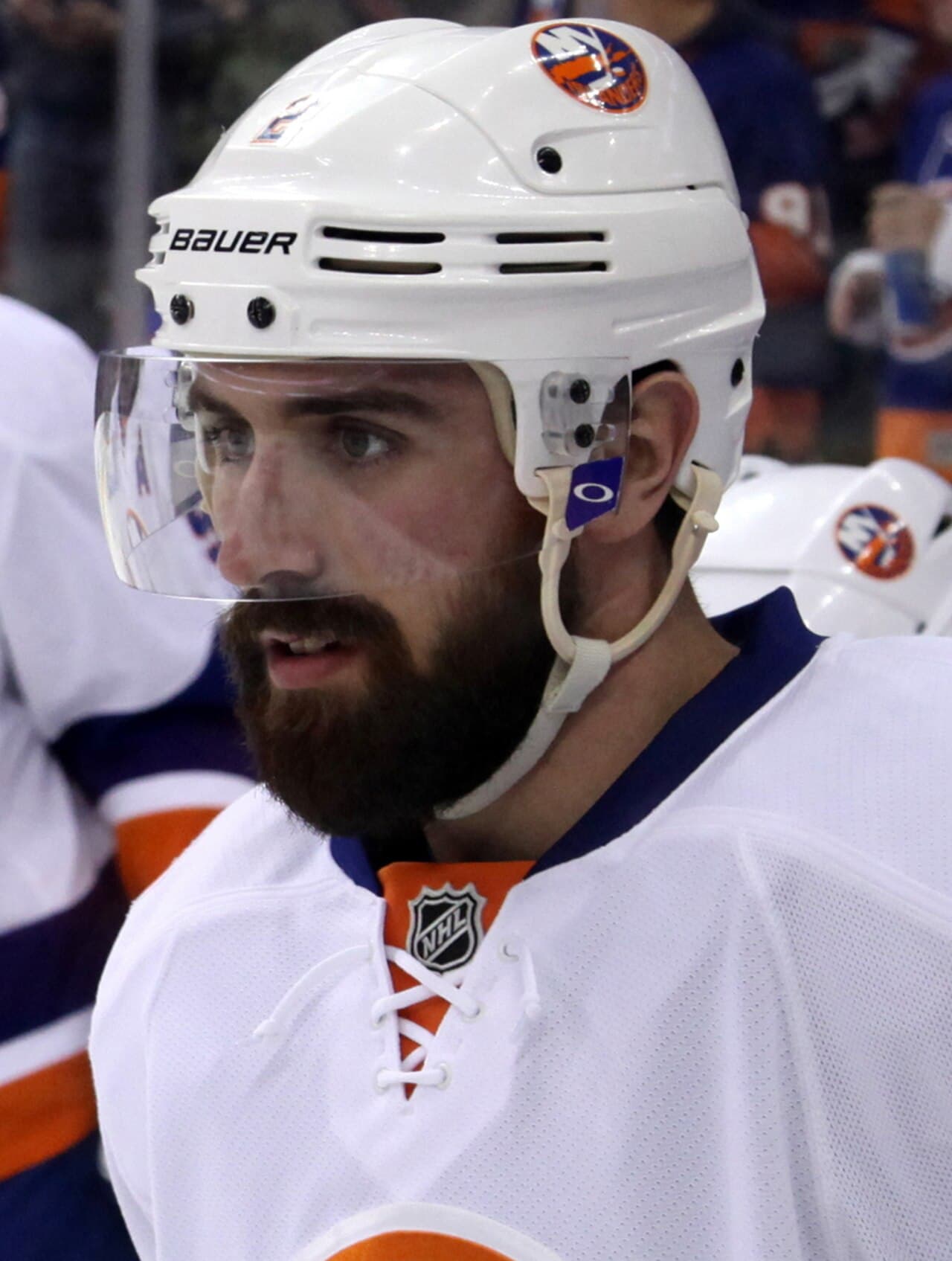
Matthew Schaefer won the Calder Trophy as the NHL's rookie of the year and enters the 2026-27 season as the New York Islanders' unquestioned No. 1 defenseman at 18 years old. That is the sporting reality. The financial reality arrived last week, when Macklin Celebrini signed a five-year extension reported at $94 million, giving him a league-leading average annual value of $18.8 million.
The connection is not hypothetical. Analysts covering the Islanders have already begun modeling what Celebrini's number means for Schaefer's next contract, with speculation landing around a five-year deal near $19.1 million annually and a realistic range between $19 million and $20 million. New York is not expected to go to the absolute maximum, but the floor of the conversation has moved.
That negotiation is a summer away. What matters for fantasy managers right now is that Schaefer is entering his second season as one of the few defensemen in the league who genuinely drives his team's offense from the back end, and that his price on draft day has not fully caught up to that.
What he actually did
Schaefer's rookie season was historic by the standards of NHL defensemen, and he did not ease into it. The Islanders named the 2025 first overall pick to the roster for the season opener rather than sending him back to junior, which is itself a statement about readiness. He then asserted himself as one of the better defenders in the world in his first professional season.
The skating is the foundation. Schaefer's mobility lets him defend without committing his body, exit the zone under pressure, and activate into the offensive zone in a way that generates chances rather than turnovers. Those are the traits that translate to fantasy production, because they produce assists on a per-game basis rather than in bursts.
He is already the top defenseman on his own roster, and the organization's stated priority is adding talent around him rather than developing him further. That is a meaningful distinction. A team building around a player deploys him at maximum, and maximum deployment for a No. 1 defenseman means first-unit power play, penalty kill, and the highest ice time on the roster.
Fantasy fallout
The defenseman position in fantasy hockey is defined by a small group of players who deliver point totals and a much larger group who deliver blocks, hits and little else. Cale Makar and Quinn Hughes anchor the first group. Schaefer belongs in the conversation immediately below them, and the argument for taking him ahead of more established names is deployment growth.
A rookie defenseman, even an exceptional one, typically does not receive the full power-play workload in his first year. Coaching staffs distribute those minutes to veterans and add responsibility incrementally. Schaefer's second season is when that changes, and the point-per-game path for defensemen runs almost entirely through first-unit power-play time.
The secondary boost is schedule length. The NHL's move to an 84-game season inflates every counting stat, and it inflates them most for players with the highest ice time. A defenseman playing 24 or more minutes a night gains more from two extra games than a bottom-pair player does.
The risk is the Islanders' supporting cast. Schaefer's assist totals depend on forwards finishing the chances he creates, and New York's forward group is not among the league's best. That is the specific reason to be measured rather than euphoric about his point ceiling, and it is the reason the organization's own analysts keep writing that the team must keep adding around him.
The Verdexed model take
Our model projects defenseman scoring from three inputs: total ice time, power-play ice time share, and the shooting talent of the forwards on the ice with them. Schaefer scores extremely well on the first two and below average on the third.
The resulting projection places him in the top 10 among fantasy defensemen for 2026-27, with a wider confidence band than the established names above him. His ceiling scenario, in which he takes over the first power-play unit outright and the Islanders' forward group improves, produces a top-three finish at the position. His floor scenario, in which the power-play deployment stays split and the offense around him stays middling, still produces a startable season, which is the point.
The model's most useful output here is the gap between projection and draft position. Second-year players are systematically underdrafted relative to their deployment growth, because rankings anchor to prior-season point totals rather than to expected role. Schaefer is the clearest instance of that effect at his position this year.
Betting angle
Norris Trophy futures are the direct market, and they are worth a look precisely because voters rarely award the trophy to a 19-year-old. That reluctance keeps the price generous on a player whose underlying case may be strong enough to overcome it.
Schaefer's season point total, once it posts, is the more disciplined position. It will be anchored to a rookie-season total produced with a rookie's deployment, and the over is the side that captures deployment growth plus the longer schedule.
The Islanders' team point total is a separate question and a more skeptical one. One elite defenseman does not fix a roster, and betting New York's over on the strength of Schaefer's development would be paying for a player rather than a team.
What to do in your league
Draft Schaefer as a top-10 defenseman and be comfortable reaching slightly if your league values points. The deployment case is stronger than the prior-season stat line, and that is exactly the situation where drafting ahead of consensus pays.
In dynasty formats, he is untouchable at any reasonable price. An 18-year-old Calder winner who is already his team's best defenseman is the single most valuable asset class in the format, and the incoming contract only reinforces that New York intends to build around him for a decade.
Do not overpay for Islanders forwards on the theory that Schaefer lifts them. The causation runs the other way in fantasy scoring: a defenseman's assists depend on his forwards, not the reverse.
What's next
The deployment question resolves in October. Watch the Islanders' first-unit power play in the opening two weeks and specifically whether Schaefer is the quarterback rather than a rotational piece. That single data point separates a top-10 fantasy season from a top-three one.
The contract question resolves next summer, and Celebrini's $18.8 million just made it more expensive. The Islanders have a year to figure out how to fit a franchise defenseman's second contract onto a roster that still needs help everywhere else.