 MLB2026-09-08
The Third AL Wild Card Is the Only Race Left and Cleveland Is Barely Holding It
By Verdexed MLB Desk
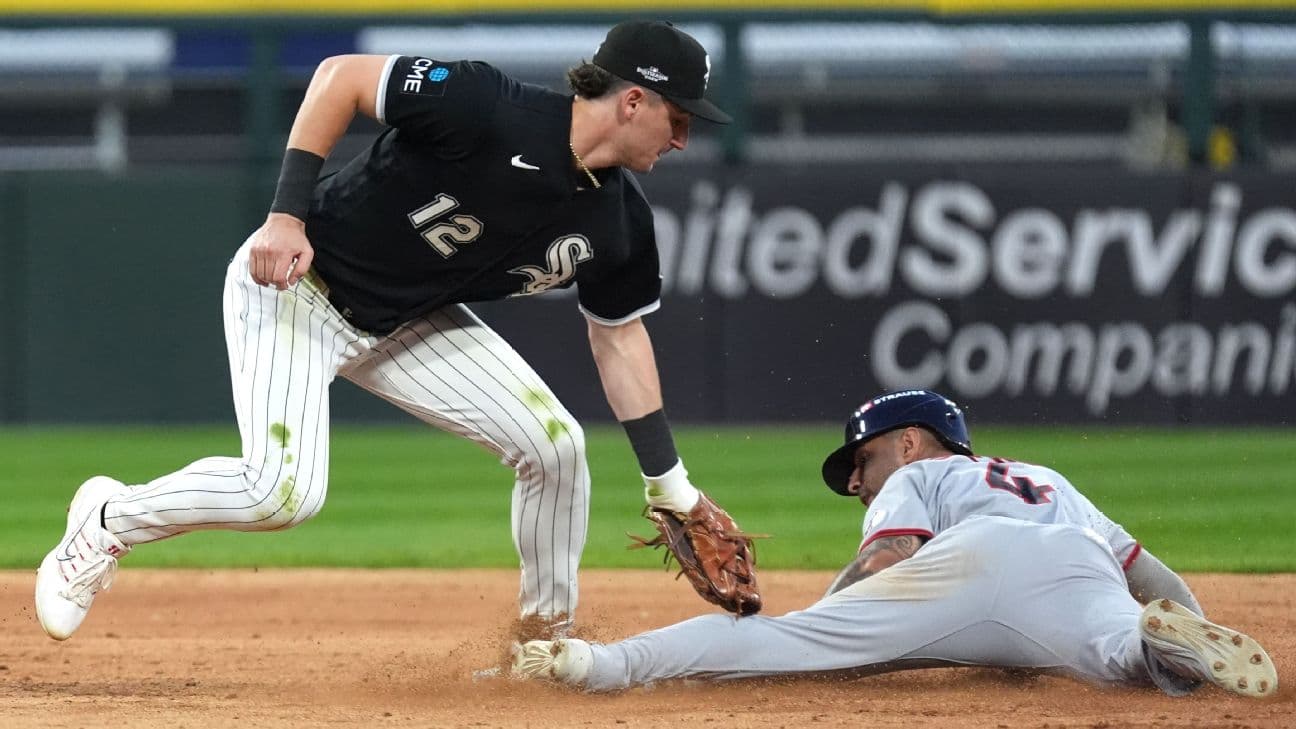
With three weeks left in the regular season, the American League playoff picture has collapsed into a single genuinely live race. Tampa Bay has essentially locked the AL East. The White Sox lead the AL Central by three games. Houston holds a two-game edge in the AL West over Texas. The Yankees and Red Sox are comfortably positioned in the first two wild card slots.
That leaves the third wild card, currently held by Cleveland at a few games over .500, as the only spot on the American League board that is genuinely up for grabs. It is also the strangest race in recent memory, because most of the teams chasing it are below .500.
How the AL got here
The top of the league separated early and never came back. The Yankees, sitting around nineteen games above .500, and the Red Sox, around fourteen above, built enough cushion that neither has faced meaningful wild card pressure since midsummer. Tampa Bay ran away with the division.
Below that tier, the AL has been a compression zone. Cleveland is the only team in the wild card hunt currently above .500, which means the final playoff spot is being decided among teams that have spent the season hovering around break-even. Toronto sits within striking distance despite a losing record. Texas and Seattle remain alive through the AL West as much as through the wild card.
Chicago leading the AL Central in September is the season's least expected development, and it has a direct effect on this race: it pushes Cleveland out of a division slot and into the wild card scrum, which is where a team that would normally be a comfortable playoff entrant now finds itself defending a lead measured in a couple of games.
The Verdexed model take
Verdexed's model treats Cleveland as the most likely holder of the final spot, but with meaningfully less confidence than a two-to-three game lead in September would normally imply. The reasoning comes down to schedule strength and run differential.
Teams clustered around .500 in September have very little margin, and their playoff odds swing dramatically on short losing streaks. A three-game skid for a team at plus-two in the standings is worth far more probability than the same skid for a team at plus-twelve. That volatility is exactly why this race is worth betting rather than watching.
The model's read is that Cleveland's rotation is the reason to back them and their offense is the reason to hesitate. A pitching staff capable of holding low-scoring games is the profile that survives a compressed September, and Cleveland has that. What they do not have is a lineup that can hit its way out of a bad week.
Toronto is the model's preferred longshot. A team with a losing record chasing a playoff spot with three weeks to go is a bad bet in most seasons, but the price on the board reflects the record rather than the underlying quality, and the Blue Jays' run differential has consistently been better than their standing.
The model's clearest position is on Houston in the AL West rather than on the wild card itself. A two-game division lead with three weeks left is close to a coin flip in the market's pricing, and the model reads it as somewhat better than that for the Astros.
Fantasy fallout
Fantasy playoffs and pennant races interact in ways that decide championships in September, and the AL's compression is the single biggest source of usage risk on the board.
Teams that fall out of the race in the next ten days will start resting veterans and auditioning September call-ups. Teams that stay in will ride their best players and shorten their bullpens. That means the value of a hitter on a contending AL team goes up, and the value of an equivalent hitter on a fading team goes down, regardless of talent.
The most actionable version of this is closer usage. Bullpens on teams in the wild card race convert more save opportunities and give fewer to secondary arms, while bullpens on eliminated teams distribute ninth innings to whoever is available. If you need saves in the championship weeks, prioritize relievers on Cleveland, Houston and Texas over equally talented arms on teams already out of it.
For starting pitchers, the calculation runs the other way in one specific case. Contenders will skip or shorten starts for arms they want available in October, while eliminated teams will let their young starters go deep to build innings. If you are streaming for strikeouts rather than wins, an eliminated team's rookie starter is often the better play.
The National League comparison
The AL's single live race stands in contrast to a National League picture that has stayed contested across multiple spots, and the difference matters for how you bet the two leagues.
When one league has a compressed race and the other has several, the compressed race attracts disproportionate attention and disproportionate money. That is exactly the condition under which a division or wild card price drifts away from its fair value, because the market is being driven by narrative volume rather than by probability.
The practical version: the AL's final wild card is the most heavily traded playoff market in baseball right now, which makes it the least likely place to find an edge. The better positions are in the AL West, where a two-game lead with three weeks left is being priced closer to a coin flip than the underlying quality of the two rosters justifies, and in the season-long team totals for clubs that will be sellers of playing time in the final two weeks.
Fantasy managers should read the same signal in reverse. The teams nobody is talking about are the ones most likely to shut down regulars without warning, and a lineup surprise in a championship week is the fastest way to lose a season.
What's next
The two weeks between now and the final weekend will produce the clarity. Watch three things: whether Cleveland's rotation can hold the line through a stretch where their offense is likely to slump, whether Toronto can string together the run its underlying numbers say it is capable of, and how quickly the teams that fall out begin shutting down regulars.
Twelve teams will be in by the end of the month, and the last handful of spots could go to the final weekend. In the American League, only one of them is still meaningfully in doubt.