Stephen Curry's Extension Window Opens This Month and Golden State Needs It Signed
By Verdexed NBA Desk
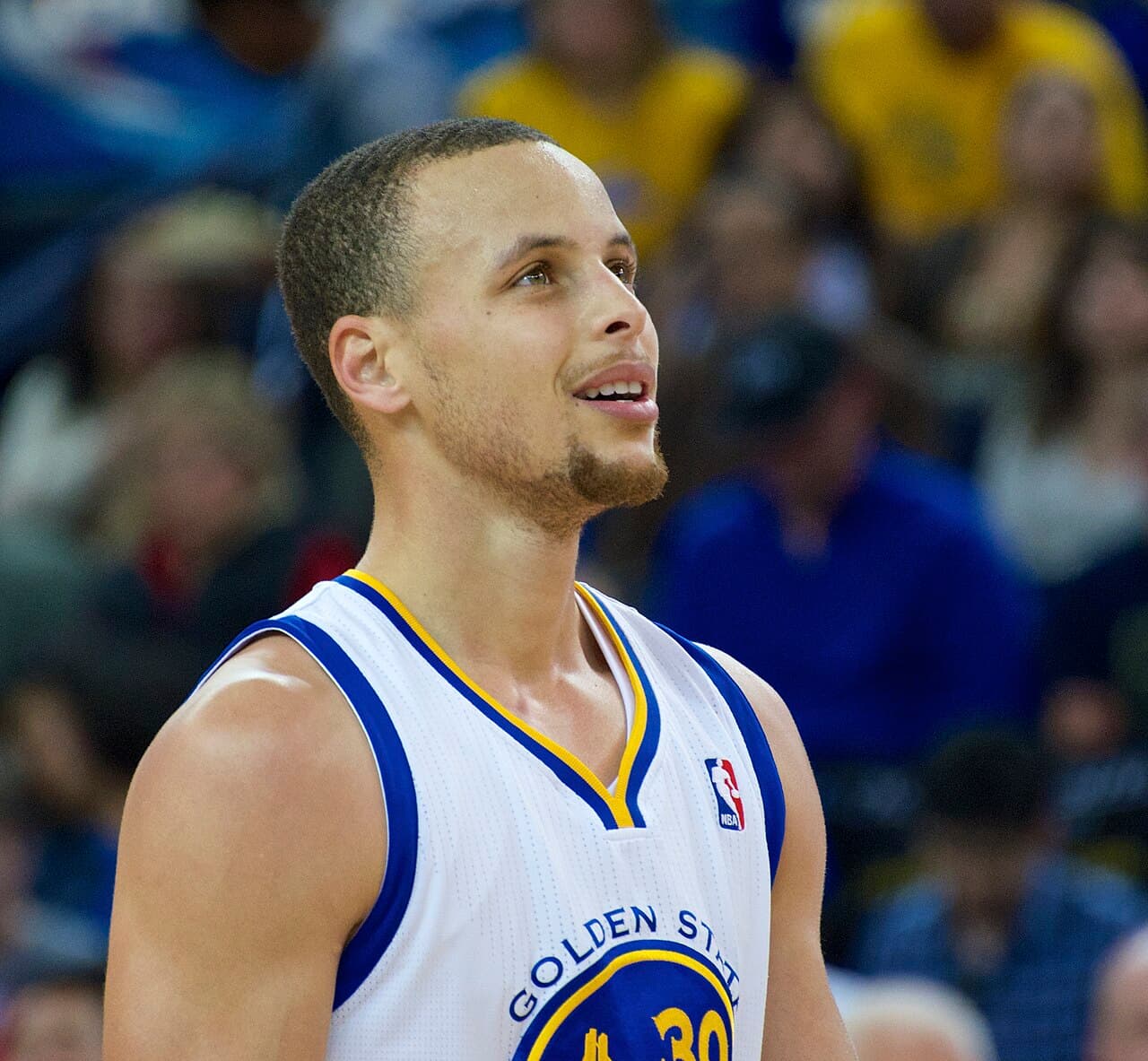
Stephen Curry becomes eligible to sign a contract extension in late August, and league sources have described mutual interest between the player and the Golden State Warriors in getting one done. Curry is entering the final season of his current deal, which pays him a reported $62.6 million in 2026-27, and the extension available to him is a two-year agreement in the neighborhood of $136.7 million.
The subtext is what makes this a story rather than a formality. Reporting through the offseason has included rumblings that if Curry does not sign once he becomes eligible, he could push for a move in pursuit of one more championship. That possibility exists against the backdrop of an offseason in which Golden State pursued LeBron James and lost him to Philadelphia.
The roster context
The Warriors did not stand still after missing on James. Draymond Green declined his player option and then re-signed on a one-year deal reported at $27.7 million. Gary Payton II returned on a one-year deal in the $3.9 million range. Those are continuity moves, not upgrades, and continuity is a defensible plan only if the team you are continuing is good enough.
The league around them got significantly harder. Giannis Antetokounmpo landed in Miami. James went to Philadelphia. New York is the defending champion. San Antonio and Oklahoma City sit at the top of most title boards for next season. A Warriors roster built around a 38-year-old point guard and a 36-year-old forward on one-year money is competing in the deepest environment of Curry's career.
Why the extension matters beyond the money
Extensions are as much about signaling as compensation. A signed Curry extension in September tells the rest of the roster, the front office and the market that the Warriors have a defined multi-year plan. An unsigned Curry in October creates a season-long story that follows the team into every road city and every trade deadline conversation.
The practical difference shows up in asset management. A team with its franchise player locked through 2029 can make aggressive win-now trades. A team facing an expiring situation with a legend has to weigh every move against the possibility of a rebuild. Those are different franchises, and they behave differently at the February deadline.
Fantasy fallout
For fantasy purposes, none of this changes Curry's 2026-27 projection in a Golden State uniform. He remains an elite points-league producer and a top-tier three-point specialist whose value in category leagues comes from volume shooting and assists rather than from defensive counting stats.
The variable worth planning for is games played. Golden State has managed Curry's workload increasingly carefully in recent seasons, and a team with an aging core and modest title odds has every incentive to sit him on back-to-backs. Fantasy managers drafting him should assume a full-season projection built on fewer than 70 games and should value him accordingly relative to younger guards with similar per-game production.
The more actionable fantasy angle is Golden State's supporting cast. A Warriors roster with one-year contracts everywhere is a roster with rotation uncertainty, which means the fantasy value of every non-Curry Warrior is a function of coaching decisions that will not be visible until the preseason.
The Verdexed model take
The model projects Golden State as a play-in-caliber team in a Western Conference that got deeper, with a title probability well outside the top tier. That is not a statement about Curry, whose individual projection remains excellent on a per-minute basis. It is a statement about a roster that spent its offseason retaining rather than adding.
On the extension question specifically, the model treats a signed deal as the strong base case for a simple reason: the money available is larger than what any competitor could offer, and Curry has never given any indication of prioritizing anything over the franchise he built. The trade speculation is downstream of a slow news cycle, not of any reported request.
Where the model does see genuine risk is in the season that follows. A Warriors team that starts poorly with a superstar in the final year of a contract is the single most volatile situation on the league's trade board, and February would be the month it resolves.
Betting angle
Golden State's season win total is the market to watch, and the timing matters. Numbers set in July priced an ambiguous offseason. A Curry extension announcement removes a tail risk that some books have shaded into the number, and the total should tick up on the news.
The more interesting bet is the Warriors' playoff-berth market rather than the win total. Win totals for teams that manage veteran minutes tend to land low relative to true talent, because rest games cost wins that a healthy playoff run does not.
Curry's individual awards markets are worth avoiding entirely. Voter fatigue and team record both work against a 38-year-old guard on a fringe playoff team, regardless of how well he plays.
What's next
Late August is the date. If the extension is signed in the first week of eligibility, the story ends and Golden State enters camp with clarity. If it drags into September, the questions start, and they will not stop until either a signature or a trade resolves them.
For fantasy managers and bettors alike, the useful posture is to treat the extension as likely, the Warriors as a fringe playoff team, and Curry as an elite individual producer on a roster whose collective ceiling is lower than his individual one. That combination is a great fantasy asset and a mediocre betting one, which is a distinction worth keeping straight.